On Wednesday, during the West Bengal State Budget, a new initiative aimed towards providing financial assistance to the economically backward “majority” population was announced by the Mamata Banerjee government. The budget’s focus on increasing financial assistance and expanding welfare coverage is being seen as a continuation of this long-standing strategy by analysts ahead of the upcoming Bengal Elections.
Also Read | West Bengal Health Scheme raises cashless treatment limit for pensioners
Social security push for gig workers
From food and medicine delivery to consumer goods and vegetables, the number of gig workers has increased rapidly in recent years. According to statistics, there are over 1 crore 20 lakh gig workers across the country. Unconfirmed sources estimate the number in the state at around 4–5 lakh.
The budget announced that gig workers will be brought under a social security framework. The state government plans to launch a dedicated portal for these unorganised workers. Once registration is completed, they will be gradually included under various social security schemes, including Swasthya Sathi, and other benefits designated for workers.
Support for farm labourers and small farmers
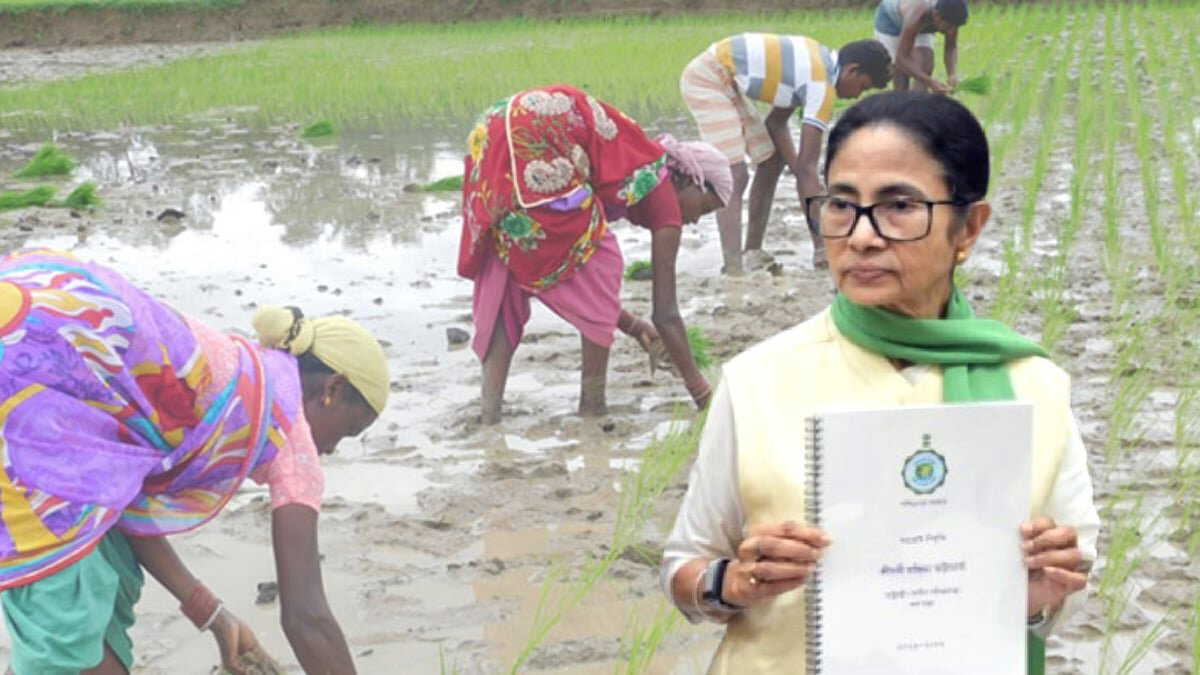
Farm labourers, who depend entirely on agriculture and allied work for their livelihood, have also been brought under the budget’s welfare focus. Financial assistance has been announced for farm labourers who are not covered under the state’s Krishak Bandhu scheme due to the absence of land ownership or because they work as sharecroppers. These workers will receive Rs 2,000 twice a year during the Rabi and Kharif seasons, amounting to Rs 4,000 annually. A separate database is also being created for them.
In another move to reduce cultivation costs, the state has announced a waiver of irrigation fees for small and marginal farmers. These farmers were earlier required to pay charges for irrigation from government tubewells or rivers, a burden that will now be removed.
Also Read | ‘Banglar Yuva-Sathi’ scheme unveiled in Bengal budget to support unemployed youth
The budget also reiterated the state’s position on the 100-day work scheme. Trinamool Congress has long accused the Centre of withholding pending dues under MGNREGA. In response, the state had introduced the Karmashree scheme to pay wages to job card holders from its own funds. Recently, the scheme was renamed Mahatmasree following protests against the removal of Mahatma Gandhi’s name from MGNREGA. An allocation of Rs 2,000 crore has been made to ensure a minimum of 100 days of work per year.