Two cases of Nipah virus disease have been confirmed in West Bengal since December 2025, according to official statements from the Union Health Ministry and the National Centre for Disease Control (NCDC). Authorities say the situation is contained and there is no evidence of wider transmission.
Recent claims on social media suggesting a large outbreak are incorrect, officials said.
Confirmed cases and contact tracing
The two confirmed cases were detected among healthcare workers at a private hospital in Barasat, North 24 Parganas district. Both patients were isolated after testing positive.
Also Read | Safety response ramped up in Bengal as five test positive for Nipah virus, nearly 100 in quarantine
Health authorities traced 196 contacts linked to the cases. All were placed under medical surveillance. As of the latest update, none have shown symptoms and all have tested negative.
No new cases have been reported.
Timeline of events
December 2025:
Suspected cases were identified in West Bengal and samples were sent for laboratory testing.
Early January 2026:
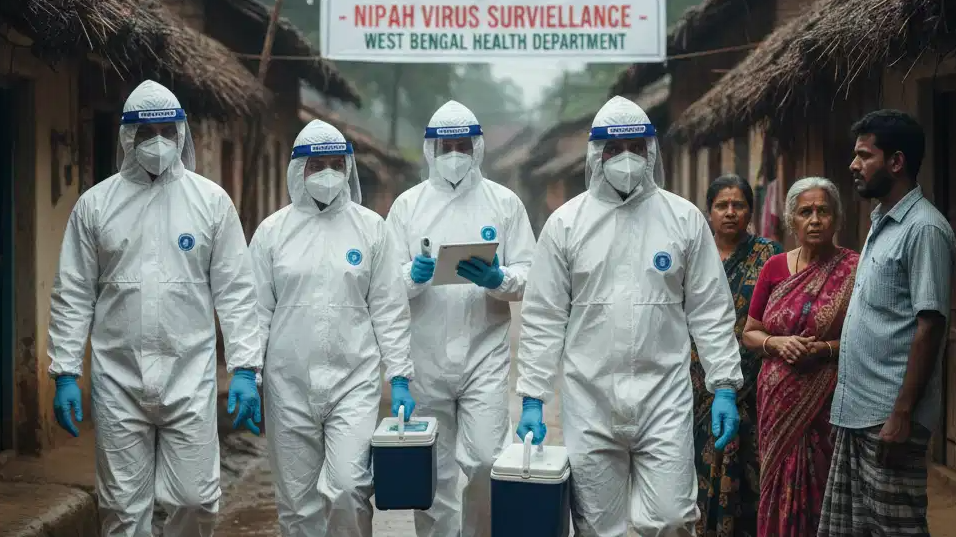
The test results confirmed infection with the Nipah virus. The central and state health authorities started the process of containment, which included isolation, surveillance, and field investigation.
Late January 2026:
The authorities confirmed that the process of contact tracing was over, and there were no secondary cases of infection.
About Nipah virus
Nipah virus is a zoonotic virus, which means it can be transmitted from animals to humans and, in some cases, from human to human. The natural host of the Nipah virus is usually fruit bats.
The symptoms of the Nipah virus starts with fever, headache, muscle ache and vomiting. In severe cases, it can lead to problems like respiratory failure or even encephalitis. There is no approved vaccine or specific antiviral treatment. Medical care focuses on symptom management.
Also Read | Nipah virus alert in Bengal: Health officials advise avoiding date palm juice, half-eaten fruits
Past outbreaks have shown high fatality rates.
Official position
The Health Ministry and NCDC said the current situation remains limited to two cases. Surveillance continues, but there is no indication of community transmission.
Officials urged the public to rely on verified information and avoid circulating unconfirmed reports.