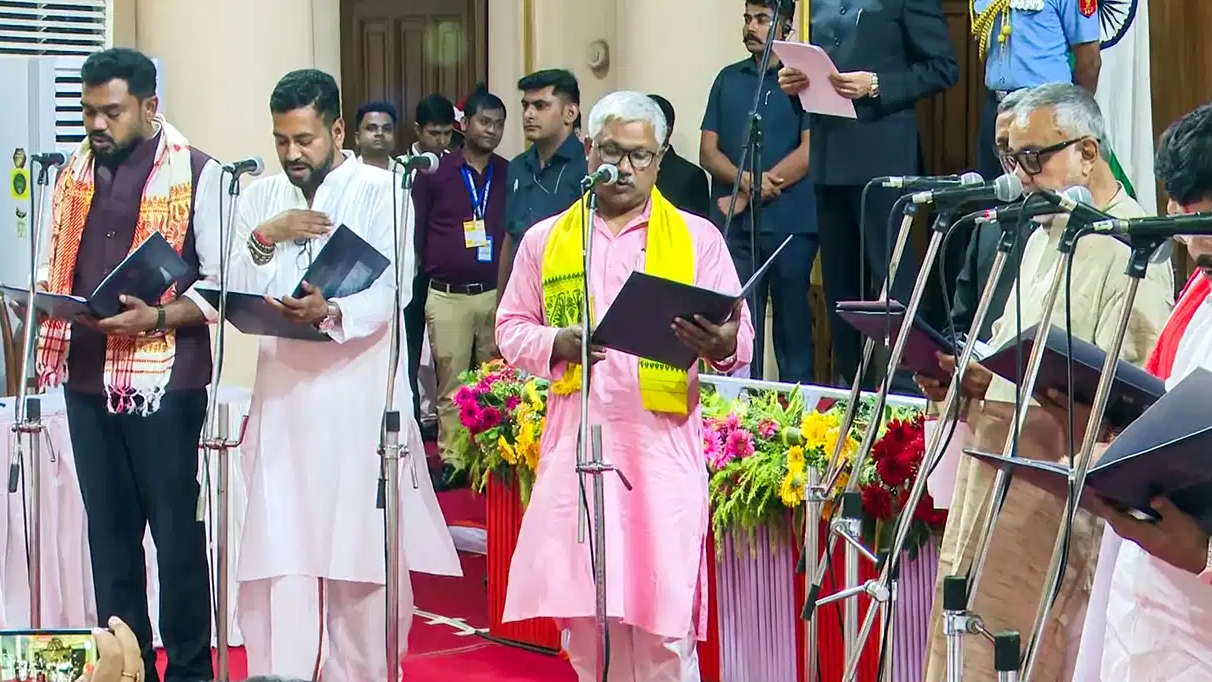
Dipak Barman, the Bharatiya Janata Party (BJP) MLA from Falakata (SC) in West Bengal's Alipurduar district, has emerged as one of the prominent faces from North Bengal following the 2026 Assembly elections. A school headmaster and a postgraduate by qualification, Barman has now secured a place in the newly-expanded West Bengal Cabinet.
From educator to legislator
According to his election affidavit, Dipak Barman holds a postgraduate degree in Master of Arts (English) under North Bengal University in 1999.
Barman listed his profession as headmaster of Deogaon High School in Falakata. He reported total assets worth around Rs 1.4 crore and liabilities of approximately Rs 16.9 lakh. His declared annual income stands at Rs 23.7 lakh.
Also Read | At 32, Biraj Biswas becomes youngest minister in Suvendu Adhikari's cabinet
Strong victory in Falakata
Barman contested the 2026 Assembly election as the BJP candidate from the Falakata (SC) Constituency, a Scheduled Caste-reserved seat in Alipurduar district located in the Dooars region of North Bengal.
In the election, he defeated Trinamool Congress (TMC) candidate Subhash Chandra Roy by a margin of 45,999 votes. Barman secured 1,34,370 votes, while Roy received 88,371 votes.
The constituency went to polls on April 23 as part of Phase 1 of the state election. Alipurduar district recorded a voter turnout of 93.2 per cent.
#WATCH | Kolkata, West Bengal: BJP MLAs Deepak Barman, Arjun Singh, Shankar Ghosh, Gauri Shankar Ghosh, Tapas Roy and Manoj Kumar Oraon take oath as Cabinet Ministers in CM Suvendu Adhikari's led state government
— ANI (@ANI) June 1, 2026
(Source: PWD IT Dept) pic.twitter.com/477S6Agycr
Inducted into state Cabinet
Following the election, Dipak Barman was inducted as a Cabinet Minister in the expanded West Bengal Cabinet. He is among 10 legislators from North Bengal who have been given ministerial responsibilities, reflecting the region's increased representation in the state government.
Also Read | Bengal's free bus ride scheme for women may boost jobs, education access; Stree Shakti sees long-term gains
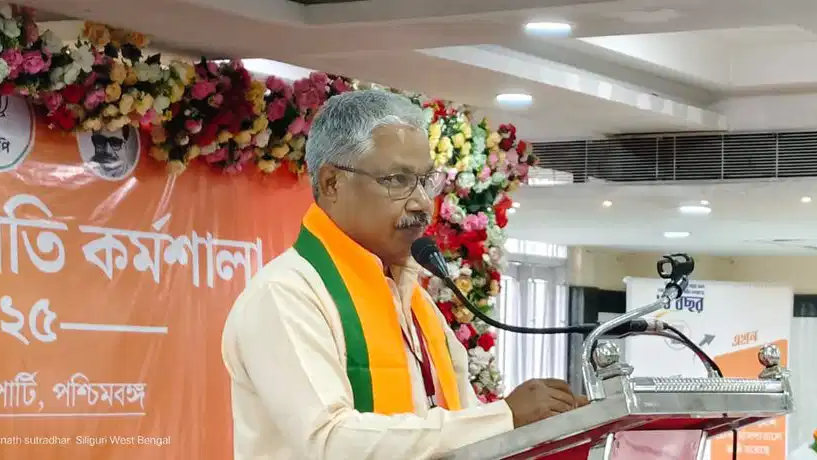 File image
 Falakata has a predominantly rural economy, with agriculture, tea garden employment and small-scale trade serving as major sources of livelihood. Farmers in the region have regularly raised concerns over irrigation facilities, flood protection and fair prices for crops.