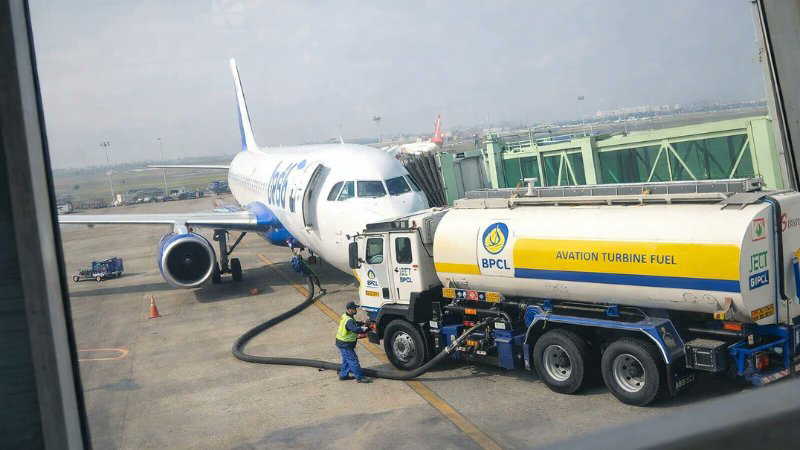
The Union Cabinet on Wednesday approved one-time budgetary support of up to ₹10,000 crore for oil marketing companies to provide aviation turbine fuel, or ATF, price-stabilisation support to scheduled Indian airlines operating domestic and international services.
The decision is aimed at easing the strain on carriers during a period of exceptional fuel-price volatility triggered by the West Asia crisis.
According to the government, the support will be extended as interest-free advances to oil marketing companies through the Ministry of Petroleum and Natural Gas.
Also Read | India reacts to Trump’s 12.5% tariff proposal, says duties not final
#WATCH | Union Cabinet decisions | Delhi: Union Minister Ashwini Vaishnaw says, "West Asia crisis has caused a major issue. The price of Aviation Turbine Fuel (ATF) have increased 2.5 times, increasing from Rs 60 per litre in March to Rs 142 per litre in May 2026. To ensure that… pic.twitter.com/rFifwIldSO
— ANI (@ANI) June 3, 2026
The fund that circles back
The mechanism has been designed as a revolving fund.
Under the approved structure, the corpus will compensate oil marketing companies when the prevailing Import Parity Price of ATF rises above a benchmark determined under the scheme.
When international prices moderate, the differential will be recovered and returned to the Consolidated Fund of India. The arrangement will be available to all willing scheduled Indian carriers for both domestic and international operations, and the fuel supply arrangement will run through memorandums of understanding between airlines and the oil marketing companies, with the civil aviation and petroleum ministries as signatories.
🚨Indian govt has approved ₹10,000 crore relief fund to control the increasing prices of Aviation Turbine Fuel (ATF)
— WingX Aviation (@wingXaviation) June 3, 2026
This will directly benefit airlines and flyers, cutting high fuel prices and costly tickets
Btw, things are not well for Indian Aviation. pic.twitter.com/98jwtZxKbi
Keeping turbulence at bay
The government said the fund is intended to provide greater predictability in fuel costs, reduce airlines’ exposure to sudden spikes and limit the pass-through of fuel shocks to passengers.
It will also be monitored by a committee with representatives from the civil aviation ministry, the petroleum and natural gas ministry, and the Department of Expenditure, with all claims and recoveries subject to audit.
The support will remain in force for 36 months, with annual review and the possibility of extension if the corpus is not fully settled within that period.
Also Read | Can a ₹9,585 crore vehicle replacement plan help clean NCR's air?
Why the government stepped in?
A government background note cited in the official release said international ATF prices have surged nearly 2.5 times, from ₹60.50 per litre in March 2026 to ₹142 per litre in May 2026, after the West Asia crisis.
It added that ATF makes up nearly 40% of airline operating costs and can rise to 60% in periods of extreme volatility.
Speaking to the media after the Cabinet meeting, Information and Broadcasting Minister Ashwini Vaishnaw said, “Due to the West Asia crisis, ATF prices had skyrocketed.” The government also said the move would help sustain domestic and international connectivity, including services to remote, regional and tier-II and tier-III cities.