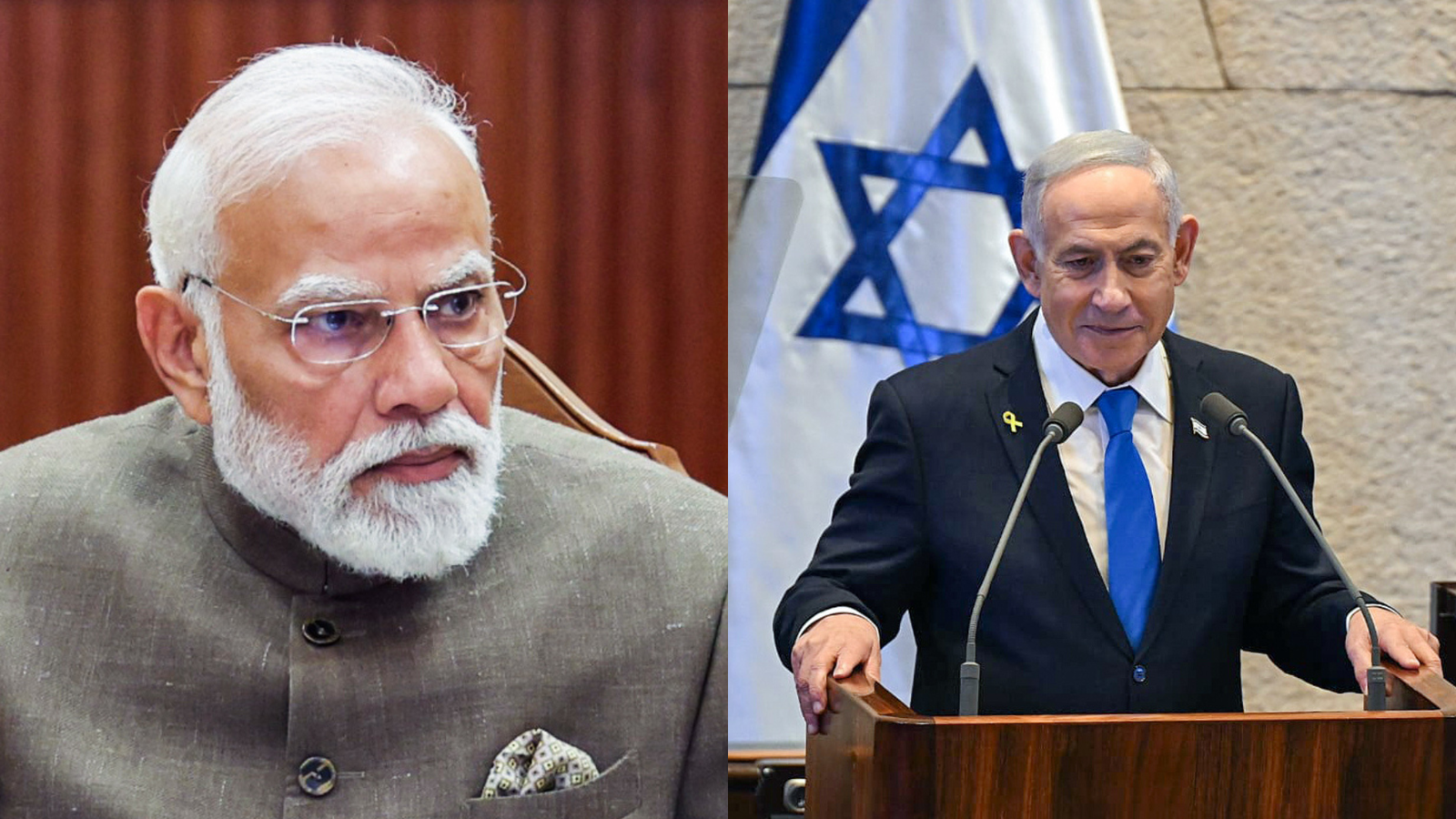
Just ahead of Prime Minister Narendra Modi's two-day visit to Israel, India is looking to expand its strategic partnership and defense cooperation. This will include cooperation in anti-ballistic missile defense systems, laser weapons, long-range stand-off missiles and drones. Modi is scheduled to visit Israel from February 25 to 26.
Although an MoU on security cooperation is expected to be inked, no defense agreement will be finalised during this visit. The defense cooperation between the two very close allies is an ongoing process and will be worth around USD 10 billion in the coming years.
Also Read | Who was Ofri Yafe? IDF paratrooper killed in friendly fire in Gaza
Silence on PM Modi's visit
Although both parties are maintaining a stoic silence on PM Modi's visit, it is evident that Israel has agreed to share advanced defence technologies with India, including the much-needed laser-based defence systems. India will be able to access a whole range of defence technologies that Israel had not shared in the past few years.
This enhanced defence partnership has its origins in the visit of Defence Secretary RK Singh to Israel in November last year, where a MoU on enhanced defence cooperation was signed.
India exploring joint development of anti-ballistic missile defence with Israel
One such proposed joint development is that of anti-ballistic missile defense systems with Israel, which is a key component of 'Mission Sudershan', the overall strategy to protect the Indian heartland from long-range ballistic missiles. Headed by Prime Minister Modi, 'Mission Sudershan' is the central component of the country's missile defense strategy.
Israel is one of the preeminent players in the anti-ballistic missile technology field, boasting a range of systems that include the long-range Arrow system, the medium-range Davidss Sling, and the short-range Iron Dome. Tel Aviv's record is impeccable, having intercepted 98 per cent of the ballistic missiles fired by Iran in June last year.
India eyes long-range missiles
India is attempting to arm itself with long-range missiles and loitering munitions that can be launched from the air, land, or sea, designed to penetrate enemy air defenses well beyond their lines. In Operation Sindoor, India used Rampage missiles, Palm 400, Harpy and Harop kamikaze loitering munitions against targets in Pakistan, penetrating deep enough to threaten even Chinese-designed defenses and reaching towards Islamabad.
Also Read | 'I can't eat, can't sleep': Iran man ends life after video appeal to Donald Trump against US-Iran deal
In the future, the Indian government has announced that it will procure Spice 1000 glide bombs for extended range, Rampage air-to-surface missiles to attack terrorist camps encountered during Op Sindoor, Air Lora air-launched ballistic missiles and the Ice Breaker long-range system. The Indian Navy also plans to upgrade its inventory with extended-range Barak surface-to-air missiles to protect warships from enemy air and sea attacks.
Due to the close ties between PM Modi and Israeli leader Benjamin Netanyahu, the two countries have common views on many political matters and come together as one against terrorism. During the visit, the two countries will hold discussions on science, technology, agriculture and access to clean drinking water, apart from the possibilities of quantum computing.