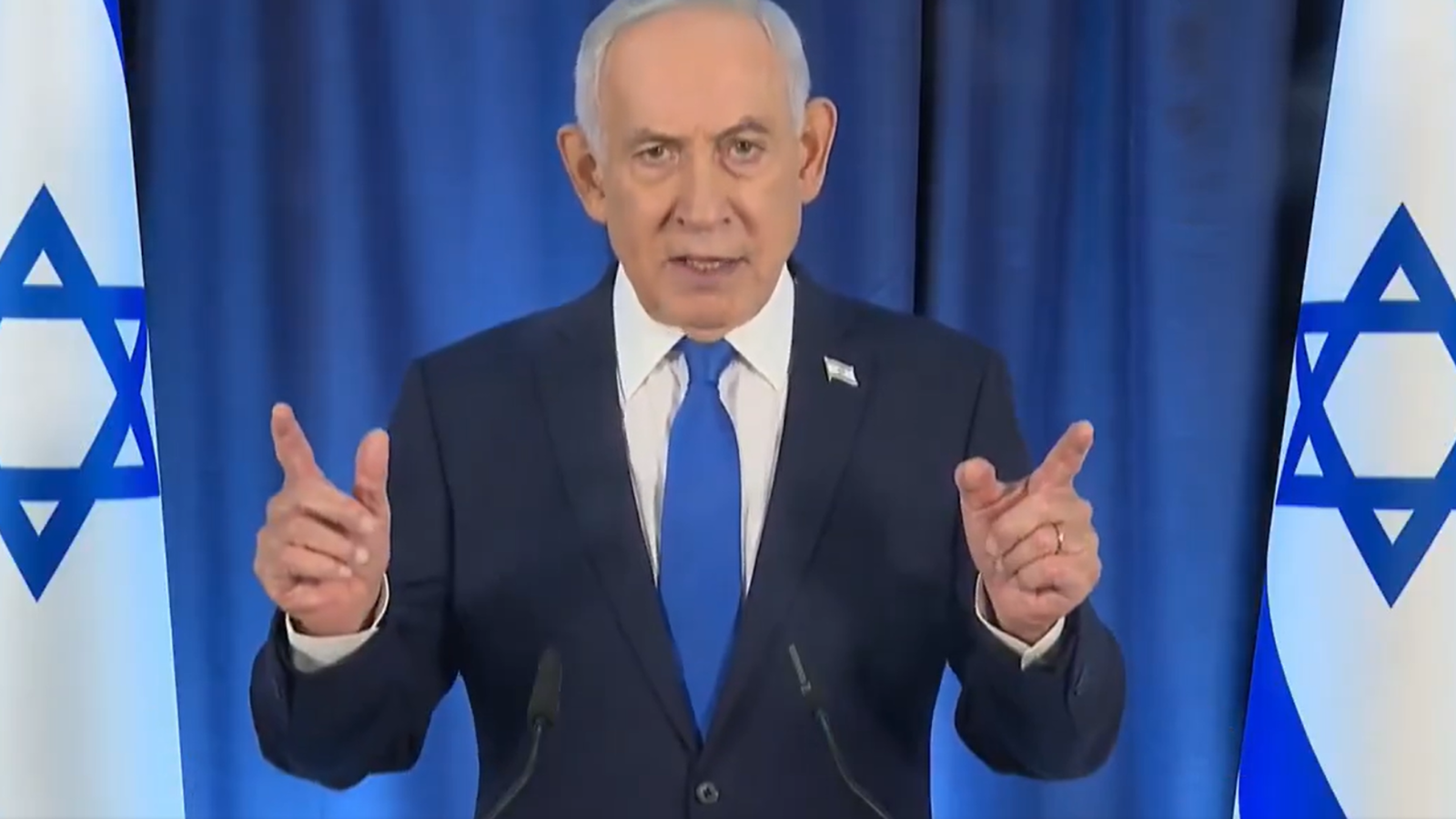
Israeli Prime Minister Benjamin Netanyahu will contest the country's upcoming general election, his Likud Party has confirmed, setting the stage for a high-stakes political battle that could shape Israel's future after nearly three years of war and domestic turmoil.
The election, which must be held by October, will be the first national vote since the October 7, 2023 Hamas attack that triggered Israel's military campaign in Gaza and dramatically altered the country's political landscape. Netanyahu's decision ends speculation about whether the veteran leader would seek another term after one of the most turbulent periods of his political career.
Election set against backdrop of war and political uncertainty
According to NDTV, Netanyahu returned to power in late 2022 at the head of the most right-wing coalition in Israel's history. Since then, his government has faced widespread criticism over judicial reforms, mass anti-government demonstrations and the handling of multiple regional conflicts.
The October 7 attack remains a defining issue. Many Israelis continue to view it as one of the country's most serious security failures, and questions surrounding political accountability are expected to dominate the election campaign.
Opinion surveys have consistently suggested that Netanyahu's current coalition would struggle to secure a parliamentary majority if elections were held immediately. Public dissatisfaction has grown amid prolonged military operations and continuing security challenges.
Also Read | 'Protect civilians': India urges 'immediate de-escalation' as Israel and Iran trade fresh strikes
Public opinion remains divided
According to NDTV, recent polling indicates significant resistance to another Netanyahu candidacy. A survey conducted by the Israel Democracy Institute found that a majority of respondents believe he should not seek re-election.
Despite this, Israel's fragmented political landscape may still work in Netanyahu's favour. Opposition parties remain divided on key issues, and analysts note that forming a stable alternative coalition could prove difficult without support from Arab political parties, a prospect that some opposition leaders continue to reject.
This political arithmetic means that while Netanyahu faces considerable public criticism, he remains one of the most influential figures in Israeli politics.
Also Read | Tehran airspace closed after Israeli strikes, airlines monitor Gulf routes
Relationship with Trump under spotlight
According to NDTV, the election campaign is also likely to draw attention to Netanyahu's relationship with US President Donald Trump. The two leaders have maintained close ties despite occasional public disagreements over regional conflicts and diplomatic strategy.
Recent reports have highlighted tensions between Washington and Jerusalem regarding military operations in Lebanon and ongoing negotiations involving Iran. Trump has nevertheless continued to publicly support Netanyahu and has even called for the Israeli leader to be pardoned in relation to corruption charges that Netanyahu denies.