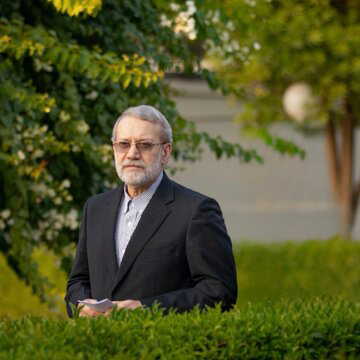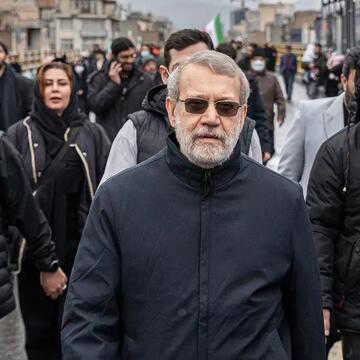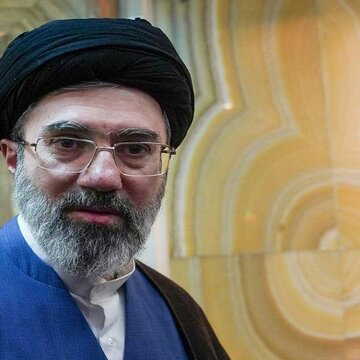
Iran has confirmed the death of Ali Larijani, the country’s national security head and one of the key figures of Iran’s wartime leadership, due to an Israeli airstrike in the vicinity of Tehran. The airstrike, which reportedly killed Larijani’s son as well, comes as the conflict in the Middle East region has seen a sudden spike in hostilities. Israel had announced earlier that it had “eliminated” Larijani, who had been one of the key architects of Iran’s strategic response to the ongoing crisis in the region.
Who was Ali Larijani?
Ali Larijani had been one of the most influential figures in Iran, with a long and illustrious career in the country’s military, political, and intellectual spheres. Born in 1958 in Najaf to a prominent clerical family, he rose through the ranks after the 1979 Islamic Revolution, becoming part of a powerful political dynasty often described as deeply embedded in Iran’s governing structure.
Also Read | Iran’s national security chief Ali Larijani killed in Israeli strike, Tehran confirms death
Larijani had been a Revolutionary Guard Corps commander during the Iran-Iraq War and later became one of the key figures in Iranian politics, holding important positions in Iran’s labour and information ministries before becoming the Minister of Culture and Islamic Guidance in the early 1990s.
From 1994 to 2004, he headed the country’s state broadcaster before becoming Secretary of the Supreme National Security Council in 2005. In this position, he was the chief Iranian nuclear negotiator, defending the country’s nuclear program under intense international pressure. His tenure ended in 2007 after a clash with President Mahmoud Ahmadinejad.
Larijani went on to become the Speaker of Parliament from 2008 to 2020, strengthening his grip on the country’s politics. Though banned from presidential runs in the following years, Larijani re-emerged in 2025 when he was reappointed as the national security chief.
Also Read | Who is Joe Kent? US official resigns over war with Iran
Scholar and strategist
Beyond politics, Larijani had an impressive academic record. He had studied mathematics and computer science before going on to pursue advanced studies in Western philosophy at the University of Tehran. His academic works focused on the works of German Enlightenment philosopher Immanuel Kant, as well as works by modern philosophers Saul Kripke and David Lewis.