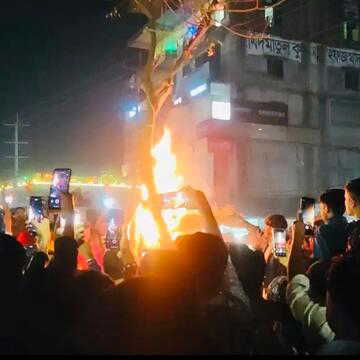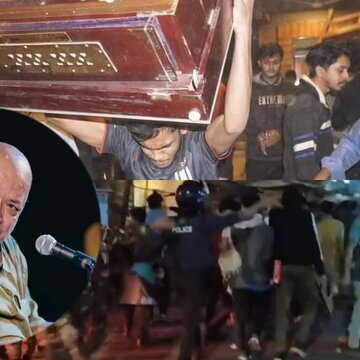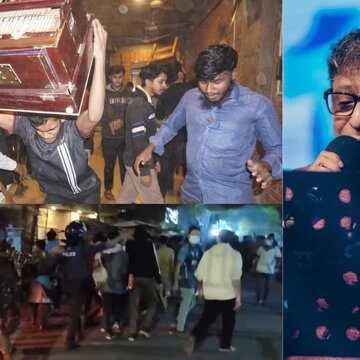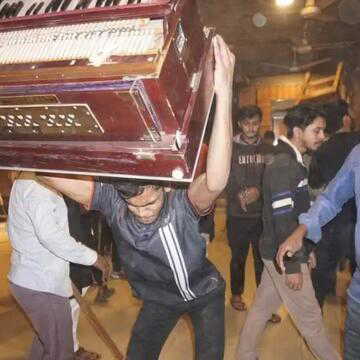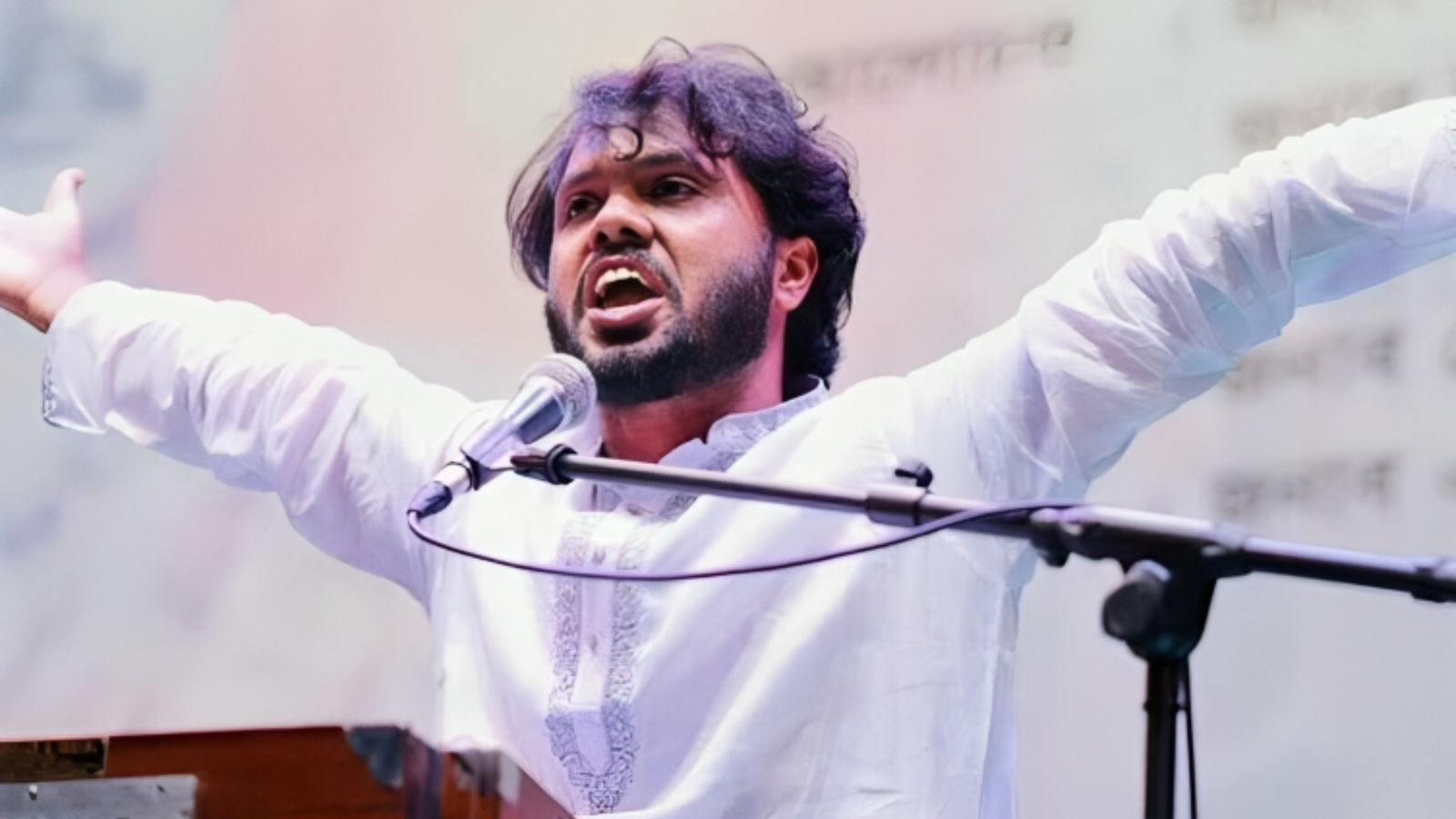
Violence has taken a new shape in Bangladesh following the murder of a prominent leader, Sharif Osman Hadi. He was a key figure of the youth movement that ousted former Prime Minister Sheikh Hasina. This event has sparked violence across the capital city of Dhaka, followed by vandalism across several properties in Bangladesh.
What happened in Bangladesh?
Sharif Osman Hadi was shot by masked attackers while leaving a mosque in Dhaka last week. The student leader died of his injuries on Thursday while being treated in Singapore. The shooting took place a day after Bangladeshi authorities announced a date for the first elections since the uprising in 2024. Hadi had been planning to contest as an independent candidate in the polls. As news of his death emerged on Thursday, hundreds of his supporters gathered in a square in the capital city to protest. The demonstrators vandalised the offices of prominent Bangladeshi newspapers The Daily Star and Prothom Alo, with one building set on fire. The political parties of Bangladesh have mourned his death and urged the interim government to bring the perpetrators to justice. Nobel laureate Muhammad Yunus, who leads the caretaker government, called Hadi's death "an irreparable loss for the nation". He mentioned in a televised speech on Thursday, "The country's march toward democracy cannot be halted through fear, terror, or bloodshed." The interim government has declared a day of national mourning on Saturday.
Also Read| Osman Hadi’s murder: Did the slain leader know his attacker beforehand?
What is the opinion of the students of JNU on this issue?
Agniva Ray, a PhD scholar of the Centre for Political Science, Jawaharlal Nehru University, mentions, “Bangladesh has been in a boiling tub since last year. A spontaneous uprising, then the fall of the government, and the formation of an interim government, rising religious polarisation, and fundamentalist ideas covered the career of this year-old mass mobilisation, which many have connected to the colour revolutions taking place around the world in the late 1980s, 1990s, and so on. In such a state of affairs, the incident of the assassination attempt on Osman Hadi has added to the existing tense situation. It is, of course, a devastating incident for the large corpus of supporters and the people who were his followers."
"But the concerning part arises in what happened post his death. After the Singaporean authorities declared his last breath, violence and clashes, including unrest near the diplomatic areas, began. Whatever tumultuous condition Bangladesh was in is nonetheless built over by these occurrences. The degree of domestic unrest is concerning, given the possibilities of a backsliding of democracy that has begun in different parts of the world", he further added.
Arko Mukherjee, another PhD scholar of the School of Social Sciences, says, “What has happened in Bangladesh is deeply condemnable. The way fundamentalist Jamaat forces are rearing their heads under the Yunus regime is extremely worrying. It mirrors what we are witnessing in our own country, where the culture of Hindu fundamentalist conventions is leading to attacks on minorities. That is why Ashraful dies here, Dipu Das there; Javed Akhtar’s programme is cancelled here, the Chhayanaut building is vandalised there; the BJP removes Gandhi’s name here, and Bangabandhu’s house is bulldozed there.
Also Read| Chhayanaut rampage met with musical defiance: Protesters sing national anthem in protest
He further said, "Meanwhile, the basic demands of livelihood and bread are pushed under the carpet. We are looking towards those progressive, conscientious people of Bangladesh who carry the legacy of the Liberation War in their hearts, hoping they will defeat these dark fundamentalist forces.”
Violence was reported in several other cities across Bangladesh, including the port city of Chittagong. The protesters had gathered outside the Indian Assistant High Commission and raised anti-India slogans. The agitated students set fire and vandalised Dhanmondi 32 in Dhaka. This is the ancestral place of Sheikh Mujibur Rehman. This location was attacked at least three times before and completely gutted and ransacked. There are also reports of attacks on Awami League offices across Bangladesh.