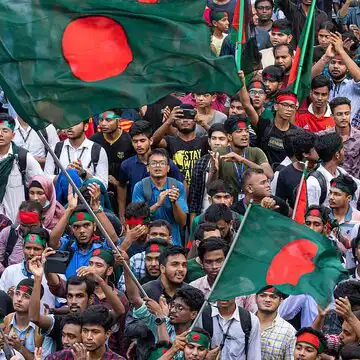
Bangladesh is set to witness a complete political transition following a nationwide movement and bloodshed in July of last year that ultimately led to the fall of the Sheikh Hasina-led government and ban of the Awami League party. The developments have drawn comparisons with significant turning points in the country’s history, including its independence in 1971.
With the 13th parliamentary elections, the South Asian nation has chosen its next leader, entrusting power to one of its oldest political groups, the Bangladesh Nationalist Party (BNP).
Leaders from across the world have congratulated the new ruler of the India neighbouring country after his party's win. As Bangladesh’s population of over 173 million looks to the new administration, attention has turned to the reforms that may follow.
Also Read | Not happy that 'BNP won': Exiled author Taslima Nasreen welcomes change in Bangladesh, lists 15 proposals
Taslima Nasreen’s advice to upcoming government
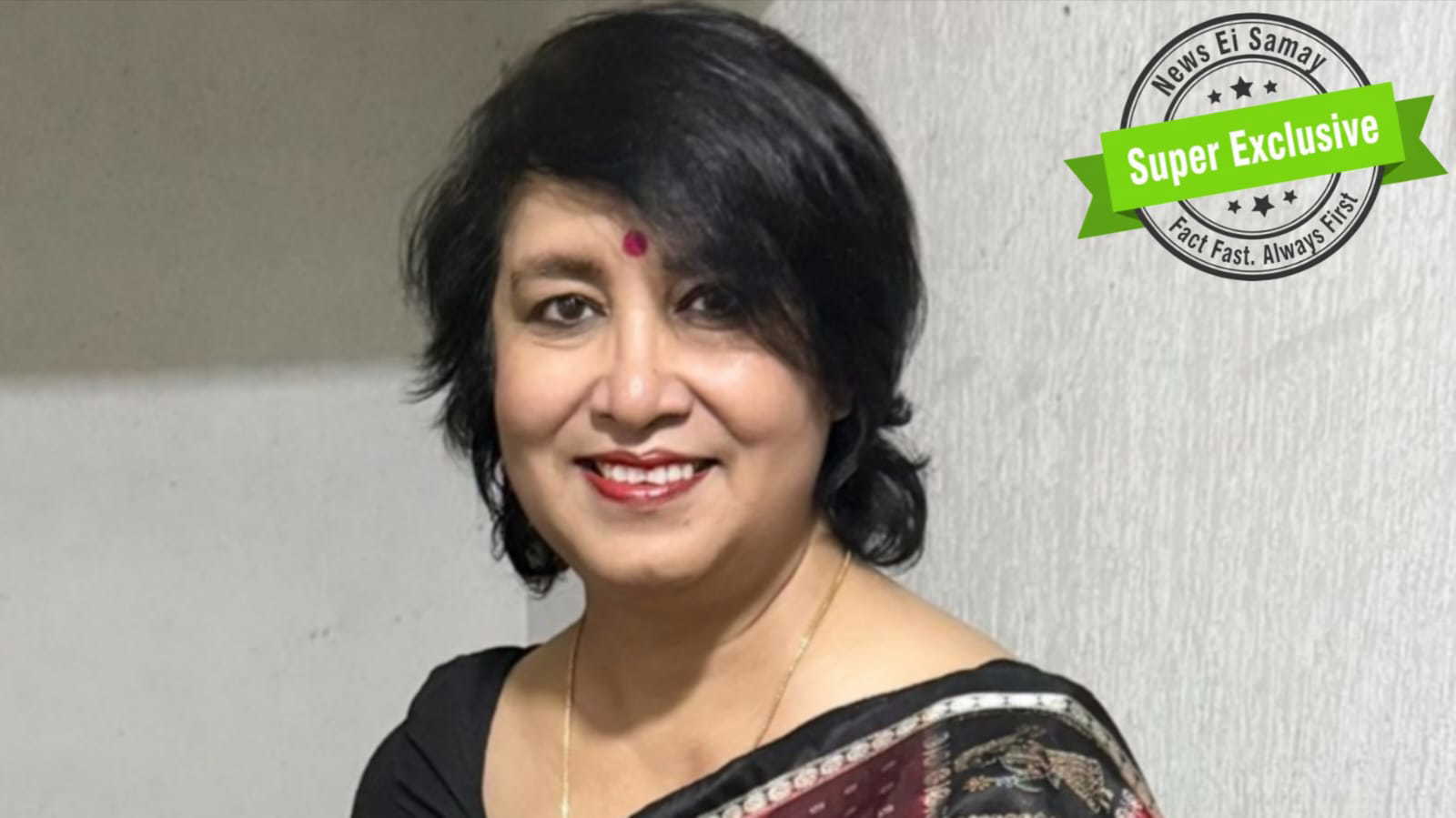
Exiled Bangladeshi author and activist Taslima Nasreen has been a critic of the country’s recent political developments, including the unrest and the Nobel laureate Muhammad Yunus-led interim government. The author has also expressed concerns about the opposition party's(Jamaat-e-Islami) religion-focused political stance.
After BNP's victory, Nasreen shared a post on her X handle outlining 15 proposals for the upcoming Tarique Rahman government. Among these was the call to restore the sculptures and memorials of Bangladesh's Liberation War, which were damaged during the July unrest.
Liberation War belongs to all
In an exclusive interview with News Ei Samay, Taslima Nasreen expressed, "The Liberation War is not the property of the Awami League. Bangabandhu (Sheikh Mujibur Rahman) is not the property of the Awami League. The Liberation War is the history of independent Bangladesh. It is everyone's history - the Liberation War, the 32 No. house (of Dhanmondi)."
She added that the BNP should reconstruct the Liberation War memorial infrastructure, stating that the party has as much stake in its legacy as the Awami League and the general public.
Nasreen noted that Tarique Rahman's father, the late BNP leader Ziaur Rahman, was a great freedom fighter. She also referred to Fazlur Rahman, elected as a BNP candidate in the 13th parliamentary elections, as a freedom fighter.
"If we make the Liberation War and Bangabandhu Awami League's fiefdom, we will lose," she said. The author also called the reconstruction of the 'Swadhinota Museum,' which was gutted during the July unrest.
Also Read | Bangladesh votes for sweeping change: July National Charter approved in referendum
India-Bangladesh relations under focus
On the India-Bangladesh relationship, Taslima Nasreen underlined that the hostile relationship between the two countries is a political tactic. "I hope that Tarique Rahman, after being in exile for 17 years, must have learned that if such politics continues in Bangladesh, then the Jammat-Shibir loyalists and religious dogmatists will only benefit. So, this has to be stopped," she went on saying.
She added that Bangladesh would benefit from maintaining strong ties with India and argued that narratives suggesting “India will capture our country” should be put to an end.
Warning against fundamentalism
Nasreen also warned about maintaining a close relationship with Pakistan, calling it "a marked enemy" due to what she termed its fundamentalist ideology. "Going towards fundamentalism forms a terrorist country like Afghanistan," she said.
"If Tarique Zia(Tarique Rahman) understands this, I have given my advice; I don't know how much he will keep it. If he does, then the country will move towards progress," Nasreen expressed.
Tarique Rahman to form Government
BNP has won 209 out of 297 seats, making Jamaat-e-Islami and its 11-party alliance the opposition in Bangladesh's upcoming political landscape, as the Awami League was barred from participating in the elections.
Also Read | Who is Kim Ju Ae, Kim Jong Un’s young daughter emerging as North Korea's likely successor?
BNP's victory in the election of 12 February has positioned its leader, Tarique Rahman, as the next leader of the country and is going to form the next government of Bangladesh. Rahman assumed the leadership of BNP after his return to Bangladesh, leaving behind 17 long years of exile, days before his mother, former Prime Minister of the country, Khaleda Zia's demise.