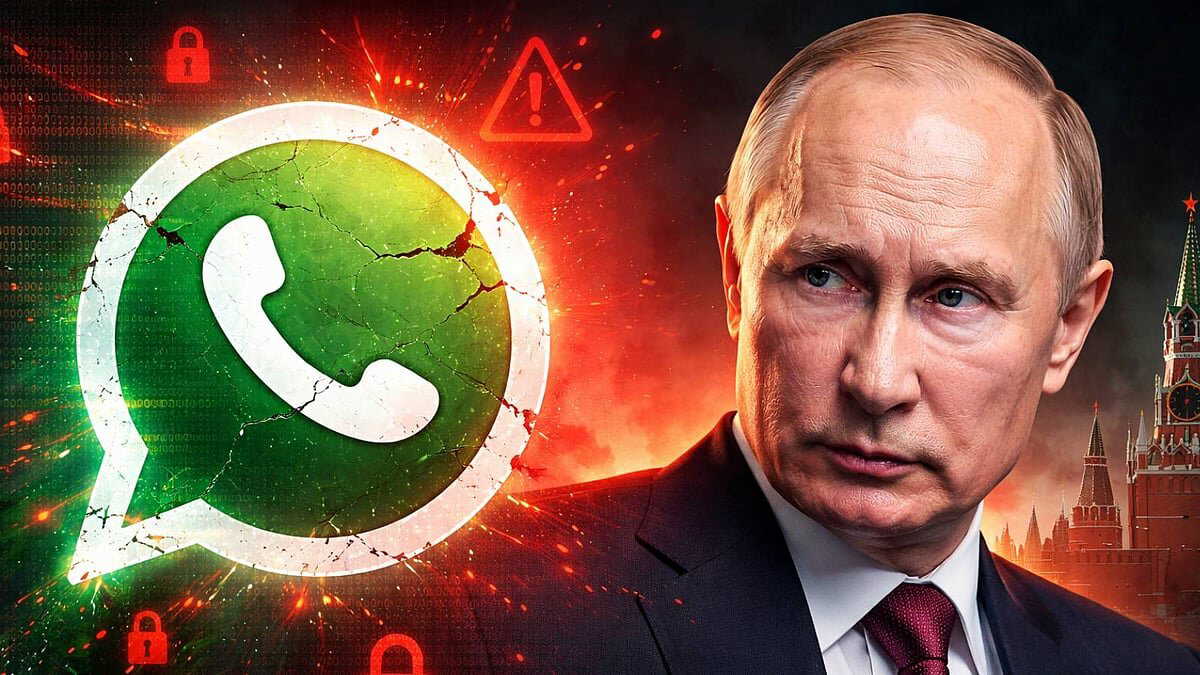
Russia has decided to completely block WhatsApp, the messaging platform owned by sillicon valley techgiant Meta. A move that could affect nearly 100 million users in the country. Meta has said the decision will have a serious impact on users’ privacy and online security. The development comes as Moscow continues to increase pressure on Western digital platforms in the backdrop of the Russia-Ukraine war.
Also Read | Osman Hadi’s sister stages protest during Bangladesh poll, demands justice for brother’s murder
After prolonged speculation, Russia has effectively imposed a ban on WhatsApp. Meta’s other platforms, Facebook and Instagram, have been banned in Russia since February 2022 and can only be accessed through VPN services. With this move, WhatsApp has now joined that list.
Kremlin cites non-compliance
Kremlin spokesperson Dmitry Peskov said that Meta had failed to align its policies with Russian law. He stated that if Meta sat down for discussions with Russian authorities and complied with the law, there could be room for a solution. However, he added that if the company remained inflexible, there would be no possibility of any resolution. So far, Meta has not indicated any willingness to accept Russia’s demands.
Encrypted apps under scrutiny
Alongside WhatsApp, Russia is also tightening its control over Telegram. Although Telegram was founded in Russia, the government is seeking greater oversight of the platform. Telegram founder Pavel Durov said Russian authorities want to push citizens toward state-controlled apps where surveillance and political censorship would be present.
Also Read | When will Bangladesh Election 2026 results be declared? All you need to know
Responding to the ban, WhatsApp said disconnecting over 100 million people from safe and private communication would be a step backwards and would only reduce the security of Russian citizens.
Pavel Durov also said the move would fail, drawing comparisons with Iran’s earlier attempts to suppress Telegram.
Analysts say the decision could have broader implications for access to information. If WhatsApp is blocked, users may have to turn to state-controlled applications or rely on VPN services. In the context of the Ukraine war, Russia has been expanding its digital controls, and this decision marks another step in that direction.