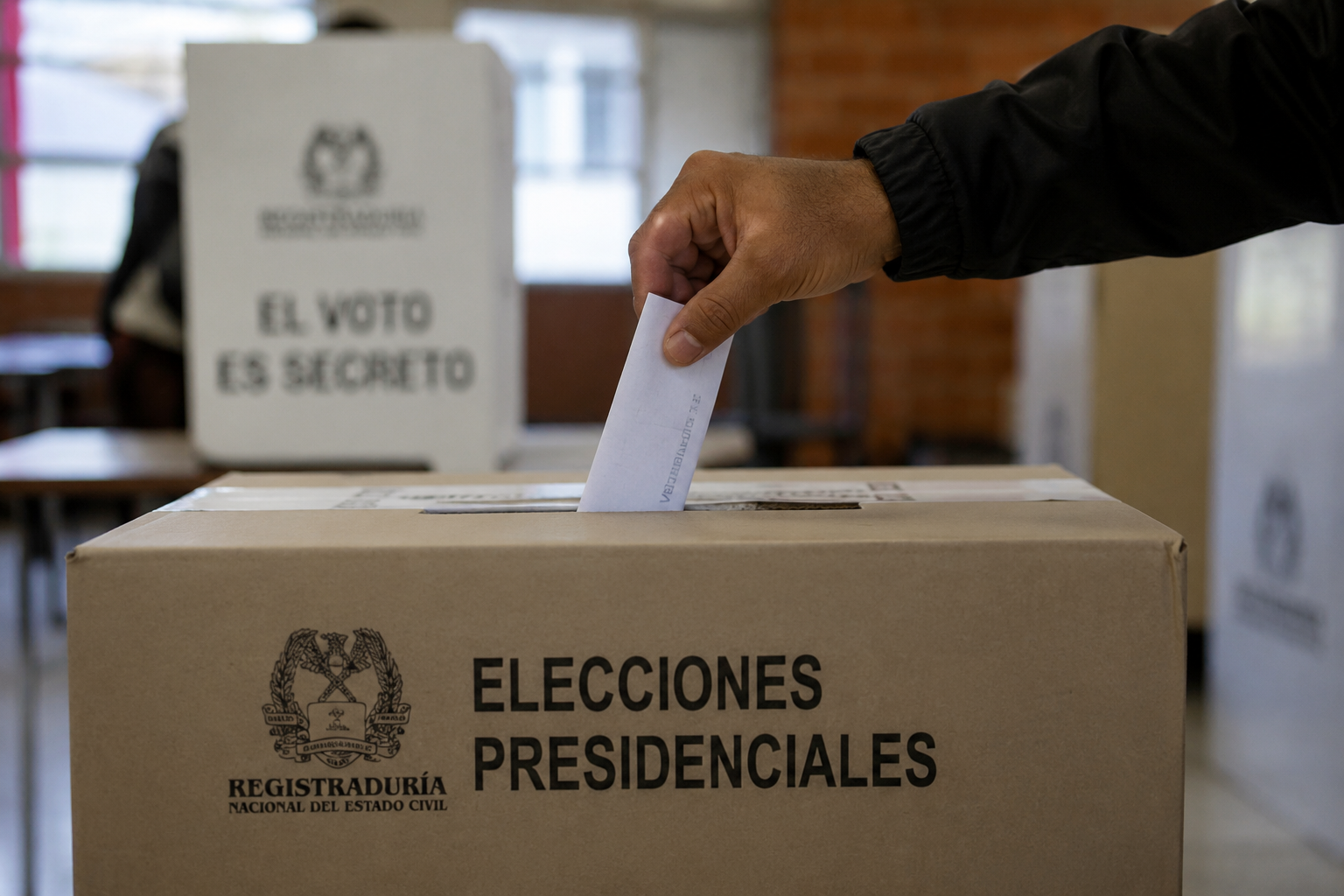
Colombians went to the polls on Sunday for a presidential runoff that pits Iván Cepeda, a leftist senator aligned with outgoing President Gustavo Petro, against Abelardo de la Espriella, a lawyer and businessman running as a conservative outsider.
The vote follows a fragmented first round in which no candidate won outright, and it comes against a backdrop of deep polarization, public anxiety over violence, and competing visions for how the country should handle armed groups.
Also Read | Iran won, says 92% of Israelis in poll that challenges Netanyahu's narrative
COLOMBIA RUNOFF: VOTING UNDERWAY FOR PETRO SUCCESSOR
— Inside the conflict (@InsidConflict) June 21, 2026
Over 41 million Colombians are voting today in a tight presidential runoff to succeed Gustavo Petro.
The race pits right-wing candidate Abelardo de la Espriella against leftist Senator Iván Cepeda.
De la Espriella… pic.twitter.com/t7WzJkYamP
A fork in the republic's road
The runoff has become a referendum on Petro’s left-wing project and on whether Colombia should move further right after more than three years of his presidency.
According to official results cited by AP, Cepeda won 41% of the vote in the first round while de la Espriella secured 44%. Cepeda, 63, is promising to continue Petro’s policies, including state pension payments for the poor, union-backed labor reforms, peace talks with armed groups, and a moratorium on new oil projects.
De la Espriella, 47, is offering the “exact opposite,” including ending talks with armed groups, launching a broad military offensive against them and boosting the country’s oil and gas sector.
🇨🇴‼️ | ÚLTIMA HORA — Gustavo Petro volvió a exhibir públicamente su voto en el momento exacto de depositar la tarjeta electoral en la urna, vulnerando el principio constitucional del voto secreto en Colombia. pic.twitter.com/xc6uG3oA6o
— UHN Plus (@UHN_Plus) June 21, 2026
A nervous hush over the hustings
Security dominated the campaign and was again central on voting day.
Both candidates have tapped into fears of a renewed internal conflict. Turnout efforts targeted the large share of eligible voters who stayed away in the first round.
“We have to restore security. It’s the only thing that truly guarantees our country’s prosperity or condemns us to misery. I’m afraid that the continuation of Petro’s project will destroy everything,” taxi driver Enrique Vargas, 58, said while backing de la Espriella in southwest Bogotá.
But not all voters saw a tougher security line as the answer. “I don’t want the country to fall back into a spiral of war that ends up taking the lives of our children and grandchildren,” said Abigail Pacheco, a 65-year-old pensioner who supports Cepeda.
Bogota lawyer John Manrique said, “Right now, what worries me is the polarization that exists between us: there are two very extreme sides, and the violence is concerning.” He added, “What I hope is that people accept who won. Let’s accept it, regardless of the side, and try to reach a social consensus. … Let’s not go out and fight.”
Beyond the battle for votes
The economic debate has run alongside the security one. Whoever wins will face high public debt and a divided Congress. Voters are also weighing the country’s struggling health system, ballooning public debt, and entrenched corruption.
The first round was closely watched by markets, and De la Espriella entered the runoff as the polling favorite, though analysts still expected a tight race.
More than 41 million Colombians were eligible to vote, with polls opening at 8 a.m. local time for an eight-hour voting window and initial results expected a few hours after polls close.
Also Read | Ex-student files $10 million suit over alleged abuse at New York school
FAQs
Q1: Why is Colombia’s presidential runoff election significant?
Ans: The runoff will determine whether Colombia continues President Gustavo Petro’s policy agenda or shifts toward a more conservative approach focused on security and economic reforms.
Q2: What are the main issues shaping Colombia’s presidential runoff?
Ans: Security, armed group violence, economic challenges, public debt, and the future direction of energy and social policies are the key issues influencing voters.