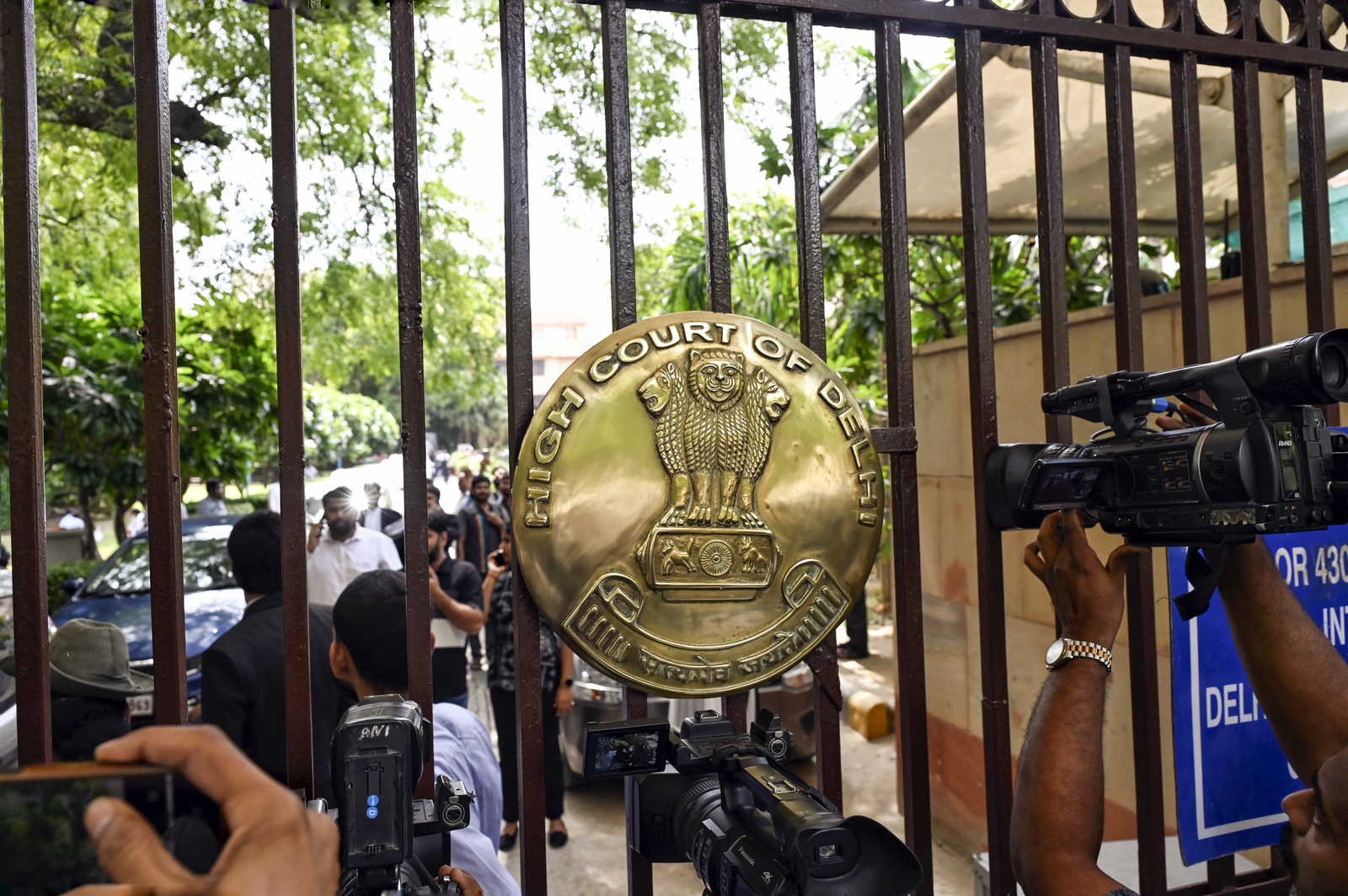
The Delhi High Court on Thursday issued notice to the Centre and the Directorate of Enforcement on a plea seeking changes to provisions of the Prevention of Money Laundering Act related to property attachment. A bench of Chief Justice Devendra Kumar Upadhyaya and Justice Tejas Karia directed both authorities to file their replies within four weeks.
Court issues notice, seeks reply in four weeks
The plea has been filed by Sachin Dev Duggal, a UK-based entrepreneur linked to an ED probe involving the Videocon Group. Duggal has sought a reading down of key provisions under Section 5 of the PMLA and has also challenged the attachment of his residential property. The court noted that the petition does not challenge the constitutional validity of the law but seeks a limited interpretation of certain provisions. The matter will next be heard on July 22.
Also Read | Delhi court orders takedown of reports linking Sandesara family to Sterling Biotech case
ED cites Supreme Court ruling, petitioner seeks clarity
Appearing for the ED, Advocate Zoheb Hossain raised a preliminary objection on the maintainability of the plea. He argued that the Supreme Court has already upheld the constitutional validity of Section 5 of the PMLA in the Vijay Madanlal Choudhary case. However, Senior Advocate Vivek Chaudhari, representing the petitioner, said that reading down a provision is still possible even if its constitutional validity has been upheld. The plea seeks several directions from the court. It argues that the “reason to believe” required for property attachment must be based on admissible evidence and not mere suspicion. It also states that such reasons must be recorded in writing and should be open to judicial review.
Also Read | Delhi HC pulls up Rana Ayyub over past tweets, calls them ‘derogatory and communal’
Further, the petition contends that the powers of officers under Section 5 should not allow the arbitrary selection of material or attachment of properties of equivalent value. It also raises concerns over the structure of the adjudicating authority. The case is expected to clarify how enforcement agencies exercise their powers under the PMLA while balancing legal safeguards.