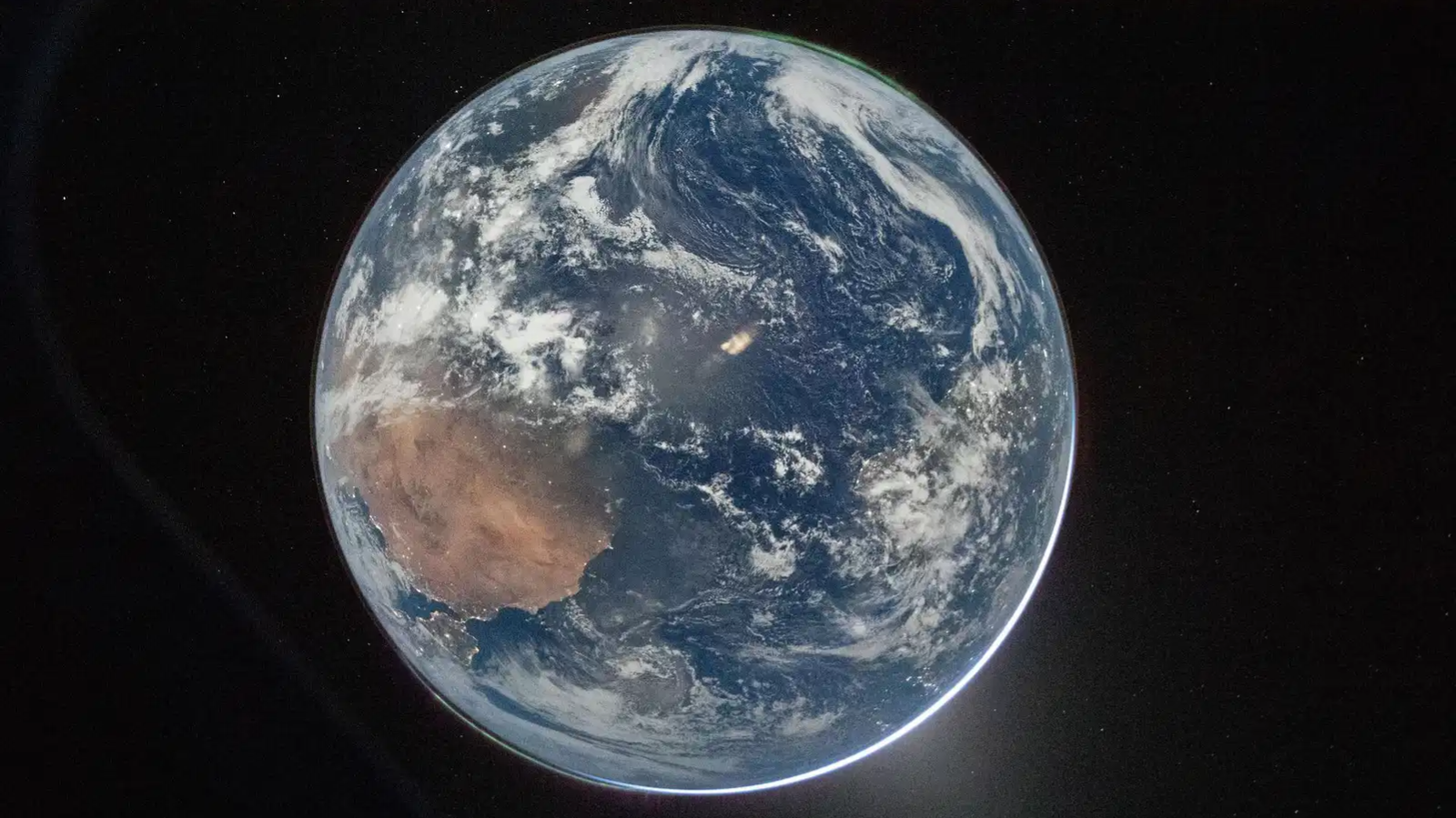
With pictures taken by Artemis II becoming popular online, a question that often comes up is: if space junk is such a problem, why isn't any of it seen in the photos?
According to experts, the explanation involves physics, scale and probability. Over the years, space agencies like NASA have frequently sounded alarms about the amount of junk floating in space. These include dead satellites, remnants from previous flights, and particles resulting from collisions.
Often discussed is the Kessler syndrome, which describes how the collision of space debris leads to increased danger of more collisions. Despite there being millions of pieces of debris orbiting the earth, most of them are unseen by cameras.
Also Read | India automobiles sales hit record high in FY26 as GST 2.0 drives late surge
Why cameras can’t capture it
This brings us to the first reason, which is related to the size and velocity of the particles. Many space particles have a relatively small diameter compared to the size of a satellite or spacecraft. Moreover, space debris moves at incredible speeds, often reaching 17,000 miles per hour.
In this case, taking a photo will require perfect conditions, and even if you manage to take a picture, there is a high probability that a particle will not be visible.
There is also an issue of location. It should be noted that space has no borders, which means that the distance between objects can be quite large, making it unlikely for debris to fall into the field of vision of a camera.
Location matters
Most orbital debris is concentrated in low Earth orbit, far below the trajectory of missions like Artemis II once they move beyond initial launch phases.
During critical stages of flight, astronauts are focused on operations rather than photography. By the time the spacecraft reaches higher altitudes or lunar pathways, the density of debris drops significantly.
Safety remains a priority
Even though debris may not be seen in these pictures, they have been carefully watched. Tracking systems will help space organizations find potential hazards and alter their course if necessary.
Also Read | China supercomputing data breach: What we know so far
Moreover, space structures such as the International Space Station are built to endure collisions with small fragments. However, a high risk of collisions between spacecraft and space debris still exists in the future, which worries experts.
To conclude, lack of space debris on pictures of Artemis II proves nothing; on the contrary, debris in space can be very difficult to observe visually.