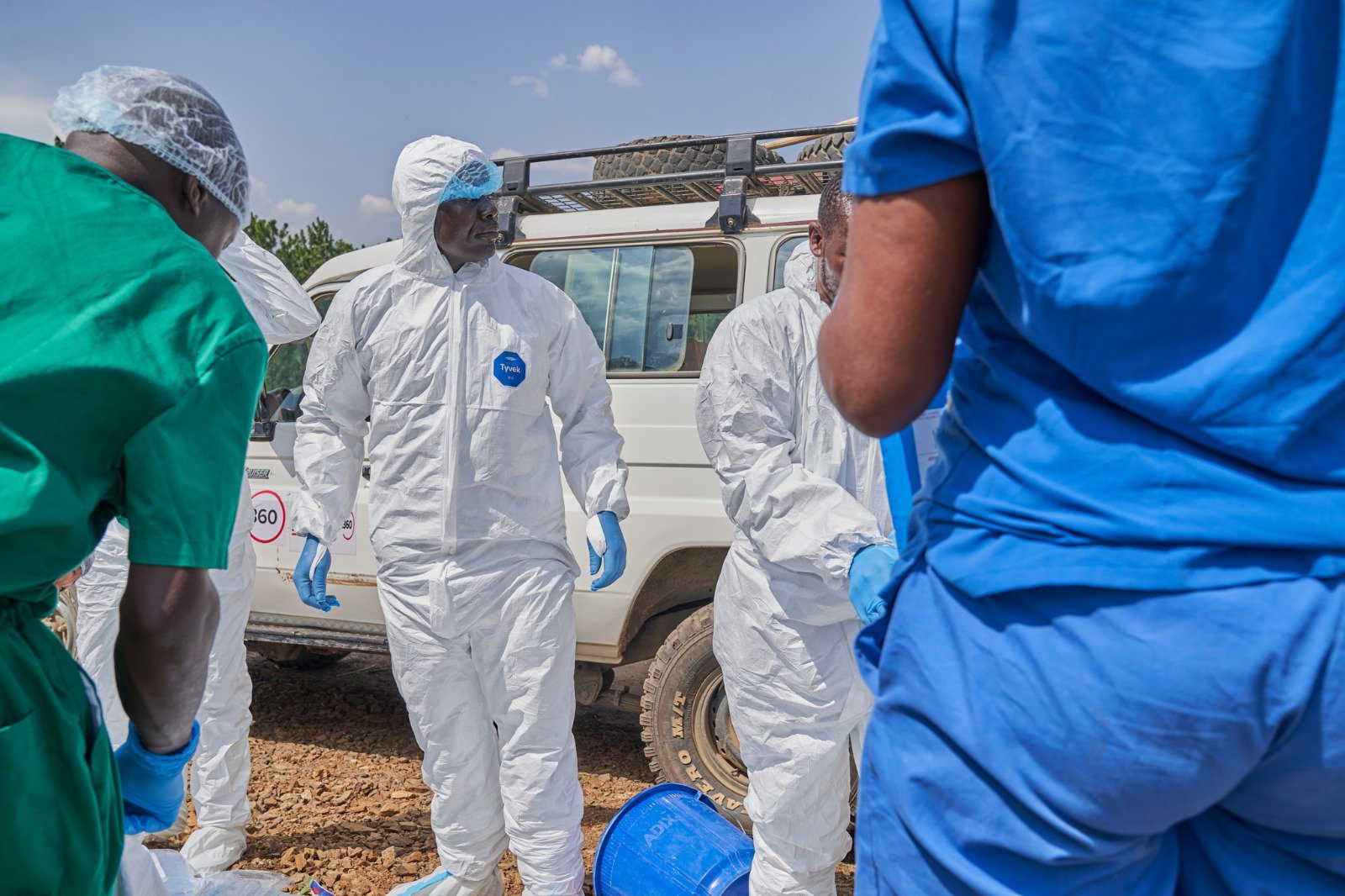
France has recorded its first confirmed Ebola case linked to the current outbreak after a doctor who recently returned from a humanitarian mission in the Democratic Republic of Congo tested positive, the French health ministry said on Wednesday.
The patient has been placed in isolation and is being treated at a specialist facility, while health authorities move to identify and monitor anyone who may have been exposed.
Reuters reported that this is France’s first confirmed case tied to the outbreak, and the health ministry said the risk to the wider European population was low.
Also Read | IAEA chief says Iran nuclear inspections will happen soon, Tehran disagrees
🇫🇷🇨🇬🦠 Ebola has reached France.
— Mario Nawfal (@MarioNawfal) June 24, 2026
The country confirmed its first case tied to the Congo outbreak after a doctor who returned from a humanitarian mission tested positive and is being isolated.
Officials maintain the risk to the wider public in Europe remains low.
Source: Sky… pic.twitter.com/9GIJLc7a2o
France moves swiftly after diagnosis
The ministry said the healthcare worker had been operating in an area where the virus was circulating.
It also said all precautionary measures were taken immediately after arrival in France, including secure transfer to hospital and isolation to limit any chance of spread.
In the ministry’s words, “All precautionary measures, including the patient’s isolation, were taken upon his arrival in the country, with transfer to the hospital under secure conditions to prevent any risk of contamination.” French authorities are now tracing contacts, who have been told to isolate for 21 days.
The confirmation of an #Ebola case in France can understandably attract attention, but the risk to the wider public remains low.
— Hans Kluge (@hans_kluge) June 24, 2026
Over the past 50 years, only a limited number of Ebola cases have been detected outside Africa. Well-developed and accessible health services,… pic.twitter.com/KbiFIAa6zE
WHO urges calm as outbreak remains under watch
The World Health Organization (WHO) also sought to calm fears around the case. Tedros Adhanom Ghebreyesus said there was no need for panic and told reporters that “they shouldn’t overreact,” while stressing that the risk to the rest of the world remains low.
Tedros noted fewer than 30 Ebola cases had been detected outside Africa in the past 50 years.
The outbreak that sent the doctor back to France is centered in Ituri province in northeastern Congo. The virus involved is the rare Bundibugyo strain.
As of 21 June, the DRC health ministry had recorded 1,048 confirmed cases, 267 deaths, and 112 recoveries, while neighboring Uganda had reported 20 cases and two deaths. The WHO declared the outbreak on 15 May and then declared a public health emergency of international concern two days later.
Contact tracing takes centre stage
Officials and health agencies have said the case in France is being managed under strict biosafety protocols, with the patient remaining in a stable condition. The focus now is on contact tracing and preventing any secondary transmission while Congo continues to battle the larger outbreak in its east.
Experts believe the virus may have been circulating for months before it was officially declared and that early cases were identified in urban areas and displacement camps.
Also Read | Asim Munir assassination plot claim sparks buzz, Pakistani journalist calls it 'utter nonsense'
FAQs
Q1: What is Ebola and how does it spread?
Ans: Ebola is a severe viral disease that spreads through direct contact with the bodily fluids of an infected person or contaminated materials.
Q2: Is the Ebola case in France a risk to the general public?
Ans: French health authorities and the WHO have said the risk to the wider public remains low due to isolation and contact-tracing measures.