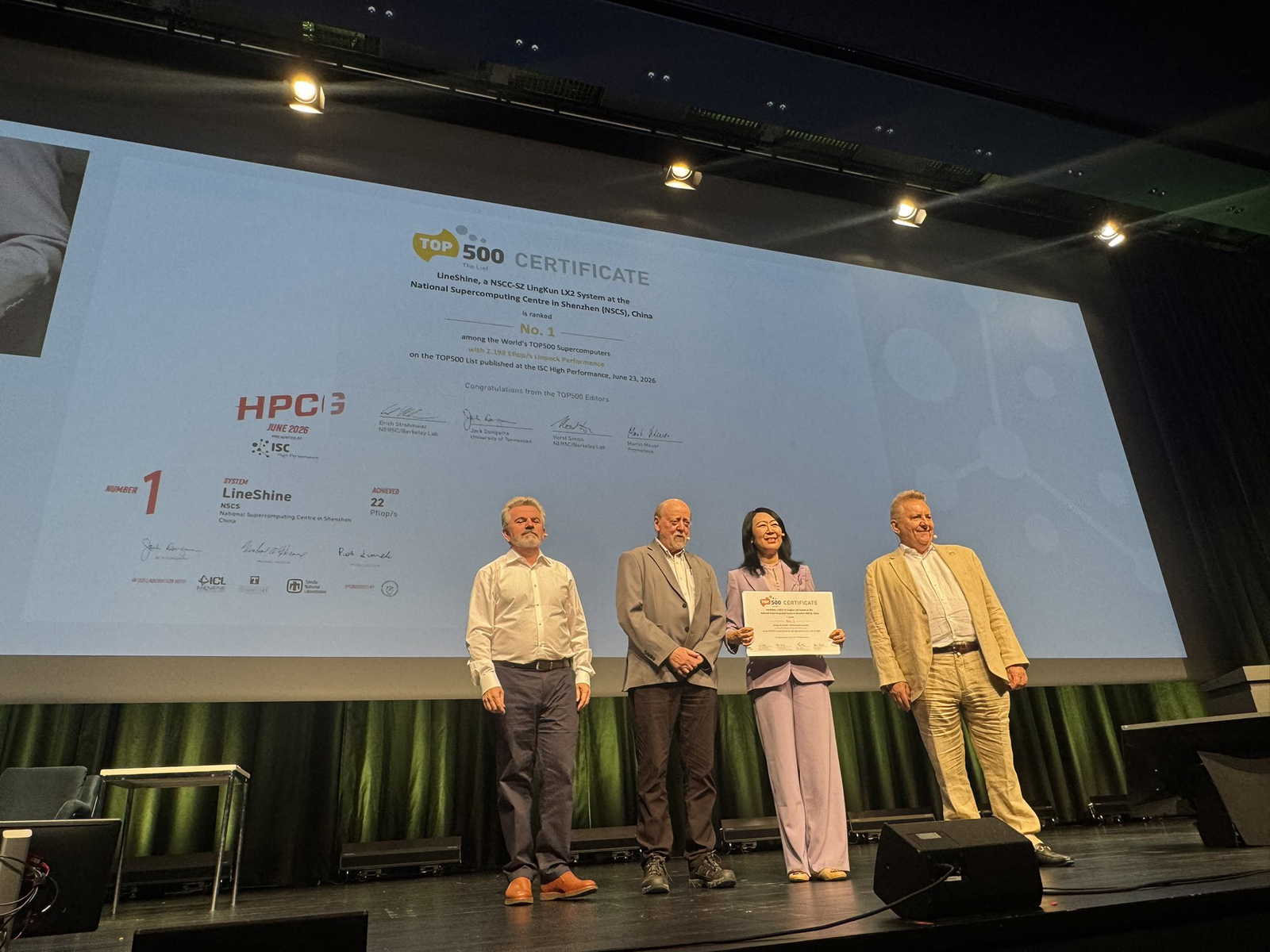
After nine years of American dominance, China has once again claimed the title of building the world’s fastest supercomputer. The newly crowned LineShine system, located at the National Supercomputing Center in Shenzhen, has surpassed the United States' El Capitan to become the most powerful publicly ranked machine on Earth.
What makes the achievement particularly noteworthy is that China managed it without relying on a single graphics processing unit (GPU) from companies such as Nvidia, AMD or Intel, which have traditionally powered modern supercomputers.
The development arrives at a time when Washington has tightened export restrictions on advanced semiconductor technologies, aiming to slow Beijing's progress in artificial intelligence and high-performance computing.
A homegrown machine breaks America’s winning streak
According to the latest TOP500 rankings, LineShine achieved a computing performance of 2.198 exaflops, allowing it to perform more than two quintillion calculations every second.
The machine overtook El Capitan, which has held the top spot since November 2024 and is operated by the Lawrence Livermore National Laboratory in California.
China last topped the rankings in 2017 before the United States established a lengthy period of dominance in the sector.
LineShine reportedly houses nearly 14 million computing cores distributed across 90 cabinets and consumes around 42.2 megawatts of electricity.
The system runs on LX2 processors developed domestically using Arm-based architecture and operates on KylinOS, a Chinese Linux-based operating system.
Also Read | 'These are bullshit numbers': What made Trump erupt during a meeting on India tariffs?
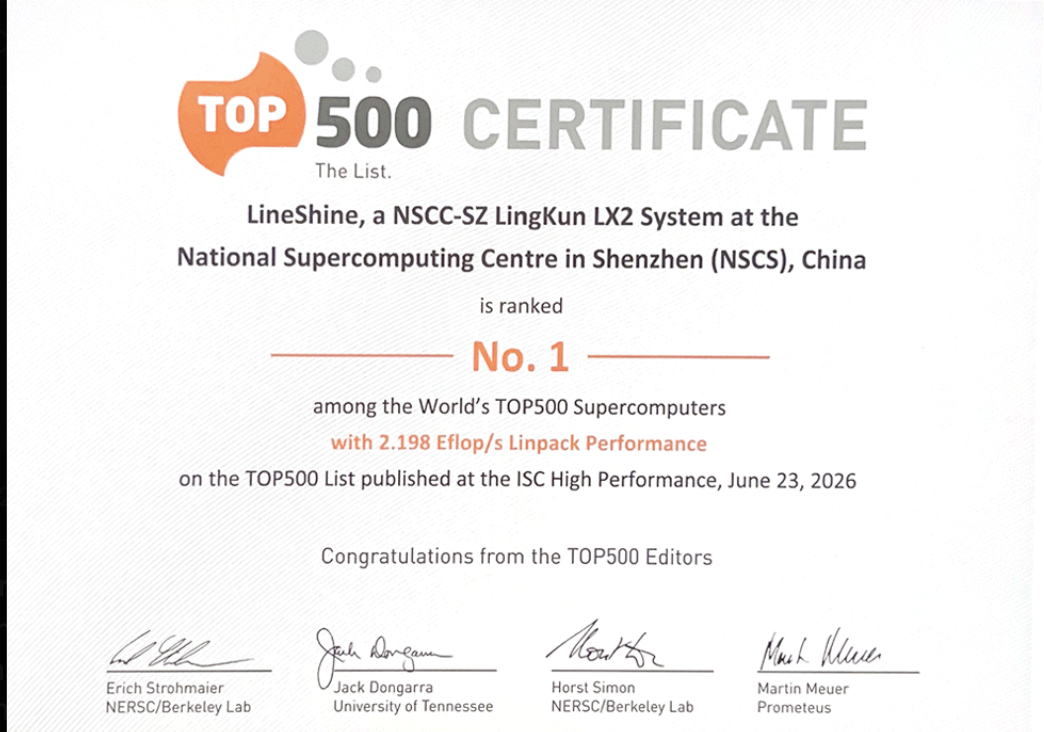 LineShine achieved a computing performance of 2.198 exaflops. (Top500)
 China finds a workaround to US chip restrictions
According to The Times of India, perhaps the biggest takeaway from the achievement is China's decision to abandon dependence on foreign GPUs.
Most of today's leading supercomputers use GPUs because they excel at handling parallel workloads, particularly artificial intelligence calculations. Instead, China designed specialised CPU processors capable of performing many of those tasks independently.
Experts believe the achievement sends a strong message to Washington that export restrictions may not be enough to halt China's technological ambitions.
China had also stopped submitting systems to the TOP500 list in 2023 amid increasing geopolitical tensions. Its decision to submit LineShine this year appears deliberate and symbolic.
The machine's developers have also reportedly entered 14 projects into the prestigious Gordon Bell Prize competition.
Also Read | Want US citizenship? It could soon cost a lot more
The AI race is still far from settled
According to The Times of India, despite reclaiming the supercomputing crown, analysts caution against equating the achievement with overall dominance in artificial intelligence.
LineShine reportedly ranked only fourth in AI-focused benchmarks designed to simulate modern AI workloads.
Moreover, several massive AI systems operated by American technology giants such as Microsoft, Amazon, Google and Elon Musk's xAI are not publicly listed in TOP500 rankings.
Some experts argue that these private systems could already surpass both LineShine and El Capitan in real-world AI capabilities.
Still, China's latest success demonstrates that the global technology race is entering a new phase. Rather than depending on imported hardware, Beijing is increasingly building alternative pathways to compete directly with the United States in one of the world's most strategically important sectors.