Jadavpur University on Friday unveiled a prototype retrofitted electric Ambassador taxi developed under a research initiative aimed at making India's transition to electric mobility more affordable and sustainable.
The project, titled “Digital Twin Development to Study Feasibility of Retrofitted E-Mobility and Technical Requirements for its Sustainability”, is being carried out in collaboration with Damodar Valley Corporation (DVC) and is funded through the corporation’s research and development programme aligned with its Sustainable Development Goals.
The initiative seeks to address one of the biggest challenges facing electric vehicle adoption in India — the need to scrap existing internal combustion engine (ICE) vehicles despite their remaining utility and limited salvage value.
According to the university, the project focuses on converting existing vehicles into electric vehicles through retrofitting rather than replacing them entirely with new EVs.
Also Read | Delhi University allows students missing Eid-ul-Zuha exams to appear after July 4
Ambassador taxi chosen as first prototype
The project is being led by Prof. Amitava Gupta, former Head of the Department of Power Engineering, as Principal Investigator, along with faculty members Dr. Bhimsen Tudu and Dr. Nirmalendu Biswas.
As part of the first phase, researchers selected an Ambassador 1.5DZ yellow taxi as the demonstration vehicle and developed a fully operational prototype.
The retrofitted vehicle replaces the conventional engine and fuel system with an electric motor, controller and intelligent interface while retaining much of the vehicle’s existing transmission architecture.
Researchers said the approach differs significantly from conventional EV conversions, which typically require replacing the entire transmission system, making retrofitting expensive and less viable for large-scale adoption.
The team developed a new transmission and control strategy that combines an automatic gear-shift mechanism with motor control systems to improve efficiency and reduce conversion costs.
Focus on affordability and sustainability
According to project officials, initial testing of the prototype has yielded encouraging results. The vehicle is capable of accelerating from 0 to 60 kmph in approximately three seconds and includes integrated sensor systems that can be connected to Internet of Things (IoT) platforms for future optimisation and performance monitoring.
Researchers estimate that the vehicle will offer a single-charge driving range of around 200 kilometres under city driving conditions.
The prototype also features air conditioning and has been designed around a swappable battery model. Battery modules have been configured to account for waterlogging conditions commonly experienced in Kolkata and several other Indian cities.
Project officials said operating costs are expected to be comparable with electric vehicles in a similar category.
Industry-academia collaboration
The prototype was developed in partnership with Kolkata-based MSME firm P2G Mobility, which worked under the technical guidance of university researchers and faculty members.
The project also involves doctoral researchers, AICTE fellows and engineering students, providing hands-on exposure to live industrial research and product development.
Also Read | VIT counselling 2026 live updates: Phase 3 process begins for engineering aspirants
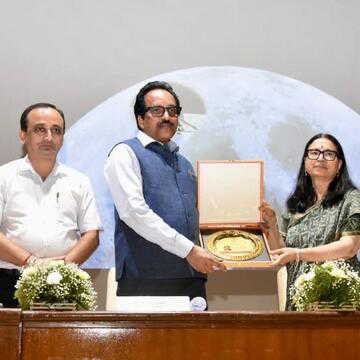
The vehicle was formally unveiled by DVC Chairman Suresh Kumar, IAS, in the presence of Jadavpur University Vice-Chancellor Prof. Chiranjib Bhattacharjee and other dignitaries on May 29.
The prototype will now undergo additional testing, performance analysis and regulatory evaluation before being considered for commercial deployment.
University officials said the long-term goal is to create a scalable model that could help modernise existing vehicle fleets while reducing the financial and environmental costs associated with scrapping functioning vehicles during India's transition to electric mobility.