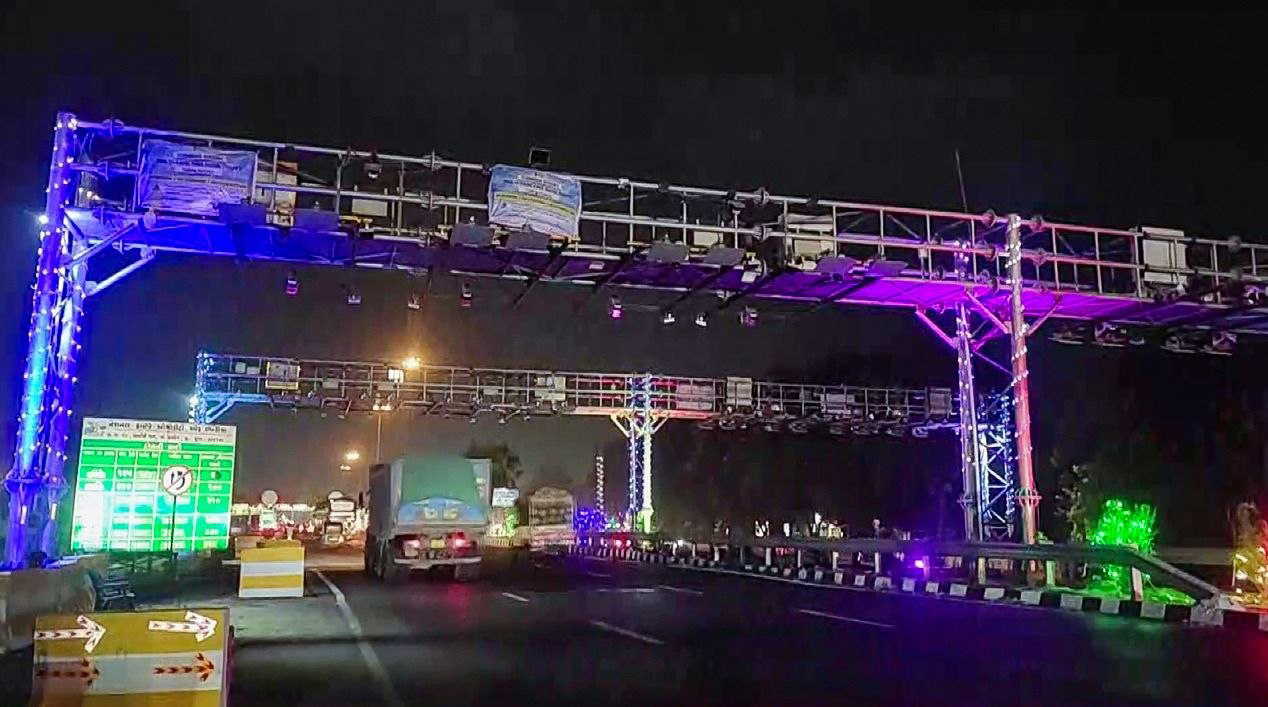
India’s new barrierless tolling system has started showing positive results, with authorities recovering nearly Rs 30 lakh after around half of the users who received e-notices cleared their pending toll dues. The recovery comes shortly after the rollout of the Multi-Lane Free Flow (MLFF) tolling system on National Highway (NH) 48 in Gujarat.
What is barrierless tolling
The MLFF system allows vehicles to pass through toll points without stopping at toll plazas. Cameras and FASTag scanners automatically identify vehicles and deduct toll charges electronically while vehicles continue moving at regular highway speeds.
The system was first introduced at the Choryasi toll plaza on the Surat-Bharuch stretch of NH-48 in Gujarat as part of India’s move toward a fully digital toll collection system.
Also Read | From MGNREGA to VB-G RAM G: Centre announces major rural jobs overhaul from July 1
Rs 30 lakh recovered through e-notices
According to reports from The Times of India, the National Highways Authority of India (NHAI) says nearly 50 per cent of highway users who received electronic notices for unpaid tolls have already cleared their dues. The recovered amount has reportedly reached around Rs 30 lakh.
According to the reports of The Times Of India, officials said the development challenges the assumption that most users would avoid toll payments once physical barriers are removed. Authorities believe the response indicates growing acceptance of digital toll collection systems among commuters.
How unpaid toll penalties work
Under the new rules, if FASTag payments fail or remain unpaid while crossing a barrierless toll point, users receive an electronic notice linked to their vehicle registration details. If the toll amount is paid within 72 hours, only the original fee is charged.
However, if payment is delayed beyond 72 hours, the payable amount becomes double the original toll fee. Authorities have introduced these rules to improve compliance as India expands the barrier-free tolling system nationwide.
India preparing nation wide rollout
The government plans to gradually expand the MLFF system across national highways by the end of 2026. Union road transport minister Nitin Gadkari has earlier said the new system is expected to reduce congestion, lower fuel wastage and improve toll collection efficiency.
Also Read | No more multiple apps: Government plans UPI-like system for EV charging stations
Officials also said unpaid toll dues may affect vehicle-related services in the future, including transfer approvals, permits and fitness certificate renewals, as stricter compliance measures are introduced.