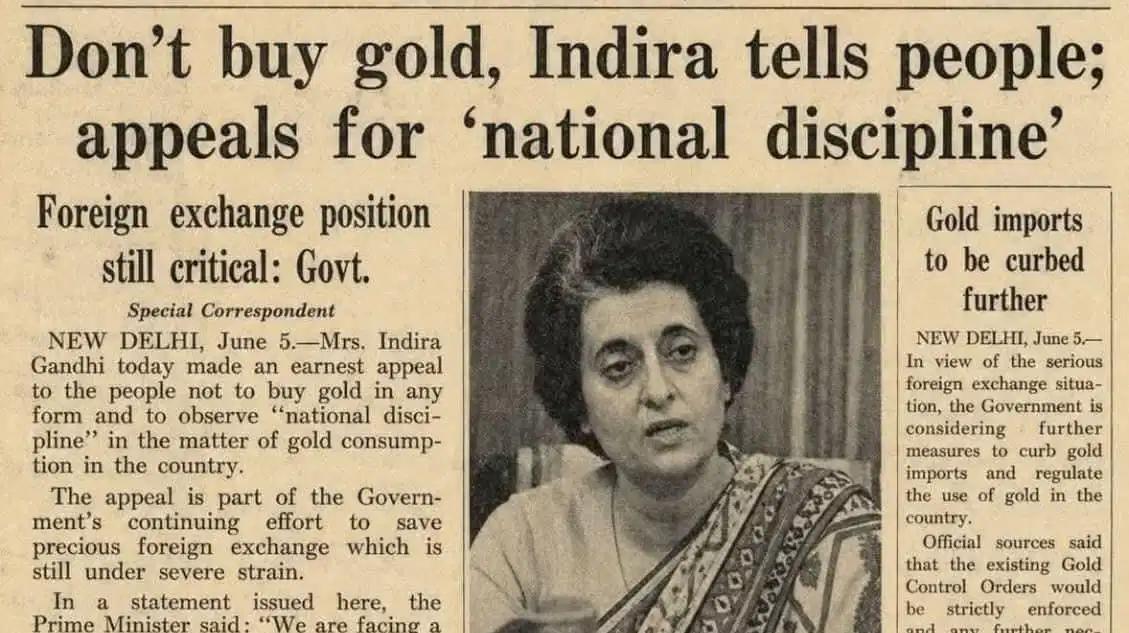
A recent social media post alleging that India’s former Prime Minister Indira Gandhi once called on her countrymen not to buy gold amid the 1967 economic turmoil has stirred yet another political controversy following a denial by The Hindu over the legitimacy of the newspaper clipping.
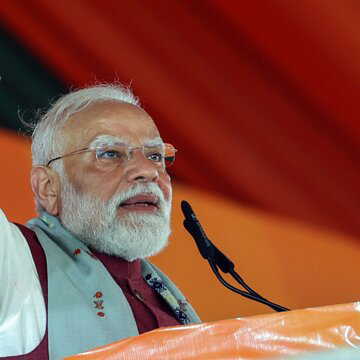
The issue arose several days ago when Prime Minister Narendra Modi made an appeal to his fellow Indians asking them not to spend unnecessarily, especially on gold imports, against the backdrop of the country’s foreign exchange troubles due to rising global commodity costs amid unrest in the West Asian region.
Following the appeal by Modi, people have been circulating an image of the June 6, 1967 edition of The Hindu that shows the headline "Don’t buy gold, Indira tells people; appeals for national discipline." However, the newspaper has now officially stated that the image is digitally altered.
Also Read | Gold jewellery purity explained: What 916, 750 and 999 actually stand for
The Hindu rejects authenticity of viral 1967 front page
In a clarification issued publicly, The Hindu said the image circulating online was not part of its archival records.
“A digitally altered image purporting to be a front page of The Hindu from June 6, 1967, is currently circulating on social media. We wish to clarify that this is not an authentic page from our archives,” the newspaper said.
The publication also urged readers to verify claims before sharing them online.
The clarification has reignited questions over whether Indira Gandhi had ever publicly made such an appeal during India’s foreign exchange crisis in the late 1960s.
While India did face severe economic pressures during that period, including forex shortages, import controls and strict gold regulations, no verified archival evidence supporting the specific viral headline has emerged so far.
Political sparring intensifies over Modi’s gold appeal
The issue quickly entered the political arena after BJP leader R. Ashoka referenced the alleged 1967 appeal while defending Prime Minister Modi’s recent comments.
In a post on X, Ashoka argued that similar economic appeals had previously been framed differently under Congress governments.
“When Smt. Indira Gandhi asked Indians to avoid buying gold in 1967, it was called ‘national discipline’,” Ashoka wrote, while also referring to former Finance Minister P. Chidambaram and his past comments discouraging excessive gold purchases.
Congress party’s memory works in mysterious ways!
— R. Ashoka (@RAshokaBJP) May 12, 2026
When Smt. Indira Gandhi asked Indians to avoid buying gold in 1967, it was called “national discipline.”
When Shri P. Chidambaram repeatedly begged people in 2013 to “resist the temptation to buy gold,” it was called “economic… pic.twitter.com/pdxIt3qUjO
Ashoka further claimed that criticism of Modi’s appeal reflected political double standards rather than disagreement over policy. The Congress party, meanwhile, attacked the government over the remarks, arguing that appeals urging citizens to cut spending pointed to economic stress.
Congress leader Rahul Gandhi criticised the Prime Minister in a post on X, saying such suggestions reflected economic weakness.
“These aren't sermons — they're proof of failure,” Rahul Gandhi wrote while referring to appeals related to gold purchases, fuel consumption and foreign travel.
Gold imports back in focus amid forex concerns
The issue is unfolding against the backdrop of gold imports and foreign exchange reserves being important economic issues once again in the country. India continues to be one of the largest consumers of gold, importing almost all of its requirements domestically. This translates into large capital outflows from the country.
Also Read | India identifies 100 products for domestic manufacturing push as ‘Made in India’ label nears launch
While economists have maintained that it is a trend among governments to dissuade countries from importing non-essential goods like gold during times of uncertainty in the international environment or high oil prices.
The latest controversy, however, has shifted attention from economic policy to political narratives and misinformation circulating on social media.