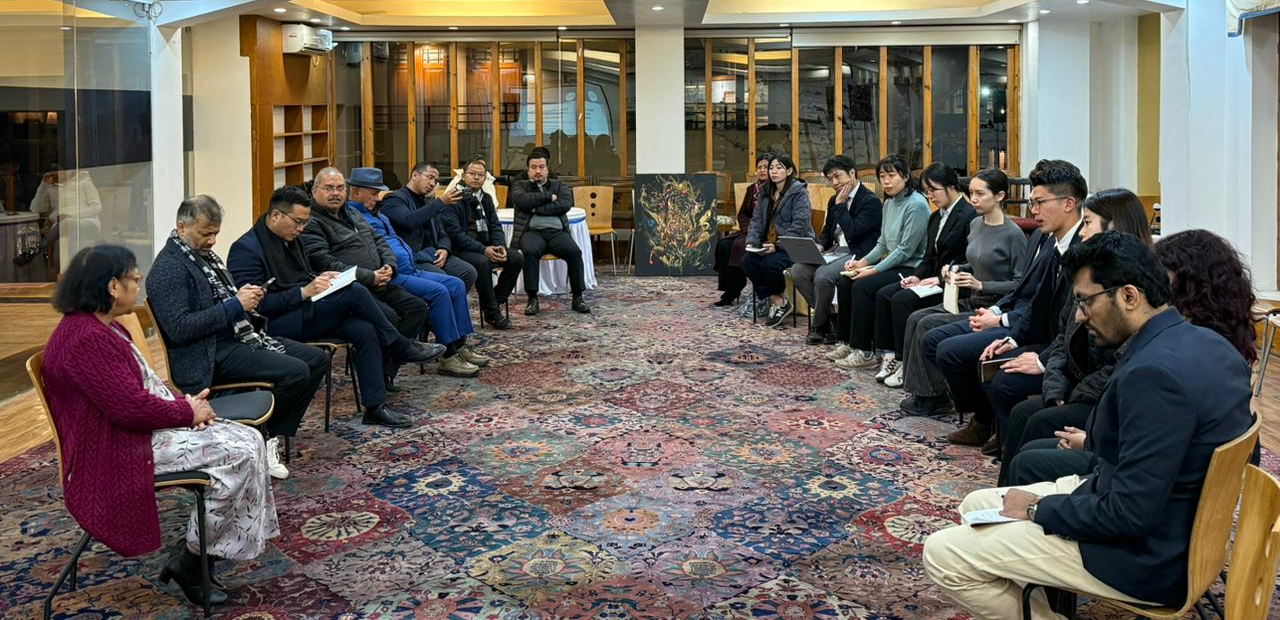
Just last week, a delegation of Japanese students and academics from leading universities visited Shillong as a part of an academic exchange program organised by the Sasakawa Peace Foundation (SPF). The event was hosted at the Asian Confluence Centre for Bay of Bengal Studies, where the discussions focused on the relationship between India and Japan and the growing influence of Northeast India on regional cooperation.
The visit began with a photo exhibition that showcased the Bay of Bengal region and Northeast India, ranging from cultural and social aspects to strategic ones. The photographs served as a background for the subsequent discussions, emphasising the diversity of the region and its links with the surrounding countries.
Focus on regional relevance
An interactive session explored contemporary India–Japan relations, with speakers emphasising why Northeast India is becoming increasingly important in strategic and development discourse. The session emphasised how the geography and connectivity of the region make it important for South and Southeast Asia, rather than simply being a local success story.
Also Read | From childhood play to Padma Shri: Hally War, the Meghalaya man behind the world’s living root bridges
Northeast's demography and youth opportunities
One of the most important strands of the discussion was the challenge of Japan’s ageing population and how this might present an opportunity for young people from Northeast India. The peers reviewed opportunities in education, skills, and employment, as well as mobility arrangements that might be mutually beneficial. They highlighted the increasing number of Japanese language schools in the region, emphasising their importance for academic exchange and easier entry into the labour market.
Broader social questions
The session continued to explore connectivity, youth exchange, and regional issues such as identity, land, and livelihoods. All of this was presented in such a way as to ensure that greater international engagement is consistent with regional priorities and social realities.
The session featured speakers from different professional backgrounds, including Sabyasachi Dutta, Executive Director of Asian Confluence; Patricia Mukhim, Editor of The Shillong Times; Ambassador Riewad Warjri, Honorary Fellow at Asian Confluence; and Binayak Dutta, Senior Fellow at the institution. The panellists directly interacted with the visiting students, responding to their queries on policy, media, and development in the region.
Also Read | Budget 2026 unveils plan for 7 high-speed rail corridors connecting major cities
Participants emphasised that it is important to develop more educational, cultural, and youth-related initiatives between India and Japan, with Northeast India set to take a more active role in such initiatives.