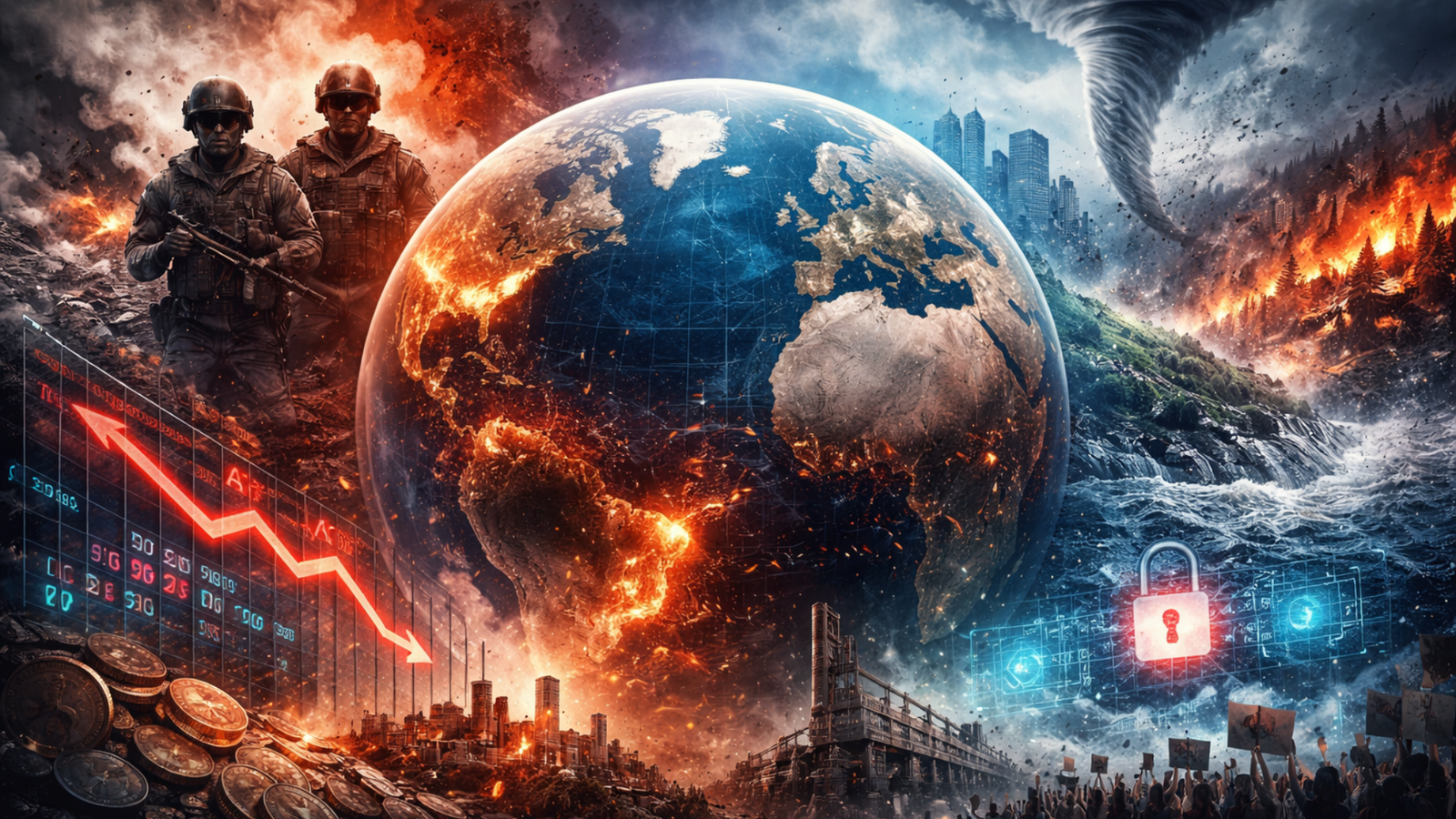
As global uncertainty deepens, the World Economic Forum recognises the increasing feeling of instability in the realms of politics, economics, the environment, and technology. The Global Risks Report 2026, released in January 14, paints a serious picture of the challenges that are likely to emerge in the coming year, the next couple of years, and the coming decade.
Based on the Global Risks Perception Survey (GRPS), the outlook for the future remains generally negative. “GRPS respondents viewed both the short- and long-term global outlook negatively, with 50% of respondents anticipating either a turbulent or stormy outlook over the next two years, deteriorating to 57% of respondents over the next 10 years”, the report stated.
“A further 40% and 32%, respectively, view the global outlook as unsettled over the two- and 10-year time frames, with only 1% anticipating a calm outlook across each time horizon.”
The report describes a “global risk” as “the possibility of an event or condition that, if it occurs, would negatively impact a significant proportion of global GDP, population, or natural resources.”
What tops the risk list in 2026
According to the report, geoeconomic confrontation has surged in prominence, climbing two places among immediate risks and jumping eight positions in the short-term outlook, placing it among the most severe global threats by 2028.
Also Read | Millions follow them but are they real? Inside the viral mystery of Instagram twins who may not exist
The report lists the following as the top 10 immediate global risks for 2026, ranked by severity:
Geoeconomic confrontation
State-based armed conflict
Extreme weather events
Societal polarization
Misinformation and disinformation
Economic downturn
Erosion of human rights and/or civic freedoms
Adverse outcomes of artificial intelligence technologies
Cyber insecurity
Inequality
Economic downturns continue to feature among the top ten risks at the start of 2026, having moved up eight positions to rank 11th in the short-term outlook and 19th over the longer term. Near-term challenges, particularly in environmental and technological domains, are increasingly taking precedence over longer-term global priorities.
How risks evolve over time
Short-term outlook: 2026–2028
Looking two years ahead, geoeconomic conflict remains at the top of the list, while misinformation and disinformation move into second place. Societal polarisation, extreme weather, and armed conflict remain well-represented, indicating that the pressing risks of the near term will continue to be interwoven and persistent.
Environmental pressures, such as pollution and displacement-driven involuntary migration, break into the top ten, reflecting increasing humanitarian challenges.
Long-term risks shaping 2036
Looking ahead to the next ten years, the greatest risks are posed by environmental threats. The first three are extreme weather, loss of biodiversity, and large changes in Earth’s systems. Technology-driven risks remain important too, with misinformation and harmful outcomes from AI ranked fourth and fifth.
The report states it clearly that, while the short-term agenda may shift and change, the long-term risks to the environment and systemic threats continue to frame the most serious global challenges, with no expectation of a quiet decade ahead.