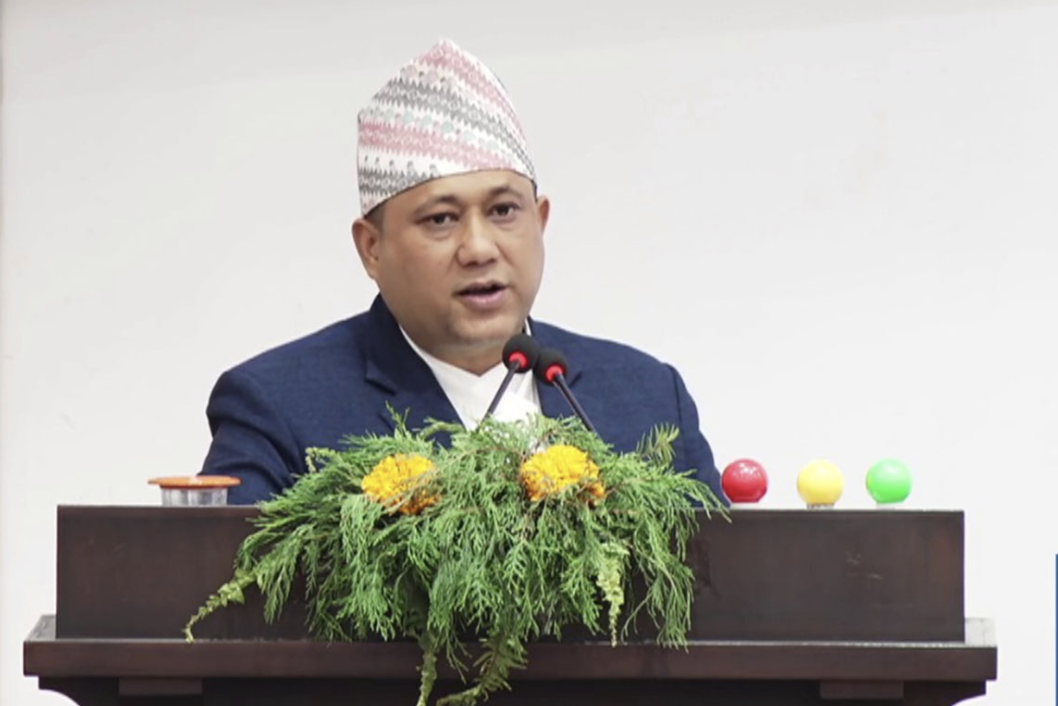
Nepal has firmly rejected the idea of involving any third party in resolving its long-running border disputes with India, with Foreign Minister Shishir Khanal clarifying in Parliament that Kathmandu remains committed to addressing all outstanding issues through direct bilateral dialogue.
The statement comes amid a political storm over remarks made by Prime Minister Balendra Shah on May 31, which were interpreted by critics as suggesting a role for external actors in discussions on the India-Nepal border. The comments sparked outrage among opposition parties and drew a swift response from India, prompting calls within Nepal for the Prime Minister's resignation.
Government seeks to clarify PM's remarks
According to ANI, addressing lawmakers on Wednesday, Nepal's Foreign Minister Shishir Khanal stressed that Nepal's position on the border issue has not changed. He said the boundary dispute is strictly a bilateral matter that should be resolved through diplomacy, negotiations and the examination of historical treaties, agreements and maps.
According to the minister, Prime Minister Balendra Shah's comments were not intended as a request for mediation by countries such as China or the United Kingdom. Instead, they referred to the possible use of historical records linked to the Sugauli Treaty as supplementary material that could assist ongoing technical studies.
Nepal's Foreign Minister Shishir Khanal said the Prime Minister's concerns were focused on issues such as encroachment in the Dashgaja no-man's land and instances of cross-border occupation, rather than any proposal to internationalise the dispute.
Also Read | Who is Meenakshi Natarajan? Rahul Gandhi aide whose Rajya Sabha nomination was rejected
Joint mechanisms continue border work
According to ANI, Nepal's Foreign Minister Shishir Khanal highlighted that several bilateral mechanisms are already functioning to address unresolved border matters between the two neighbours.
He noted that technical teams from both countries are engaged in mapping border areas, maintaining boundary pillars and collecting data on encroachments. The Nepal-India Boundary Working Group and other related bodies are also conducting surveys and verification exercises in disputed and sensitive locations.
Nepal's Foreign Minister Shishir Khanal said the technical process, which had remained stalled for a considerable period, has regained momentum and that more detailed findings would emerge as joint fieldwork progresses.
The minister emphasised that cooperation between the two countries remains active despite political disagreements surrounding the issue.
Also Read | Sushmita Dev quits TMC, resigns as Rajya Sabha MP amid growing turmoil in party
India reiterates bilateral approach
According to ANI, India had earlier responded to the controversy through the Ministry of External Affairs, reiterating that there is no role for any third party in boundary discussions with Nepal.
MEA spokesperson Randhir Jaiswal stated that nearly 98 per cent of the India-Nepal border has already been demarcated, with only a few segments remaining unresolved. He said both countries have established mechanisms to address issues arising from river shifts, cross-border occupation and encroachment in no-man's land areas.
The clarification from Kathmandu follows Khanal's recent visit to India and appears aimed at easing diplomatic concerns while also responding to mounting domestic political pressure.