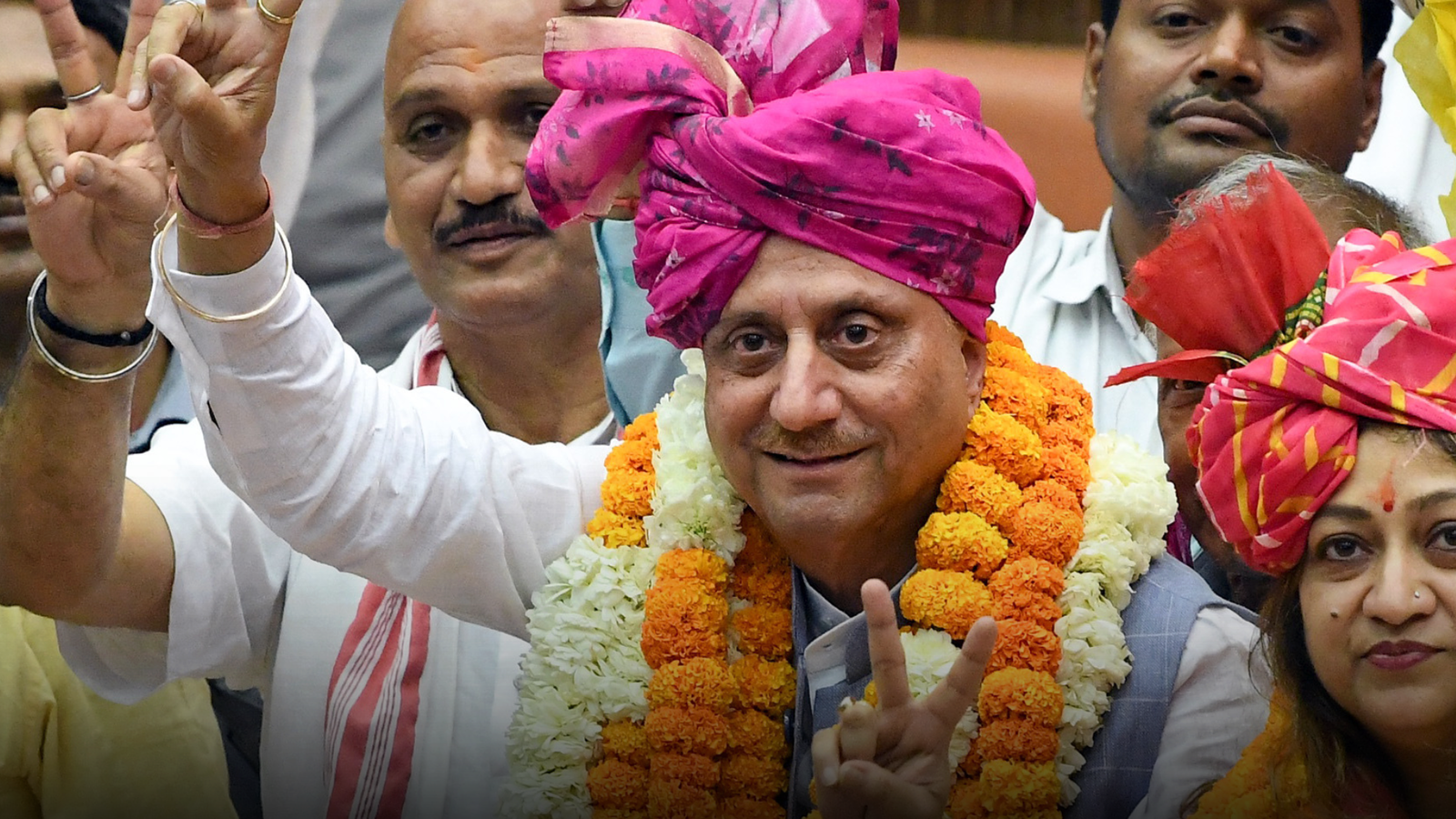
Bharatiya Janata Party candidate Pravesh Wahi was declared the new Mayor of Delhi by presiding officer Raja Iqbal Singh on April 29. The election took place in the Municipal Corporation of Delhi, where the BJP held a comfortable lead.
The electoral college consisted of 273 members, including councillors, MLAs and MPs. A candidate required 137 votes to win. BJP crossed this mark with around 156 votes, while Congress managed only 9 votes. The Aam Aadmi Party chose not to participate in the contest, effectively clearing the path for Wahi’s victory.
Who is Pravesh Wahi?
Pravesh Wahi comes from a family that migrated from Rawalpindi. He belongs to the Khatri Punjabi community and studied at an MCD primary school in Old Delhi. His early association with the Rashtriya Swayamsevak Sangh dates back to his teenage years, shaping much of his organisational journey.
Political journey and rise in BJP
Wahi’s political involvement began with grassroots roles. In 1990, he worked as an area representative for the Vishva Hindu Parishad. By 1998, he had risen to the position of district president.
He formally entered the BJP’s youth wing in 2002, joining the BJP Yuva Morcha. Over time, he took on several organisational responsibilities before stepping into electoral politics.
Wahi was first elected as a councillor from Rohini in 2007 and later represented Naharpur. He served another term from 2012 to 2017. His administrative roles included serving as chairman of the Rohini zonal committee between 2010 and 2012 and chairman of the standing committee in the erstwhile North Corporation from 2016 to 2017. Before becoming mayor, he was also the Leader of the House in the MCD.
Also Read | Before TV hype, exit polls were experiments: Here’s how they began
Vision for Delhi
On polling day, Wahi outlined his priorities for the city. "We aim to provide good facilities to the people of Delhi...We will work to clear the piles of garbage inherited from the legacy of previous governments and ensure a clean Delhi," he said.
However, his tenure will now be closely watched, especially on issues like sanitation, infrastructure and delivery of civic services in the capital.