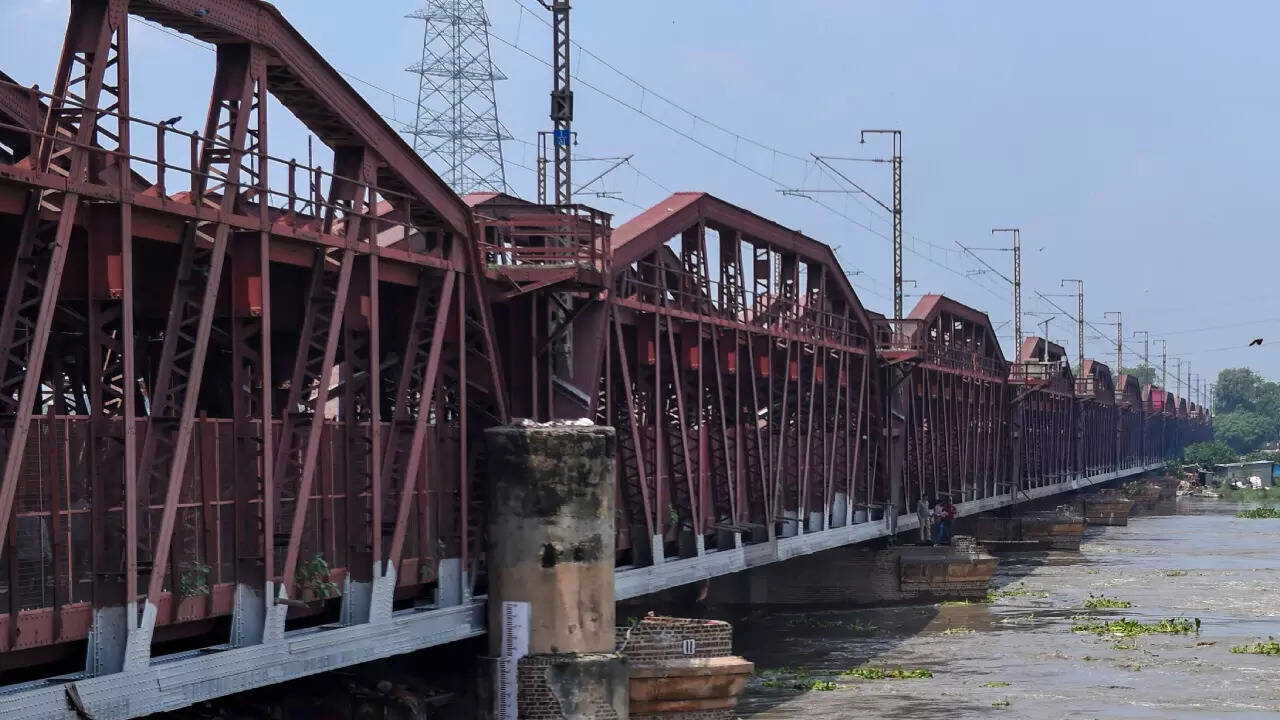
A newly constructed rail bridge alongside the Old Yamuna Bridge, popularly known as Loha Pul, is now ready for train operations in Delhi. The Commissioner of Railway Safety has completed the inspection, and approval has been given to begin the process of connecting the bridge to the existing railway network.
Modern bridge to replace ageing Loha Pul for trains
According to the Times of India, the new bridge is about 865 metres long and has been built at a cost of around ₹227 crore. It has been designed to handle modern train traffic without speed restrictions, unlike the old bridge, where trains are limited to around 30 kmph due to its age. Importantly, the new structure has been built at a higher level over the Yamuna, allowing train services to continue even during high flood conditions, which often disrupt movement on the older bridge.
Also Read | Delhi records wettest March in years as unusual weather grips capital, IMD explains why
Old bridge to remain for road use, rail traffic to shift
The existing Loha Pul, which dates back to the 19th century, has long exceeded its intended lifespan and has been under strain due to heavy traffic. It is a double-decker structure, with trains running on the upper level and vehicles using the lower deck. With the new bridge ready, rail traffic is expected to gradually shift away from the old structure. This will reduce pressure on Loha Pul and improve the overall efficiency of train movement in the capital.
Also Read | Commercial LPG crunch hits Delhi eateries, menus cut, and losses rise
Officials have said that while the new bridge will be used exclusively for trains, the old Loha Pul will continue to handle road traffic. This separation is expected to enhance safety and reduce delays caused by speed limits and ageing infrastructure. The development marks a major infrastructure upgrade for Delhi’s rail network, especially on the busy Delhi–Shahdara section. It is also expected to minimise disruptions during floods and improve the punctuality of trains passing through the route.