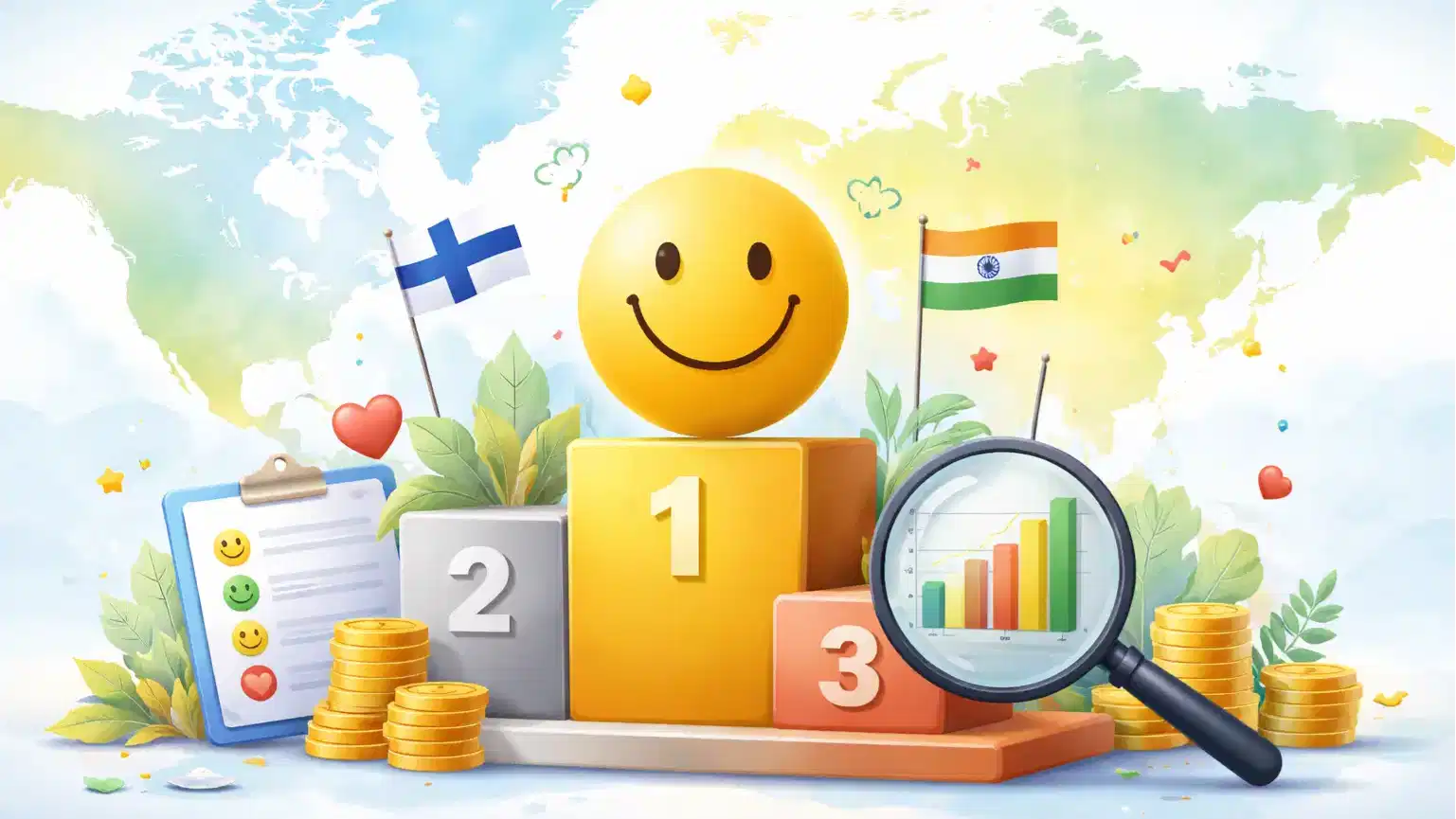
Finland has once again been named the happiest country in the world, holding on to the top spot for the 10th year in a row, according to the latest World Happiness Report. The annual rankings, published by the Wellbeing Research Centre at the University of Oxford, assess global happiness levels based on people's own evaluation of their lives.
Nordic countries dominate top rankings
Alongside Finland, several Nordic nations continue to feature prominently. Iceland, Denmark, Sweden and Norway all remain in the top 10, reflecting consistently high levels of wellbeing across the region. Costa Rica emerged as a notable entrant, climbing sharply to 4th place from 23rd in 2023.
Also Read | Love, luck, and peace affected? The impact of Saturn and Mars in enemy signs
Israel secured the 8th position with an average life evaluation score of 7.187, standing out despite ongoing regional tensions.
India trails behind neighbours
India is ranked 116th in the report, placing it behind Pakistan, which stands at 104th with a score of 4.868. Other neighbouring countries show mixed results, with Sri Lanka at 99th, Bangladesh at 127th, Nepal at 134th and Afghanistan at 147th.
India's average life evaluation score is 4.536. The country performs poorly on several indicators, including social support (123rd), inequality (92), and GDP per capita (89th). However, it fares relatively better in areas such as freedom (61st) and perceptions of corruption (64th).
How is happiness measured?
The report bases its rankings on a three-year average of people's self-assessed life evaluations, where individuals rate their lives on a scale from 0 to 10. The overall happiness score is calculated using six key indicators: GDP per capita, social support, healthy life expectancy, freedom, generosity, and perceptions of corruption.
Social media and youth wellbeing
A key finding of this year's report highlights the impact of social media on younger populations. It notes that heavy use of social media is linked to a decline in wellbeing among young people, particularly in countries such as the United States, Canada, Australia and New Zealand.
Also Read | Are at-home wellness services now becoming necessary support systems for men?
The report points out that extended time spent online is associated with higher levels of depression and stress, even though some regions, including parts of the Middle East and Africa, show positive links between social media use and wellbeing.