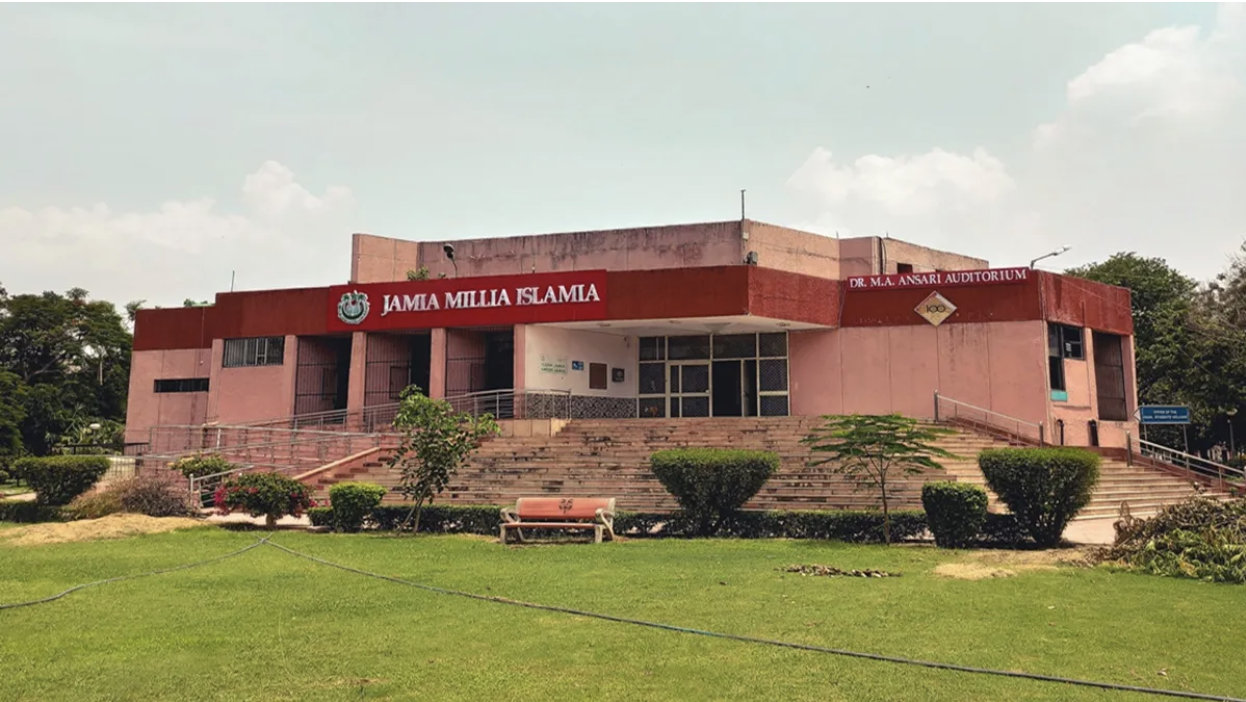
Tensions flared at Jamia Millia Islamia as nearly 70 students staged a protest against a campus event linked to the Rashtriya Swayamsevak Sangh marking its 100-year milestone. The demonstration unfolded outside the venue on Tuesday, with students raising slogans and questioning the university’s decision to allow the programme.
Students raise slogans, question intent
Protesters, many affiliated with Left-leaning student bodies like the Students’ Federation of India and the All India Students’ Association, gathered with placards criticising what they described as an attempt to influence campus space. Slogans such as “Inquilab Zindabad” echoed across the area, while posters accused organisers of pushing ideological agendas.
Some students alleged that amid the protest, organisers attempted to bring the event’s chief guest into the auditorium through alternate entry points, further intensifying tensions.
Event defended as academic discussion
The programme, part of the RSS-linked “Yuva Kumbh” initiative, had already drawn objections a day earlier from student groups, who termed it provocative. However, university authorities maintained that the event was academic in nature, focusing on themes like youth engagement, Indian knowledge systems and prospects.
Officials stated that the programme went through the same approval process as other campus events, which typically require endorsement from faculty members. They emphasised that multiple events are held daily, making it difficult to scrutinise each one beyond standard procedures.
Also Read | Delhi deer park to shrink—why are animals being moved out?
Debate over campus space and permissions
The protest has reignited a broader debate over access and fairness in university spaces. Students argued that while their own discussions often face restrictions, certain events receive easier approvals and better facilities.
Also Read | Who is Zaib Zuber Ansari? Mumbai stabbing accused wanted to join ISIS, say cops
University authorities rejected these claims, saying permissions are granted based on academic merit rather than political alignment. Despite that clarification, the episode reflects ongoing friction over ideology, freedom of expression and institutional neutrality within campus environments.