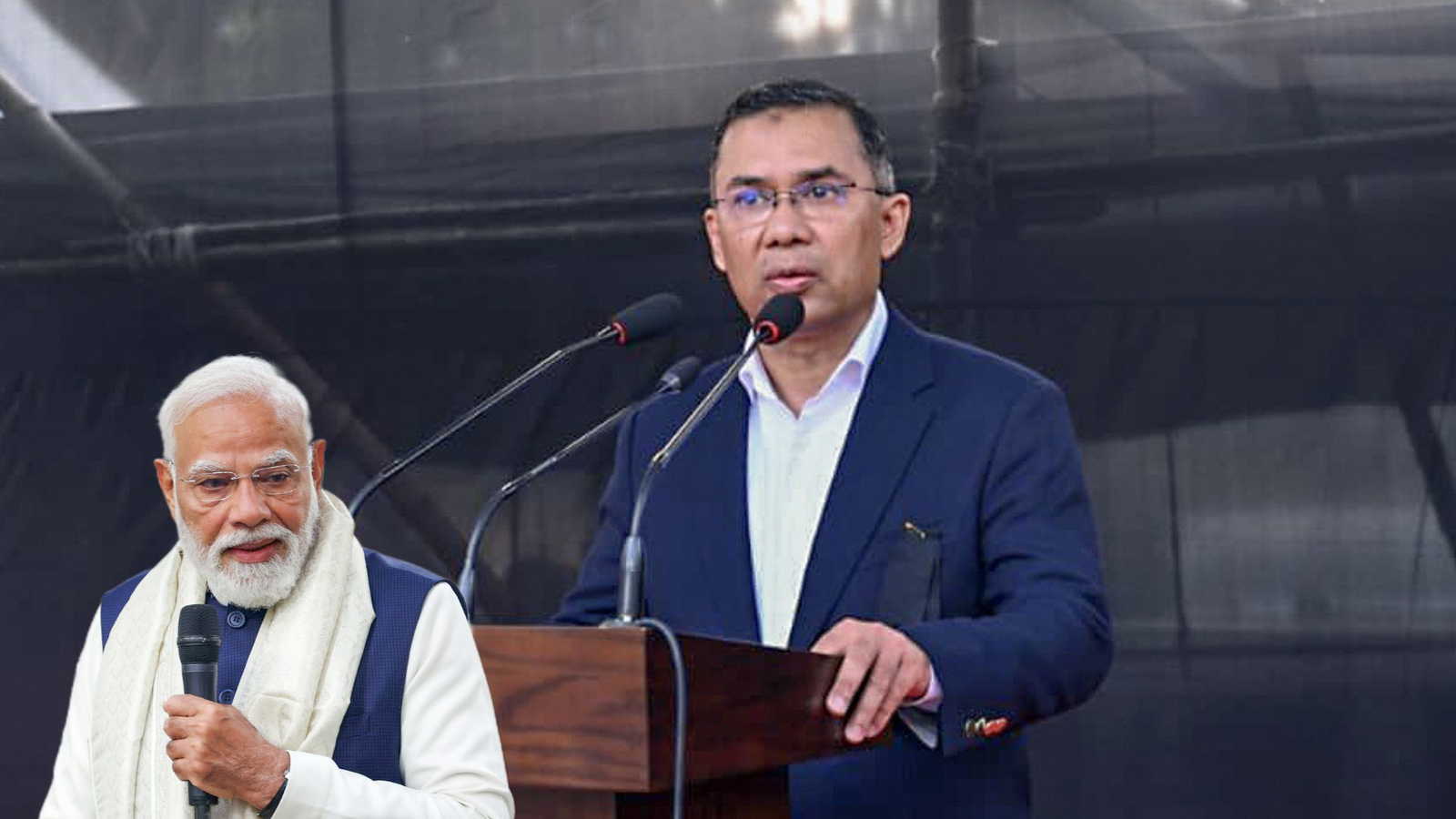
Prime Minister Narendra Modi on Thursday congratulated Tarique Rahman after the Bangladesh Nationalist Party (BNP) claimed a decisive victory in Bangladesh’s parliamentary elections, signalling New Delhi’s readiness to work with the incoming leadership in Dhaka.
In a post on X, Modi said he extended his “warm congratulations” to Rahman for leading the BNP to a decisive mandate, noting that the result reflected the confidence of the Bangladeshi electorate in his leadership. The prime minister added that India would continue to stand in support of “a democratic, progressive and inclusive Bangladesh.”
Also Read | Was AI-171 crash ‘intentional’? AAIB responds to Italian media report
“I look forward to working with you to strengthen our multifaceted relations and advance our common development goals,” Modi said.
I convey my warm congratulations to Mr. Tarique Rahman on leading BNP to a decisive victory in the Parliamentary elections in Bangladesh.
— Narendra Modi (@narendramodi) February 13, 2026
This victory shows the trust of the people of Bangladesh in your leadership.
India will continue to stand in support of a democratic,…
While final results are awaited, BNP leaders have said the party is on course to form the next government, with Rahman expected to assume the office of prime minister.
A diplomatic outreach after a strained phase
Further, the message from Modi is interpreted as an attempt at an early initiative to heal the relationship after a period of strain in India-Bangladesh relations. The engagement between the two countries had taken a hit under the interim government headed by Muhammad Yunus, amid concerns in New Delhi over border management and illegal migration.
India has also closely followed developments in Bangladesh since the exit of former prime minister Sheikh Hasina, who fled to India in August 2023 due to widespread student protests against her leadership. During her tenure, Bangladesh and India enjoyed cordial relations with regards to trade, connectivity, counterterrorism and water-sharing agreements.
The return of BNP to power, however, revives memories in India of its tenure between 2001 and 2006, a period New Delhi links with cross- border insurgency and incidents such as the 2004 Chittagong arms haul.
Also Read | Defence Acquisition Council clears Rs 3.6 lakh crore proposals, includes Rafale MRFA for IAF
BNP signals reset, India watches closely
Rahman has publicly spoken of a “reset” in relations with India and has pledged continued cooperation on counterterrorism, protection of minority communities, including Hindus, and progress on long-pending issues such as the Teesta water-sharing agreement. At the same time, his emphasis on a “Bangladesh First” doctrine has prompted questions about how closely Dhaka will align with New Delhi compared to the Hasina era.
For now, Modi’s outreach underlines India’s intent to engage the new dispensation early, even as policymakers remain cautious and attentive to how the BNP translates its pre-election assurances into governance.