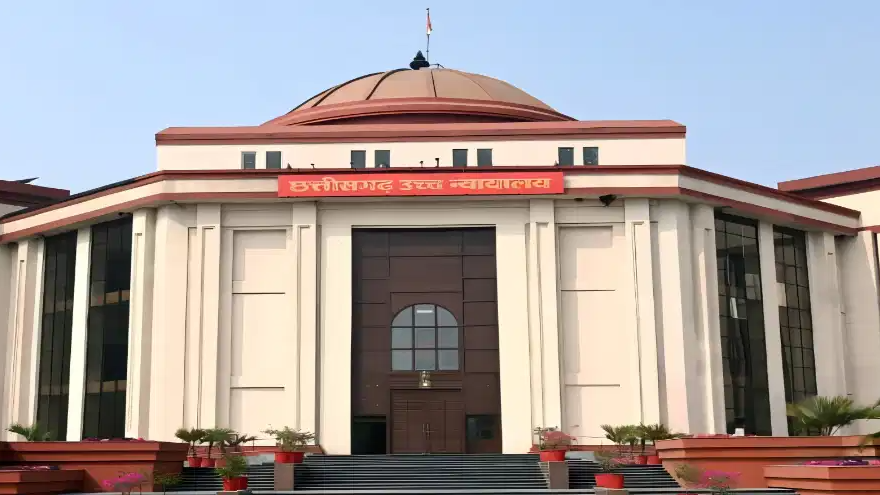
The Chhattisgarh High Court has held that juveniles accused of heinous crimes are not entitled to automatic bail and has rejected a petition filed by a juvenile accused in a murder case in 2025. The court observed that the grant of bail has to be considered in the light of the facts and circumstances of the crime and that granting bail in such cases may result in defeating the ends of justice.
The Chhattisgarh High Court has refused bail to a juvenile accused in a murder case in 2025 and has observed that relief under the Juvenile Justice Act, 2015 cannot be considered an absolute or automatic right in cases involving heinous crimes.
Also Read | 'Who will pay for it?': Supreme Court questions Tamil Nadu government over freebies
Justice Arvind Kumar Verma upheld earlier orders of the Juvenile Justice Board (JJB) and a sessions court in Dhamtari, observing that courts must examine the nature and gravity of the offence before granting bail to a minor. The High Court said it was "not convinced" that bail could be claimed without such scrutiny.
"JJB and the sessions court rightly prioritised child protection over routine bail in a heinous offence like murder," Justice Verma noted in his judgment dated February 13. He added that such acts “amount to a grave rupture of social order, violate the inherent dignity of childhood, and demand collective vigilance to restore moral balance.”
Murder charge and legal challenge
The minor had moved a criminal revision petition under the Juvenile Justice Act, 2015, challenging a sessions court order dated October 31, 2025, which rejected his bail plea. He is accused of stabbing Vikas Dhruv in Dhamtari following an altercation on June 6, 2025.
Counsel for the juvenile argued that the lower courts failed to appreciate the reformative intent of the 2015 law. It was contended that continued detention in an observation home could expose the minor to criminal influence. The defence also claimed the incident occurred in self-defence, emphasising that the accused had no prior criminal record and came from a poor family background.
Also Read | SC reinstates Special Court proceedings in minor assault case, overturns Allahabad HC's 'erroneous' verdict
Contrary to the plea, government counsel Vivek Sharma has submitted that the JJB and the sessions court had rightly evaluated the material placed before them, emphasising the gravity of the charge and the circumstances surrounding the alleged offense.
In line with the prosecution, the High Court observed that the grant of bail in such circumstances without due consideration would result in the erosion of justice, particularly in a situation where the alleged offense is of a serious nature.