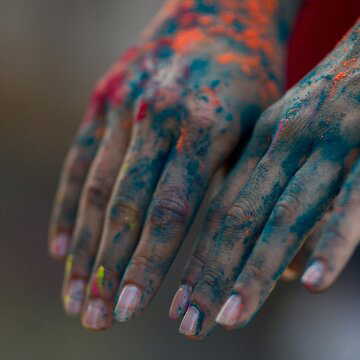
Holi, the festival of colours, is celebrated across India. This year it falls on March 3, on Tuesday. Beyond celebration, Holi also has interesting scientific aspects. There is a science behind the colours and traditions of this vibrant festival.
Holi falls in spring, mainly during the transition period between winter and summer. At this time, germs and infections are generally common. In the past, people who bathed less during winter could develop skin problems or infections, and dirt or unwanted particles would accumulate on the body. Using natural colors like turmeric during Holi helps cleanse the skin and remove these impurities, keeping the body healthy.
ALSO READ | Afraid of nail damage after Holi? Here are some easy ways to prevent infections and stains
Plant-based sources of Holi colours can be safe alternatives to synthetic Holi colours; traditionally, Holi colours were made from natural sources, either as powders or liquids. Naturally, using plants like Neem, Turmeric (Haldi), Bilva, Beetroot, Palash, and more.
Green: By using powdered Mehendi, dried Gulmohur leaves, spring crop leaves, herbs, rhododendron leaves, pine needles, or spinach can be used to make the green color.
Yellow: To make the yellow colour, Turmeric powder or juice, Bael fruit, Amaltas, gram flour, and yellow flowers like Marigold, Chrysanthemum, Sunflower, Dandelion, Daffodil, or Palash (Tesu) flowers are used.
Orange: Saffron, barberry, or mixing lime with turmeric powder gives an orange shade. Even soaking Mehendi in water also produces an orange hue.
Red and Violet: Roses, dried hibiscus flowers, madder tree, crab apple bark, red sandalwood, pomegranate peels and seeds, radish, Barberry, Blueberry, Wildberry, and beetroot (powder or juice) can produce red or violet colors.
Blue: Mostly, Indigo, Grapes, blue Hibiscus, jacaranda flowers, and some Indian berries can be used for blue, in powder, paste, or liquid form.
Brown: In terms of making Brown shade, Catechu (Katha from acacia trees), red maple leaves, dried tea leaves, or coffee can be used.
ALSO READ | Have you ever noticed the 'X' mark on the glass window? Here’s the reason behind it
Stop and check: Are you using synthetic colours too?
Nowadays, most Holi colors in the market are synthetic, as they are cheap and easily available. Although in the current market scenario, herbal colours are often limited. People forget that synthetic colours contain harmful chemicals like lead oxide, chromium, copper sulfate, and diesel. These can cause skin rashes, allergies, pigmentation, hair damage, and eye irritation.
In order to stay safe, we should choose herbal colours, even if they cost more, as higher demand will eventually make them more affordable.