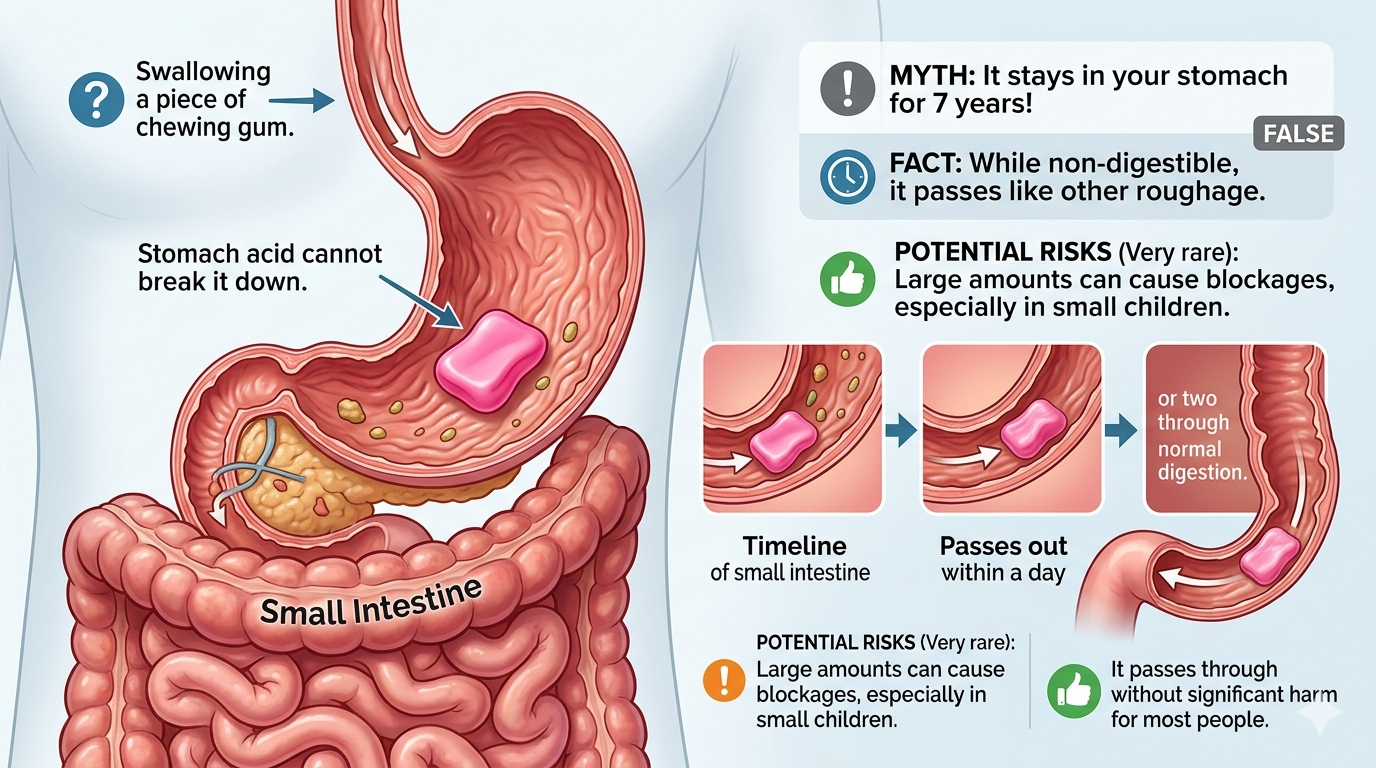
Swallowing chewing gum by mistake is something many people have experienced at least once. It often leads to panic because of the common belief that gum stays in the stomach for years.
Chewing gum is widely used as a stress reliever, for fresh breath, or even to control hunger. But the fear of swallowing it and harming the body continues to worry people unnecessarily.
To clear this confusion, a gastroenterologist explained what really happens when gum is swallowed and how the digestive system handles it. The truth may surprise many.
In a conversation to Hindustan Times, gastroenterologist Dr Vishal Seth from Apollo Spectra Hospital in Pune explained the truth.
Also Read | Burnout or just emotional exhaustion? Therapist explains the key differences you should not ignore
Does chewing gum stay in the stomach?
“Since childhood, everyone is made to believe that swallowing chewing gum will stay in the stomach for years. This belief has been passed down for generations, creating unnecessary fear and stress among people,” Dr Seth explained to Hindustan Times and cleared the myth that chewing gum stays in the stomach forever or causes serious stomach problems.
How the body processes swallowed gum
"While it is true that chewing gum is not easily digested like regular food, it does not remain in the body for years.” As per Hindustan Times, the doctor explained that even though gum cannot be fully broken down, it still moves through the digestive system like other food.
How long does it stay in your body?
As per Hindustan Times report, doctor explained saying, "People should be at ease and don’t get tensed, as swallowed chewing gum does not stay in the stomach for years.” He further added, "The gum still travels through the digestive tract similar to other foods. The gum cannot be digested like food and will go to the intestines from the stomach. It will then further move with the other waste and will be removed from the body via stool, within 4-5 days. The body will not store it for years at all.”
Does gum stick to your organs?
“The gum will not raise the chances of symptoms such as abdominal pain, heaviness, poor digestion, vomiting, nausea, or constipation or impact overall well-being.” The doctor assured that gum does not stick to organs like the stomach or intestines.
The fear of chewing gum staying in the stomach for years is a myth. The digestive system naturally pushes it out of the body within a few days, just like other waste.
However, experts still advise avoiding swallowing gum because it is not meant to be digested. Even then, if it happens accidentally, there is no need to panic.