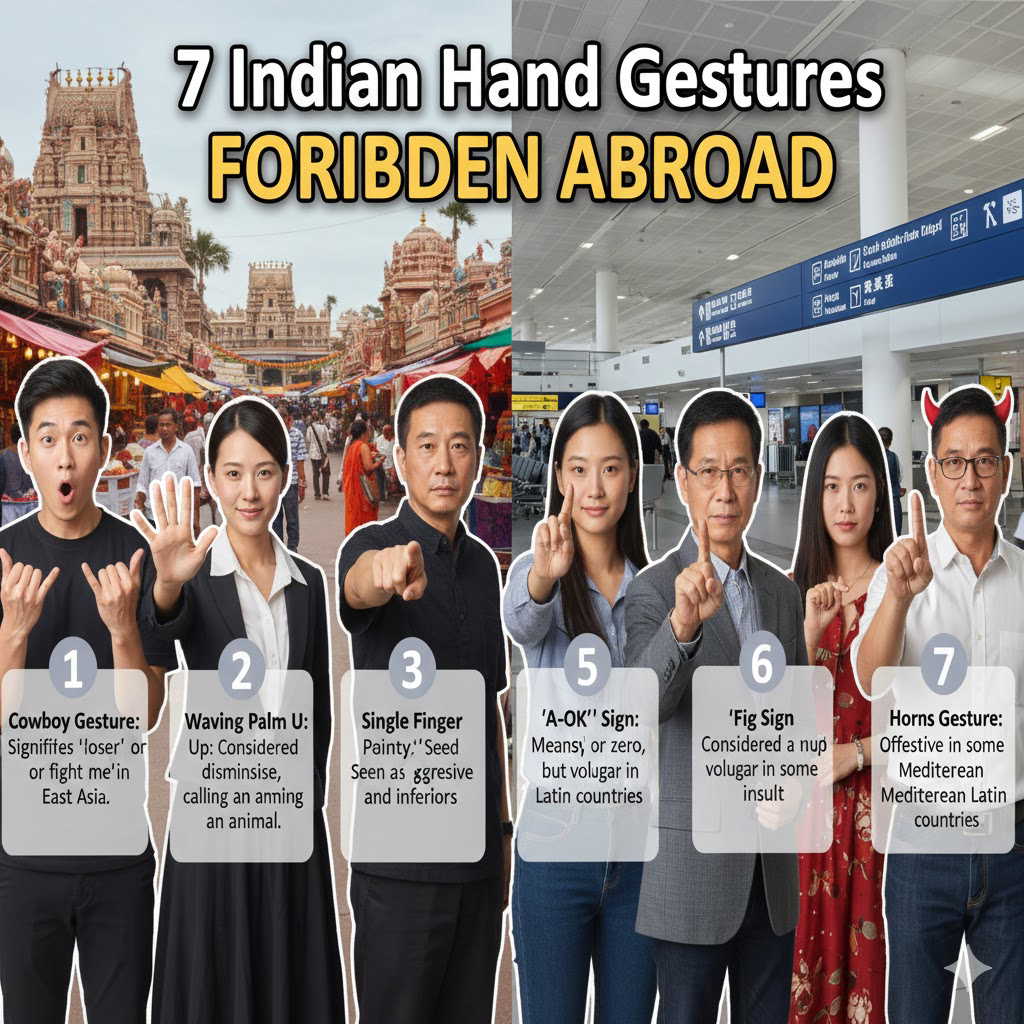
As we step into the new year 2026, many people plan to travel to different countries, unexplored places, in search of new adventures, historical places, beaches, and mountains. It is important to be aware of cultural differences while travelling. Different countries follow different cultural rules for gestures. A hand sign that is common in India may be considered offensive and hurt cultural sentiments in other countries.
This information can help you plan your vacations and avoid unnecessary problems that may stop you from exploring. Here are 7 gestures you need to know.
Thumbs up signs
In India, a thumbs up means appreciation or approval, but if you use this sign in Middle Eastern countries such as Iran, Iraq, and Greece. It is considered disrespectful and is similar to showing the middle finger.
Ok signs
Ok means in India as perfect or everything is fine, but in Brazil, Turkey, the gestures are considered insulting.
Pointing at someone with a finger
In India, pointing and calling someone with a finger is normal. However, in the Philippines and Japan, it is considered disrespectful.
V sign or the victory sign
In India, people often use this sign as victory or success, but in Turkey, it means terrorism.
Finger crossed
In India, crossed fingers represent, luck or hope sign, but in Vietnam, it's offensive.
Also Read| Japan’s hydrogen water trend reaches India: Benefits, risks and price explained
Swastik sign
The Swastik sign in India represents wealth, positivity, good luck, but in Germany it represents Nazism, racism and hate.
Also Read| What should your ideal weight be? Doctor teaches simple calculation at Bengal Liver Summit
Touching someone’s head
In India, touching someone’s head is often seen as a blessing, but in Thailand it represents insulting and sacred.