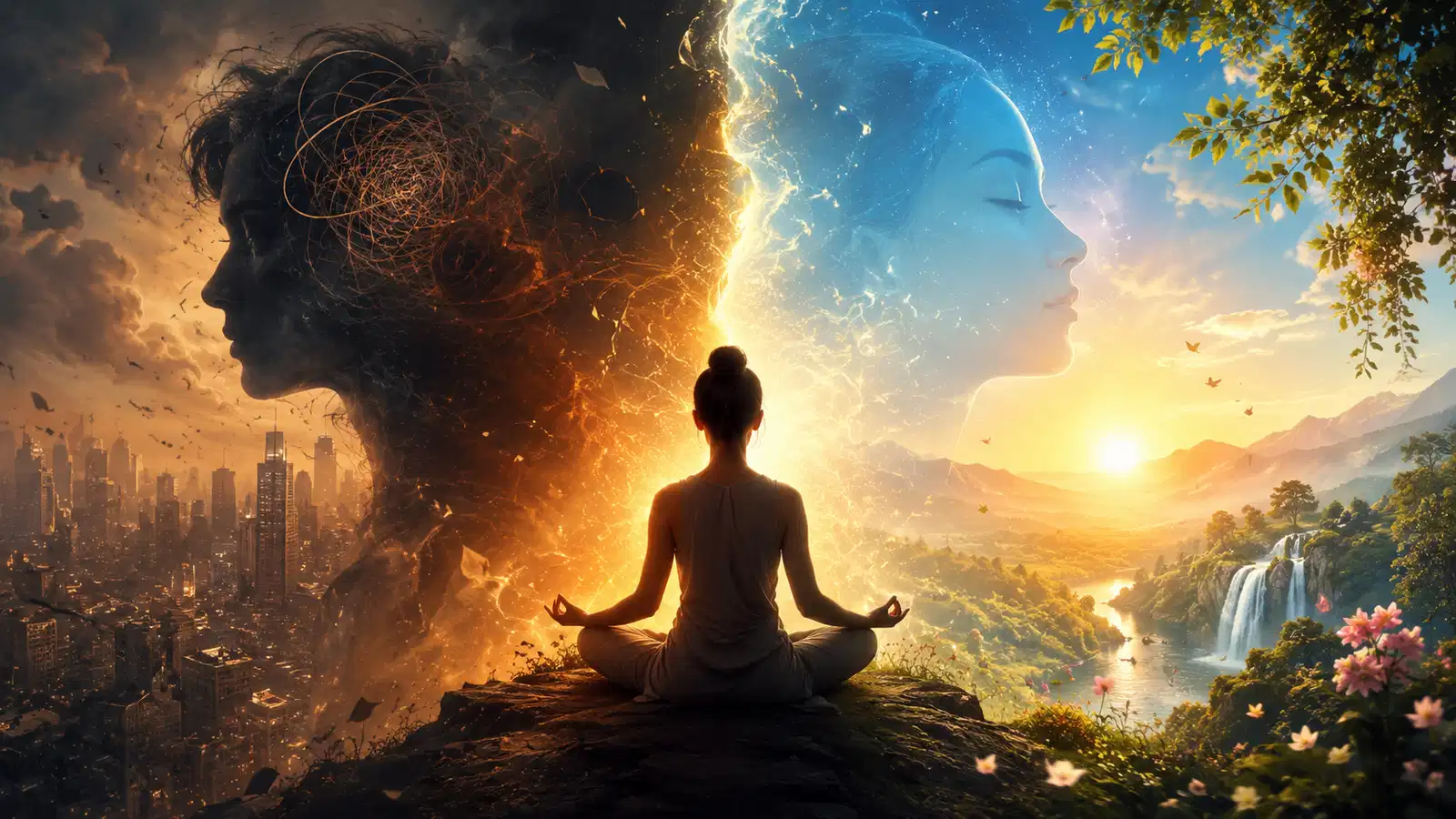
Most people spend their lives chasing happiness, believing it to be the ultimate goal. But HH Guruji Sundar explains to News Ei Samay that there exists something far deeper within human experience, something beyond fleeting emotions. That state is bliss.
On the surface, happiness and bliss may seem similar, but they are fundamentally different in nature. “Happiness is a fleeting emotion, while bliss is a deeply spiritual occurrence,” the teachings explain, drawing a clear distinction between the two.
What is happiness?
Happiness, as described, arises from the mind and is closely tied to external achievements. “When the mind sets goals and achieves them, it experiences a sense of satisfaction for a short period,” the Centre explains.
Also Read | ‘Amavasya is a boon for spiritual seekers’: Expert explains why it aids inner growth
However, this state does not last. “This satisfaction fades within minutes, leaving the mind searching for its next source of fulfilment.” In this sense, happiness is temporary and dependent, shaped by circumstances and outcomes.
 (Representational Image) True peace lies beyond the restless activity of the mind. AI Generated
The nature of the mind itself contributes to this instability. “It behaves like a restless monkey, constantly swinging from one extreme to another,” the teachings note. One moment, the mind feels content, and the next, it slips into worry or dissatisfaction. Because of this, lasting happiness remains out of reach.
Bliss: A state beyond the mind
In contrast, bliss is described as something far more stable and profound. “Bliss comes from one’s own being or the soul,” the Centre explains. Unlike happiness, it is not dependent on external factors or achievements.
Also Read | Can meditation change the way you react to people and stress? Here’s what an expert says
“It is steady, expansive, and enduring,” the teachings state, highlighting its deeper and more sustained nature. Bliss allows a person to remain in a state of inner fulfilment, untouched by the constant fluctuations of the mind.
Who experiences bliss?
Bliss is not considered a common or everyday experience. “It happens to real seekers of truth, who turn their gaze inward,” the Centre explains. This inward journey, often supported by meditation, is seen as essential to experiencing such a state.
 (Representational Image) Bliss is seen as a deeper state that comes from within. AI Generated
The role of spiritual guidance is also emphasised. “With the grace of the Guru and God, a sincere meditator can experience bliss,” the teachings say. Additionally, being in the presence of spiritually evolved individuals can also influence this experience.
“At times, even sitting in close proximity to such a presence can awaken bliss within,” the Centre adds.
Also Read | ‘There is no need to travel far into mountains…’: Expert explains the true meaning of enlightenment
Beyond external fulfilment
Interestingly, the teachings also acknowledge that glimpses of bliss can occur in creative pursuits. “Poets, musicians, and artists may touch this state when they immerse themselves deeply in their craft.”
 (Representational Image) Chasing happiness may not lead to lasting fulfilment. AI Generated
Yet, meditation remains the most direct path. “A meditator can enter bliss simply by transcending the restless activity of the mind,” it states.
Ultimately, the journey from happiness to bliss is described as a shift in awareness. “It is not about acquiring more, but about becoming more aware, more inward, and more connected.”
In that inward turn, one realises that the peace and contentment they seek outside have always existed within.