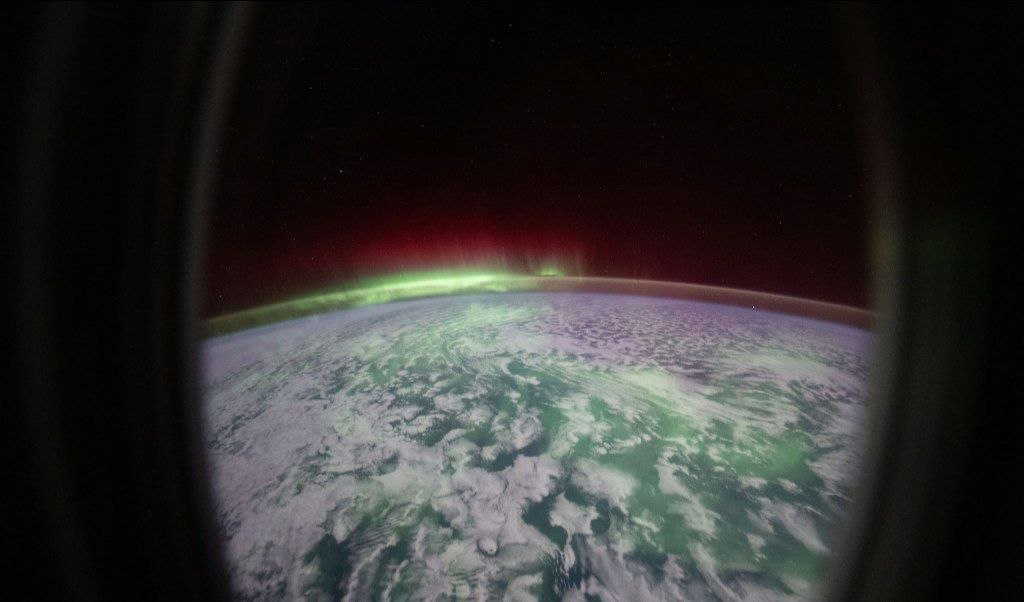
A stunning image of the Aurora Australis, also known as the southern lights, has once again sparked fascination online after astronaut Sophie Adenot captured the glowing phenomenon from space aboard the International Space Station (ISS).
The photograph, taken while the ISS passed above the Indian Ocean, showed vibrant green lights stretching across Earth’s atmosphere. Unlike views seen from the ground, astronauts aboard the space station witness auroras from above, giving them a rare perspective of how the phenomenon spreads across the planet’s upper atmosphere.
How auroras appear differently from space
Auroras are created when charged particles from the Sun collide with gases in Earth’s atmosphere near the magnetic poles. From Earth, people usually see these lights as glowing curtains or waves moving across the night sky.
Also Read | Bermuda mystery cracked? Scientists identify hidden rock layer beneath the island
However, astronauts in orbit experience something very different. Instead of looking up at the aurora, they see it from above and sometimes even from within the glowing layer itself. This creates a three-dimensional view of the phenomenon that is impossible to fully observe from the ground.
The ISS orbits roughly 400 kilometre above Earth, placing astronauts in a position where they can see the full curve of the planet alongside the glowing bands of light. The photographs often reveal how the aurora forms a giant ring around Earth’s polar regions.
Day 085, orbit 1316 ” Did you know you can spot the International Space Station using only your eyes? From the ground, it looks like a very bright star moving across the sky at roughly the speed of a commercial airliner. But unlike an aircraft, it has no headlights or flashing pic.twitter.com/yuvkOzXBt1
— Adenot Sophie (@Soph_astro) May 9, 2026
Rare glimpse above the Indian Ocean
The recent image shared by Sophie Adenot on X, stood out because it captured the Aurora Australis over the Indian Ocean, creating a dramatic contrast between the darkness of space and the glowing atmosphere below.
Space photography from the ISS has increasingly gained public attention over the years, especially when astronauts share rare natural events like auroras, lightning storms and sunrises from orbit. The unique angle often makes familiar Earth phenomena appear almost otherworldly.
Aurora Australis is the southern counterpart of the more widely known Aurora Borealis, or northern lights. While both are caused by solar activity, they are visible in opposite hemispheres near Earth’s magnetic poles.
Also Read | From tender coconut to Gadbad, THESE iconic Indian ice creams just made it to global top 100 list
Scientists continue to study auroras to better understand solar storms and their effects on Earth’s atmosphere and satellite systems. Images captured from space also help researchers observe the scale and movement of these glowing formations more clearly.