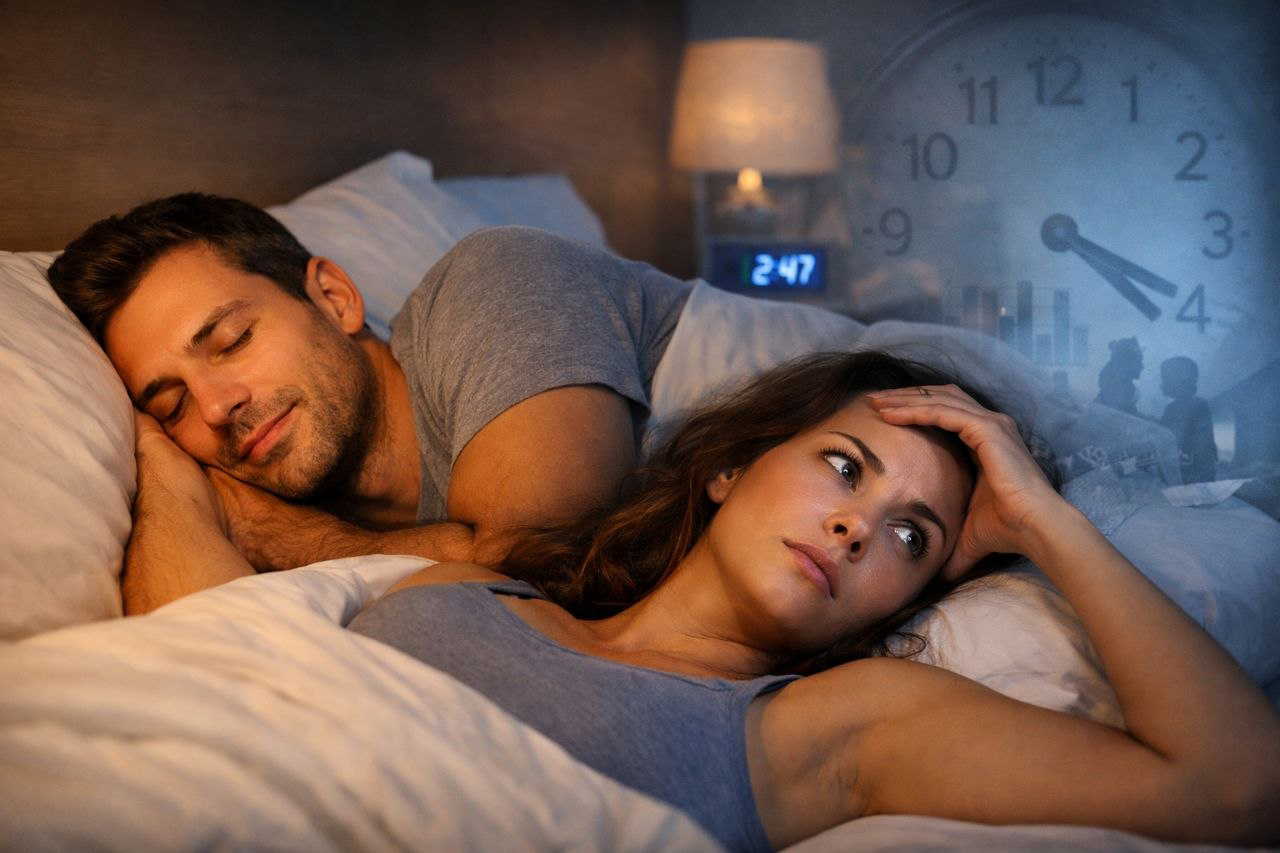
It’s a common observation in many households that men tend to fall asleep faster than women. According to sleep expert Dr Christopher J Allen, this isn’t just perception but has biological and psychological reasons behind it. In a recent explanation, he broke down why women, particularly wives, often experience poorer sleep compared to their husbands.
Hormones play the biggest role
One of the primary reasons lies in hormonal differences. The doctor described hormonal changes as the “biggest” factor affecting women’s sleep. Unlike men, whose sleep-related hormones remain relatively stable, women experience regular fluctuations in estrogen and progesterone.
According to Hindustan Times reports, Dr Allen explained, “When progesterone drops before your period, your sleep gets lighter, and you wake up more. And when estrogen drops during perimenopause, your sleep fragments completely.” Such changes mean women are more likely to experience interrupted and lighter sleep throughout different stages of life.
Mental health and emotional load
Beyond biology, emotional health also plays a significant role. Women are more vulnerable to anxiety and depression, both of which can interfere with sleep. The doctor highlighted this connection, stating, “Women are twice as likely as men to have both anxiety and depression. But poor sleep makes anxiety worse, and anxiety makes sleep worse.” Hindustan Times reported. This creates a cycle where stress and sleep problems feed into each other, making it harder for women to relax at night.
Stress affects men and women differently
The way stress is processed also differs between men and women. According to the expert, even when both experience similar stress levels, their responses at bedtime are not the same.
He noted that men are often able to fall asleep within minutes despite stress, while women’s minds tend to remain active. This heightened alertness can delay sleep, as the brain struggles to “switch off.”
The larger “sleep gap” between genders
These combined factors contribute to what experts often call a “gender sleep gap.” Research shows that while men may fall asleep faster, women are more likely to experience insomnia and report lower sleep quality.
Also Read | What happened today (April 19) in history? Key events to look back on
Additional pressures, such as daily responsibilities, caregiving roles, and mental load, further impact women’s ability to get restful sleep.
Why sleep feels harder for women
In essence, the difference comes down to a mix of biology and lifestyle. Hormonal fluctuations, emotional factors, and stress responses all make it more challenging for women to fall asleep quickly and stay asleep. While men may have an easier time drifting off, women often deal with layered factors that disrupt their rest. The result is not just difficulty falling asleep, but also poorer overall sleep quality.