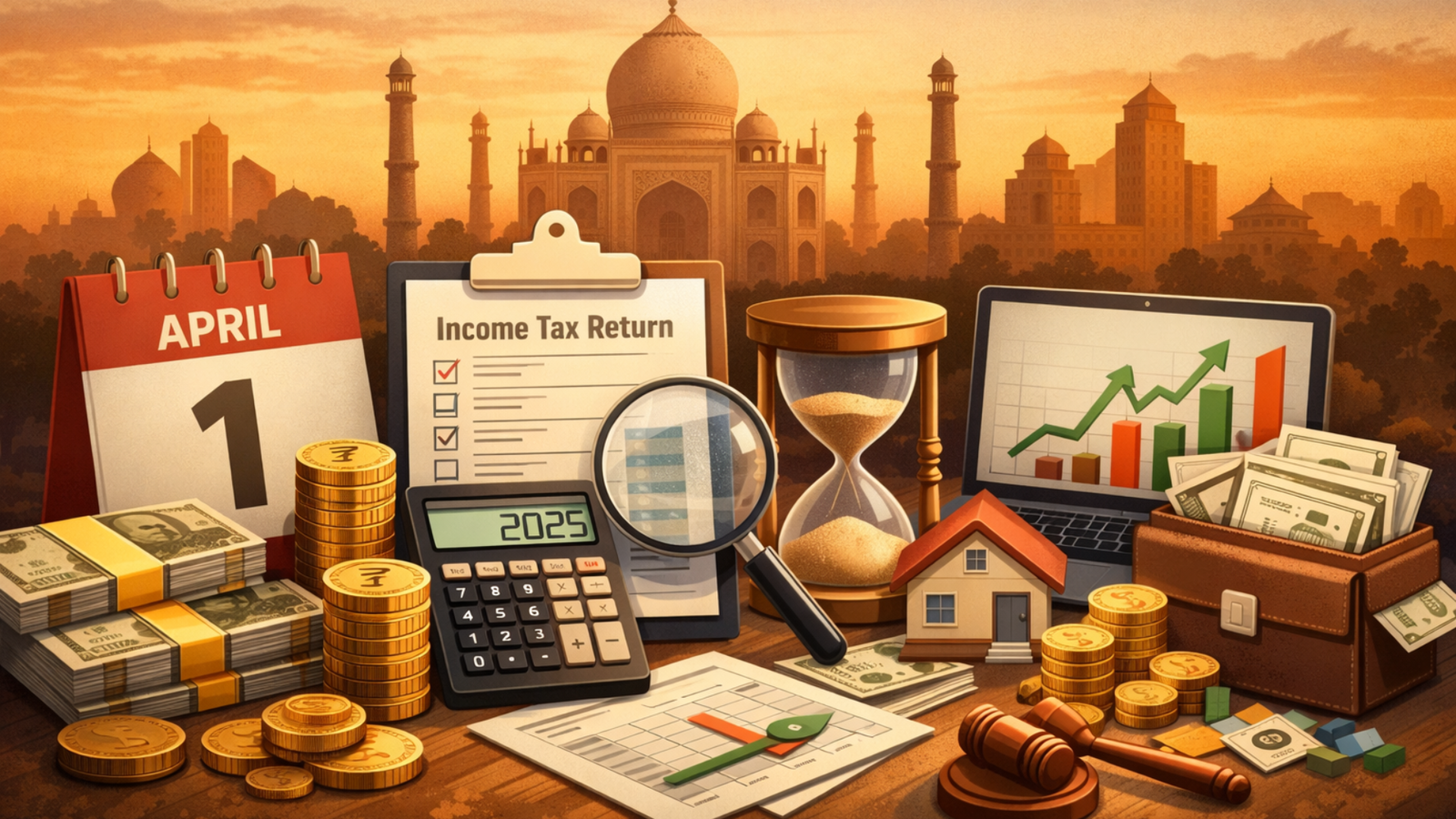
The direct tax system in India is all set to witness a significant change from April 1, 2026, with the introduction of the new Income-tax Act, 2025. The new law will replace the existing Income-tax Act, 1961, which has been in force for over six decades. In conjunction with this change, the new changes introduced in the Union Budget 2026 will also come into effect, subject to approval under the Finance Act, 2026.
As per multiple reports, Tax experts say that though there will be no changes in tax rates applicable to individuals, there will be structural changes in compliance, timelines, and taxation rules.
Single ‘Tax Year’ to replace existing system
The first change will be the introduction of a new concept of ‘Tax Year’. In the existing system, there are two concepts: previous years and assessment years. The new system will introduce a single tax year, which will simplify the understanding and compliance of tax rules.
Despite this change, income tax slabs under both old and new regimes will continue as they are.
Also Read | Is stock market closed from March 19–21 for Ugadi, Gudi Padwa and Eid-ul-Fitr? Check the details
Revised ITR filing deadlines
The government has revised the return filing dates as follows:
July 31 for individuals filing simple returns such as ITR-1 and ITR-2
August 31 for taxpayers with business or professional income not requiring an audit
October 31 for companies and those requiring audit
November 30 for assessees under special provisions
These timelines will apply from Tax Year 2026-27.
Extended window for revised returns
The taxpayers will have up to 12 months instead of the present nine months to revise the return. They will have to pay a fee if the revisions are made after nine months, depending on the income levels.
Higher STT on derivatives trading
Securities Transaction Tax on derivatives will increase from April 1, 2026:
Options sale: 0.10% to 0.15%
Options on exercise: 0.125% to 0.15%
Futures sale: 0.02% to 0.05%
This may raise trading costs in the futures and options segment.
Also Read | India Post launches 24-hour Speed Post service across six Metro cities
Changes in TCS rates
Tax Collected at Source rates will also be rationalised across various categories, such as alcohol, scrap, and minerals. The TCS rate for overseas expenditure above Rs 10 lakh under LRS will be lowered to 2% for education and medical expenses. The TCS rate for other categories will remain the same. The TCS rate for overseas tour packages will be lowered to 2%.
Other key changes
The exemption for employer-paid commuting expenses will be extended to perquisites. Share buyback tax is to be levied as capital gains. The deduction on interest expenses for dividend and mutual fund income is to be removed.