Stars: 4 out of 5.
Directed by Sriram Raghavan and produced by Dinesh Vijan, IKKIS is an absorbing, layered war drama that transcends the mechanics of combat. It is an evocative exploration of life in and around a war zone, featuring the soldiers and their families, as love and compassion are tested by distance and danger, duty and loyalty are shaped by discipline, and pride is rooted not in slogans but in lived values. It is a fragile, resolute, conflicted, and enduring story about humanity rather than war.
What immediately distinguishes IKKIS from many films in the genre is its strong moral clarity without slipping into jingoism or rhetorical nationalism. Despite devoting substantial screen time to war and combat operations, the film resists triumphalism. Instead, it consistently re-centres the narrative on human cost and moral consequence. The battlefield is not portrayed as a spectacle of conquest but as a space of irreversible decisions. By the time the film concludes, it leaves behind a quietly powerful message, urging everyone to reflect on a preference for peace over war.
The film is based on the true story of Second Lieutenant Arun Khetarpal, commissioned into the Poona Horse (Armoured Regiment), who was just 21 years old at the time of his martyrdom during the 1971 Indo–Pak war. His youth is central to the emotional strength of the film and not just incidental. At an age when most lives are only beginning to take shape, Arun’s was defined by extraordinary responsibility and an unyielding sense of duty.
ALSO READ । Emraan Hashmi recalls past immigration check experience at new web series trailer launch
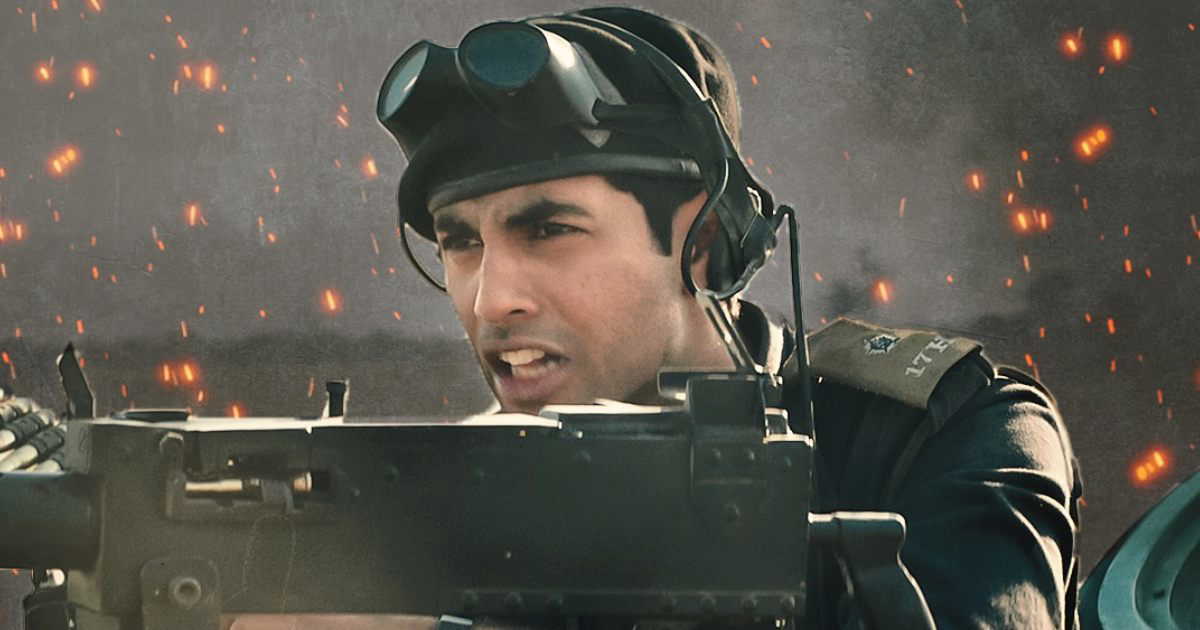
Agastya Nanda portrays Second Lieutenant Arun Khetarpal with remarkable restraint and ease. His performance never strains for heroism; instead, it allows courage to emerge organically through action and choice. Nanda convincingly inhabits multiple dimensions of Arun’s life, including an NDA cadet shaped by discipline and camaraderie, as a tank commander navigating the chaos of armoured warfare, and as a young man briefly experiencing love and emotional vulnerability. These softer moments are brief but essential and serve as poignant reminders of what is at stake when war intervenes.
One of the film’s most effective choices is how it frames Arun’s bravery. His actions during the Battle of Basantar are depicted with clarity and respect rather than exaggeration. Even after being wounded and ordered to retreat, Arun continues to command his tank, engaging enemy armour at dangerously close range until he is fatally hit. The sequence is staged not as a dramatic crescendo but as a grim inevitability, reinforcing the idea that true heroism often unfolds without flourish. As the youngest recipient of the Param Vir Chakra, India’s highest gallantry award, Arun Khetarpal’s life and sacrifice are narrated with dignity and precision.
The film’s visual language plays a significant role in grounding its authenticity. The cinematography, paired with a carefully researched script, transports the audience seamlessly between training academies, army cantonments, and active combat zones. The depiction of life at the NDA and IMA, that are complete with references to terms like liberty and Sinhgarh, etc., captures the rhythms of cadet life, including their routines, the shared jokes, the unspoken hierarchies, and the quiet forging of bonds that later translate into battlefield trust. These sequences provide crucial emotional context, showing how discipline and camaraderie are cultivated long before they are tested.
Military procedures, strategic decisions, battlefield movement, and even the silences between engagements are portrayed with striking precision. The film pays attention to formations, communication protocols, and command structures, allowing viewers to trust the realism of what they are witnessing. Importantly, the silences that are moments of waiting, listening, and anticipation are as expressive as the combat itself. They convey fear, resolve, and the stress of responsibility more effectively than dialogue ever could.
The emotional spine of IKKIS, however, lies in its parallel narrative involving Arun’s father, Retired Brigadier Madan Lal Khetarpal, played with profound sensitivity by Dharmendra. In what stands as one of his most restrained and moving performances, Dharmendra embodies a man carrying decades of quiet grief and unresolved longing. Now in his eighties, Madan is travelling to Lahore for a school reunion and expresses a desire to visit his ancestral home in Sargodha. Beneath this seemingly personal journey lies a deeper, unspoken wish, which is to see the land where his son made the ultimate sacrifice.
ALSO READ । All eyes on March 19 as Yash’s Toxic and Ranveer Singh’s Dhurandhar 2 set for face-off
His host in Pakistan is Brigadier Nasir, portrayed by Jaideep Ahlawat, a character with moral complexity. Nasir lives with the burden of knowing that he was responsible for Arun’s death during the war. Far from being depicted as an antagonist, Nasir is shown as a man haunted by memory and respect for his fallen adversary. He welcomes Madan Khetarpal with warmth and dignity, treating him as family and extending genuine hospitality. Their interactions are layered with unspoken history, mutual recognition of loss, and a shared understanding of the futility of hatred.
One of the film’s most powerful sequences occurs when Nasir escorts Madan to the actual battle site. Stopping near a particular tree, he recounts the precise course of the Battle of Basantar and describes, in measured detail, the exceptional bravery of the 21-year-old Indian officer in his final moments. For Nasir, this confession becomes an act of release, and for Madan, it is both devastating and healing. This exchange transcends national boundaries and reframes the idea of the enemy, replacing abstraction with human accountability. It is here that the film most clearly articulates its stance on war, which is not only a contest of nations but also a series of personal tragedies that echo across generations.
While Agastya Nanda’s performance anchors the film’s wartime narrative, it is Dharmendra who carries its emotional conclusion. Through quiet conversations and reflective silences, his character raises profound questions about war, peace, and humanity, something that lingers long after the final frame.
Technically, IKKIS is accomplished across departments. The sound design during combat sequences is particularly effective, immersing the viewer in the claustrophobia and chaos of armoured warfare. Gunfire, engine roars, and sudden silences are calibrated to heighten realism without overwhelming the senses. The cinematography strikes a careful balance between capturing the scale of battlefields and the intimacy of deep personal loss, honouring courage without romanticising violence.
ALSO READ। The Lyari house in Dhurandhar wasn’t filmed where you think
Ultimately, IKKIS is a significant cinematic achievement. It is meticulously researched, ethically grounded, and marked by a high of emotional intelligence. By refusing to simplify war into slogans or spectacle, the film offers a deeply human story that honours sacrifice while questioning the very conditions that demand it.
About the author:
Praveen Nagda, Festival Director of KidzCINEMA and CultureCINEMA Film Festivals