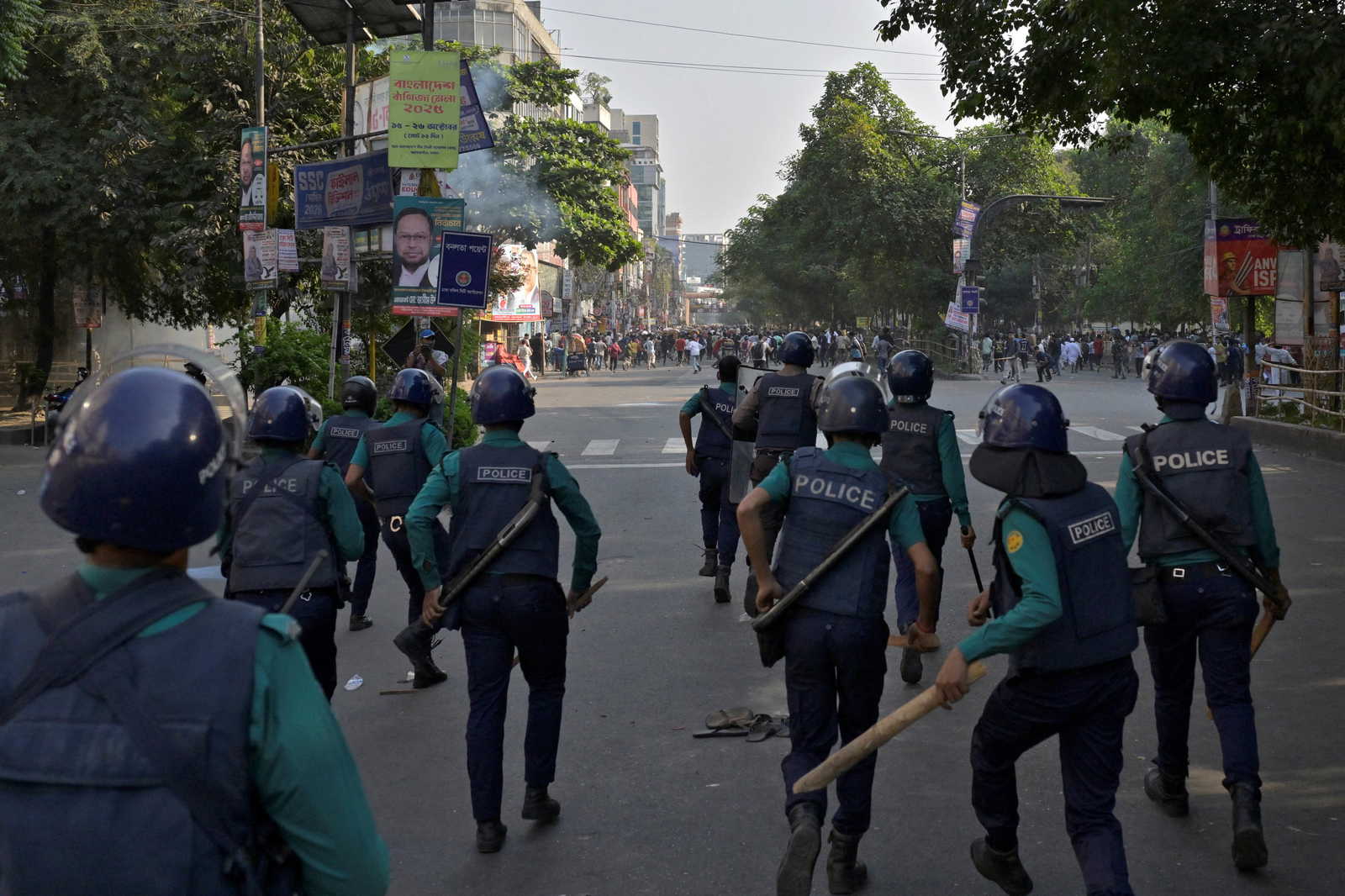
Bangladesh is heading into the 12 February 2026 general election at a moment of deep political transition. This is the first national election since the fall of Sheikh Hasina’s government in 2024, after months of student-led protests and the formation of an interim administration. Many citizens see this election as a chance to restore democratic politics after years of repression, fear, and controlled voting. Yet while political parties continue to campaign on the streets, the most powerful battlefield of this election has shifted online, especially to social media platforms like Facebook, YouTube, TikTok, and Instagram.
In this election, social media is no longer just a place where opinions are shared. It has become a space where political reality itself is being manufactured. Coordinated bot activity, artificial intelligence–generated content, and paid engagement are shaping how voters see candidates, parties, and even ordinary citizens who speak out. What looks like public opinion online is often not organic at all. It is increasingly designed, bought, and deployed with clear political intent.
Mockery as a digital weapon
A disturbing pattern has emerged in recent months. Posts expressing concern about political violence or threats are often met not with sympathy, but with mass mockery. On Facebook, the “haha” reaction has become a political weapon. When a post is flooded with laughing reactions, it sends a message that the speaker is ridiculous, isolated, or deserving of scorn. This form of public ridicule discourages others from speaking and creates fear without the need for direct threats. Research on online harassment shows that mockery is especially effective at silencing voices because it combines humiliation with social pressure. The impact of this mockery goes beyond emotion. Social media platforms rely on algorithms that decide which posts are shown and which are buried. Coordinated hostile reactions can reduce a post’s visibility, making it harder for information to spread. This means organised ridicule does not only attack a person’s dignity, but can also erase their voice from public discussion. Investigations into platform algorithms have previously shown that trolling and mass negative engagement can suppress reach, even when content is factual or non-violent. What makes this especially dangerous is how easy it has become to organise such attacks. A growing online market openly sells likes, reactions, followers, and comments. Anyone with a mobile payment app can buy thousands of reactions within minutes. These reactions often come from fake or semi-fake accounts, many using AI-generated profile photos and little personal information. Studies on digital manipulation have shown that paid engagement is increasingly used in elections worldwide to create false impressions of popularity or rejection.
ALSO READ | Nahid, Tasnim, Sarjis: Where are the Gen-Z protest leaders as Bangladesh votes tomorrow?
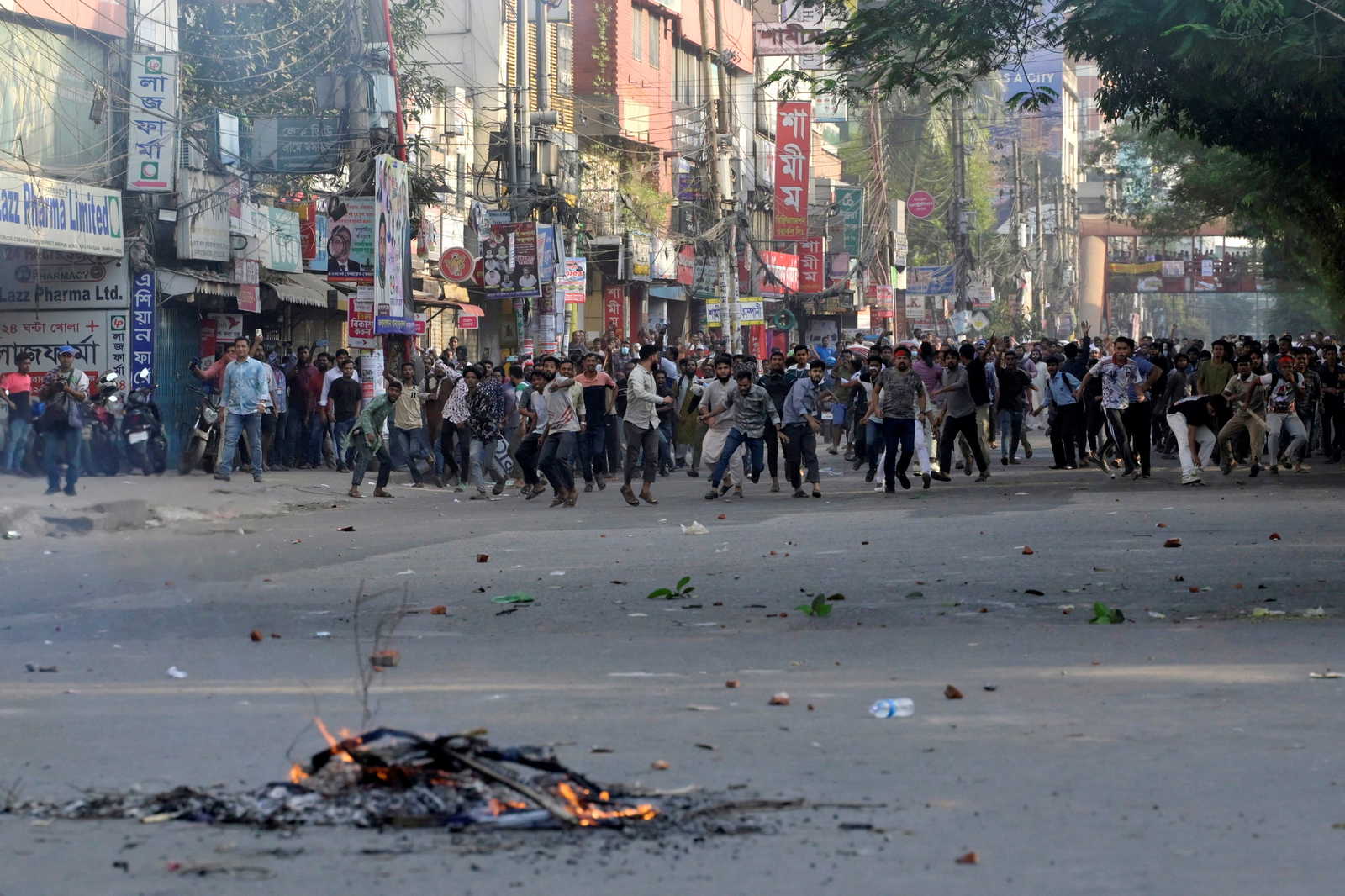 (Representational image) Demonstrators throw stones towards police. ANI
 In Bangladesh, this practice has turned political competition into a marketplace of perception. A candidate or party does not need genuine support to appear popular. They only need money and access to click farms. At the same time, opponents can be made to look unpopular, foolish, or dangerous through coordinated attacks. This distorts voter judgment, especially in a tense environment where people are trying to assess which side is strong, safe, or likely to win. Artificial intelligence has intensified this problem. In the final weeks before the election, AI-generated political content has flooded social media. These include fake images, manipulated videos, misleading captions, and emotionally charged messages designed to provoke anger, fear, or religious tension.
Research on election disinformation shows that AI dramatically increases the speed and scale at which false narratives can spread, often faster than fact-checkers or journalists can respond. Bangladesh is particularly vulnerable to this form of manipulation because of high social media usage and political polarisation. With a large youth population online and a history of emotionally charged political narratives, AI-driven content can easily exploit social divisions. Much of this content is not meant to inform voters but to distort their feelings, deepen suspicion, and delegitimise opponents. Once such narratives take hold, it becomes difficult to restore trust in any source of information.
Alongside disinformation and harassment, digital campaigning has also taken a more cultural form. Campaign songs have emerged as one of the most powerful tools of online mobilisation. These songs spread rapidly across platforms and are shared in homes, transport, and campuses. While political music is not new in Bangladesh, the digital version functions differently. A viral song can repeat slogans, symbols, and emotions thousands of times a day, shaping political identity without policy discussion. Scholars of political communication note that music and short-form video are especially effective in influencing young voters because they bypass rational debate and work through repetition and emotion. In this election, campaign songs are not just entertainment. They act as permanent digital rallies. They frame which parties represent the past and which claim the future. They also push simplified moral narratives that are easy to remember and share. In a context where many voters distrust long speeches and manifestos, these songs often become more influential than formal political programmes.
ALSO READ | Bangladesh Elections 2026: First vote after Sheikh Hasina’s ouster, what’s at stake?
Referendum fuels online polarisation
The digital battle is further complicated by the presence of a national referendum alongside the parliamentary election. This referendum, linked to reforms proposed after the 2024 uprising, has turned online spaces into arenas of existential debate. Competing narratives present the vote as a choice between democracy and chaos, reform and betrayal, national sovereignty and foreign control. Political research shows that when elections are framed in existential terms, disinformation and harassment tend to increase, as groups justify extreme tactics in the name of survival. The result is a political environment where voters are overwhelmed. They face a flood of content that mixes fact, fiction, emotion, and intimidation. Even if the voting process itself improves, the damage done by digital manipulation may continue after election day. Losing sides may reject results as manufactured, while winners may struggle to gain legitimacy in the eyes of a divided public.
Bangladesh does not need censorship or new forms of repression to address this crisis. What it needs is transparency, accountability, and digital literacy that helps citizens recognise emotional manipulation, not just false facts. Social media companies must be pressured to act against engagement markets and coordinated harassment. Journalists and activists need protection from organised online attacks. Without these safeguards, elections may continue to take place, but democratic trust will slowly disappear behind screens filled with manufactured outrage.
About the Author
Atendriya Dana, Research Scholar, Department of International Relations, Jadavpur University