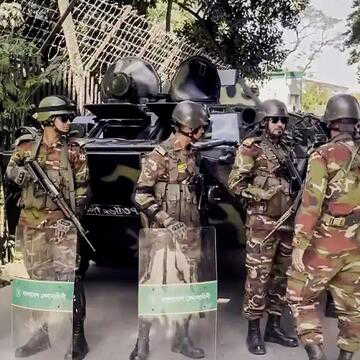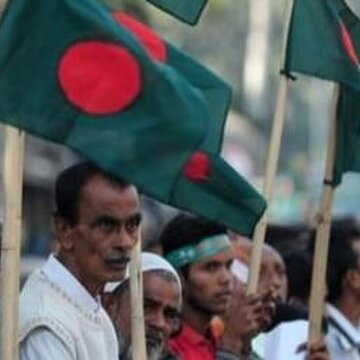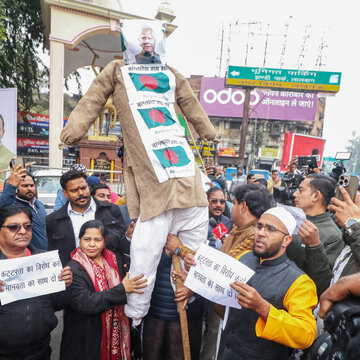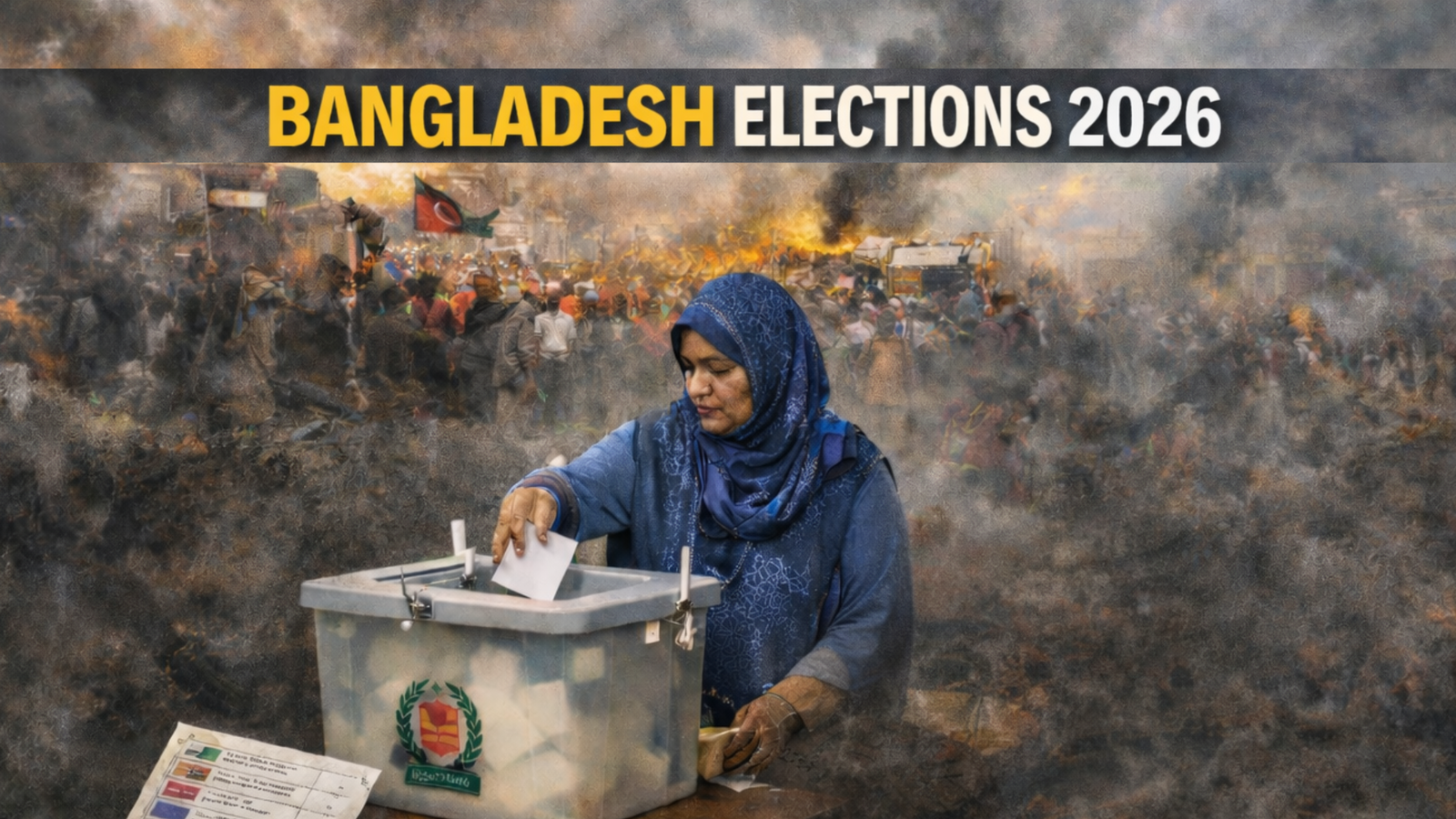
Bangladesh is set to hold the polls on Thursday, February 12, in the country’s first parliamentary election since the ousting of former prime minister Sheikh Hasina in a violent crackdown on student-led protests in 2024. Almost 1,400 people were killed during the protests, according to the International Crimes Tribunal (ICT) in Bangladesh, making it one of the deadliest moments in the country’s recent political past.
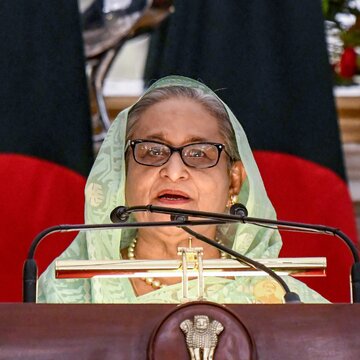
Hasina, who is currently in exile, has had her Awami League party banned from political activity, and the election is expected to be a reset for the country’s democracy.
When and how will voting take place?
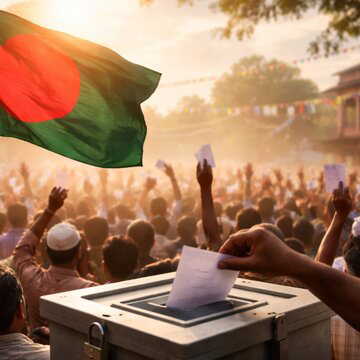
Polling stations will open at 7:30 am and close at 4:30 pm in 42,761 polling stations across 64 districts, as per the Election Commission of Bangladesh (ECB). Over 127 million registered voters will be able to cast their ballots in 300 parliamentary constituencies
Bangladesh follows a unicameral system of Parliament, meaning that it has a single lawmaking body, which is the Jatiyo Shangsad, or House of the Nation, comprising 350 constituencies, each represented by one member. Following a first-past-the-post (FPTP) electoral system for 300 directly elected seats in the Jatiyo Shangsad, the remaining 50 seats are allocated to women in proportion to the number of seats won by parties. A party must win 151 seats to form a government on its own.
As of October 31, 2025, a total of 127,711,793 people aged 18 and above are on the electoral roll, including voters enrolled for postal ballots both within Bangladesh and overseas.
Also Read | Bangladesh’s horror coup of 1975: The massacre of Sheikh Hasina’s family that changed the nation forever
This is the first election where overseas Bangladeshis will be able to cast their postal ballots. This is a major step forward for the millions of migrant workers who contribute significantly to the country’s economy through remittances.
Alongside the vote in parliament, people will also vote on a referendum on the July National Charter 2025. It is an ambitious roadmap for reform developed after the demonstrations last year. It envisions changes to the constitution or law that could affect how the country is run.
What is at stake?
The election is taking place after months of turmoil. During the time of the 2024 protest over employment quotas, the current condition led to the ouster of Hasina from power. Since then, the current interim period has been led by the Nobel laureate Muhammad Yunus.
In November, Hasina was convicted in absentia for crimes against humanity by the tribunal in Dhaka, receiving a death sentence. However, India has not extradited her.
According to a report by Al Jazeera, analysts note the vote will gauge if the momentum of the protest movement continues from last year’s uprisings, particularly among the youth and among first-time voters who were integral to the protests.
Also Read | Election day security tightened: Nearly half of Bangladesh polling centres deemed 'high-risk'
Key parties and shifting alliances
The centre-right BNP leads a 10-party alliance, and its leader, Tarique Rahman, returned recently to Bangladesh after almost 17 years of exile in December. Founded by former President Ziaur Rahman in 1978, BNP has always shared power with the ruling AL.
The opposition of BNP is JIB, also known as Jamaat-e-Islami, currently positioned on top of the 11-party alliance. Although Jamaat used to be a partner of BNP politically, it is running alone this time after gaining back its registered status courtesy of a Supreme Court decision in 2025. The opposition alliance comprises the newly formed National Citizen Party (NCP), formed by student activists who took to the streets in 2024.
There are other parties and groups, like Islami Andolan Bangladesh and the Jatiya Party, that are independently contesting the elections.
A poll conducted by the International Republican Institute in December 2025 reported BNP at 33 per cent, with its closest rival, Jamaat, at 29 per cent.
Why this election matters
“After nearly 17 years, the electorate anticipates the opportunity to participate in a genuinely competitive and meaningful electoral process in which individual votes carry real weight,” Al Jazeera quoted Independent University’s Rejwan as saying.
Since 2009, the opposition's various factions have expressed a lack of confidence in the results of the country's national polls.
Also Read | Who’s winning Bangladesh polls? BNP–Jamaat battle remains neck-and-neck, surveys indicate
He further said, this election is significant as "young voters constitute a substantial proportion of the electorate, many of whom will be casting their votes for the first time. This generation was also at the forefront of the popular movement that challenged and ultimately deposed the autocratic rule of Sheikh Hasina.”
The absence of the Awami League, the emergence of Islamist political parties, and the referendum on structural issues mean this is no ordinary election. The outcome could shape not only the next government, but the course of Bangladesh's political system as a whole, Rejwan added saying, “Taken together, the longstanding public demand for a free and fair election, the unprecedented possibility of constitutional and structural transformation of the state, the decisive presence of a large Gen-Z electorate, and the growing popularity of Islamist parties such as the JIB render this election one of the most consequential in Bangladesh’s political history.”
The unofficial results are expected to start trickling in the next morning, although officials warn that it may take even longer.