





















The Premier League is set to trial a significant rule change from the 2026-27 season to crack down on tactical time-wasting involving goalkeepers. The proposal, which is awaiting final approval from the International Football Association Board (IFAB), aims to prevent teams from exploiting injury stoppages to disrupt the flow of matches or receive tactical instructions from the sidelines.
How will the new goalkeeper rule work in Premier League?
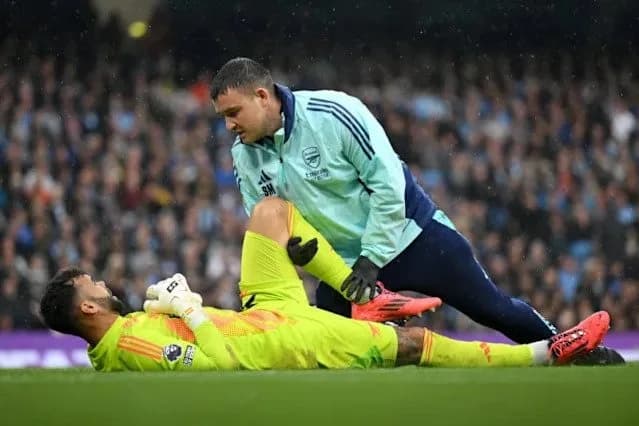
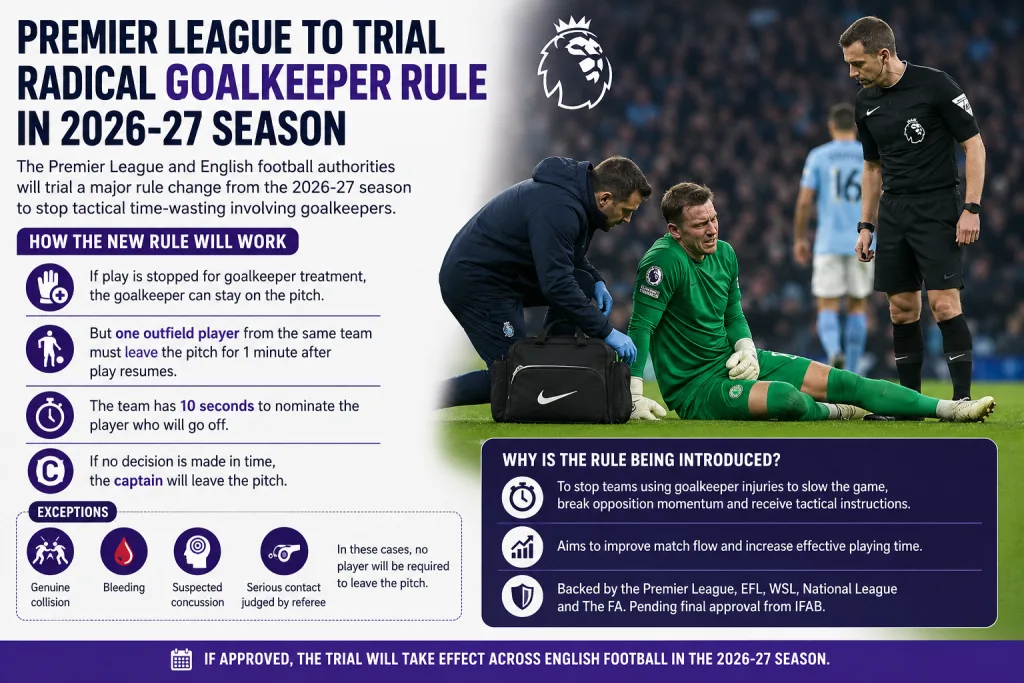
Under the proposed law, if play is stopped for treatment to a goalkeeper, the goalkeeper will be allowed to stay on the pitch after receiving medical attention. However, one outfield player from the same team must leave the field for one minute once play resumes.
Premier League and English competitions to test new goalkeeper injury rule aimed at stopping time-wasting https://t.co/67N8DSfv8C
— World Soccer Talk (@worldsoccertalk) July 27, 2026
The team will have 10 seconds to nominate the player who will temporarily go off. If no player is selected within that time, the captain will be required to leave the pitch instead.
There are important exceptions to the rule. No player will have to leave if the goalkeeper has suffered a genuine collision, is bleeding, has a suspected concussion, or if the referee believes the injury resulted from serious contact. These exemptions are intended to ensure players with legitimate injuries receive proper treatment without penalising their team.
The reason for introducing the rule in Premier League
Football authorities believe some teams have used goalkeeper injury breaks as a tactical tool to slow the game, interrupt an opponent’s momentum and allow coaches to pass on instructions. The new rule is designed to remove any advantage gained from such stoppages while keeping the game moving.
🚨 BREAKING: English football has proposed a new trial to stop goalkeeper time-wasting! ⏱️🥅 Could this completely change the game? Fans are already debating it! 👀⚽ pic.twitter.com/cmXrmHgN1C
— Osagie Peter odion (@Plutowave021) July 27, 2026
The proposal has been backed by the Premier League, English Football League (EFL), Women’s Super League (WSL), National League and the Football Association (FA). If IFAB approves the trial, it will come into effect across English football during the 2026-27 season.
The goalkeeper rule is part of a wider effort to improve match flow and reduce unnecessary delays. Football lawmakers hope the trial will increase effective playing time and discourage teams from using injury stoppages as a tactical tactic. If successful, the law could eventually become a permanent part of the game’s regulations.
