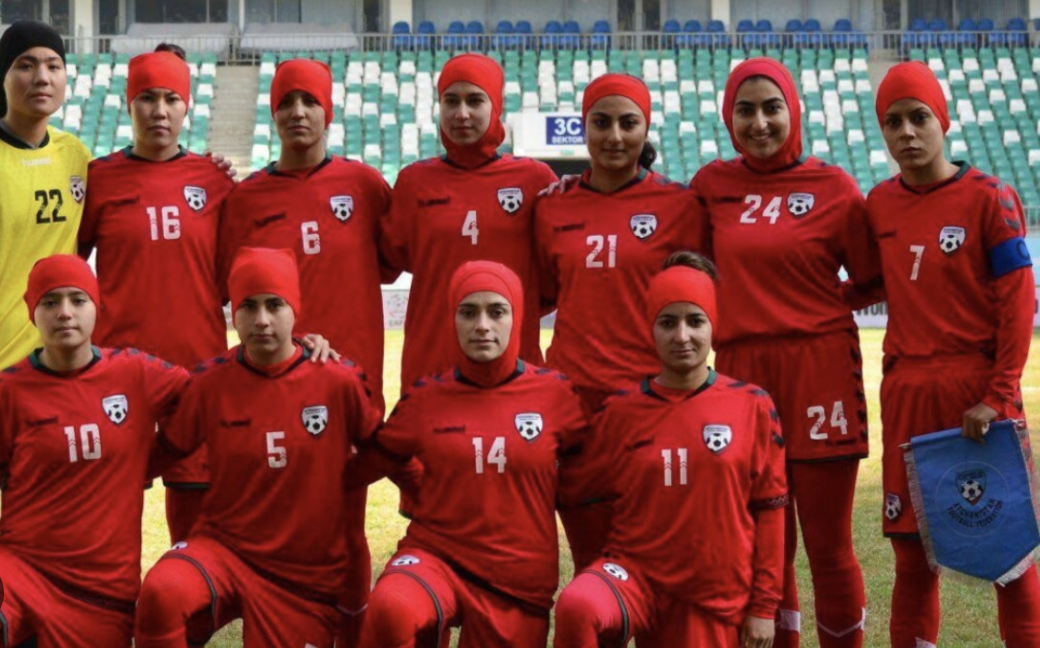
In a decision that carries both sporting and political weight, FIFA has approved a team of Afghan women refugees to compete as the country’s official national side, bypassing the need for recognition from the Taliban. The move effectively restores a pathway to international football for players who were forced into exile after the regime returned to power in 2021.
A team born out of displacement
The squad, known as Afghan Women United, is made up of players now scattered across countries in Europe, the Middle East and Australia. Many were part of Afghanistan’s original women’s national team, which was formed in 2007 but ceased to exist after the Taliban takeover.
Since then, players have lived as refugees, campaigning for the right to represent their country again. FIFA’s decision acknowledges that effort and offers them a formal platform to compete internationally, something they had been denied for more than three years.
Breaking away from political control
Previously, international regulations required national teams to be recognised by their domestic governing bodies, which in Afghanistan are now under Taliban control. By removing this condition, FIFA has made a rare intervention that separates sport from state authority in this case.
The decision is part of a broader strategy aimed at supporting Afghan women, including diplomatic engagement and creating opportunities to play. It also reflects growing pressure on global sporting bodies to respond to restrictions on women’s participation in Afghanistan.
Also Read | PSG survive Bayern’s late surge in nine-goal Champions League thriller
More than just football
For the players, the development goes far beyond competition. It represents identity, resilience and the chance to reclaim something that was taken away. Captain Fatima Haidari has previously described stepping onto the pitch as a moment where fear and uncertainty give way to strength and purpose.
Also Read | FIFA cracks down on misconduct with strict World Cup rules, Here is everything you need to know
FIFA has already attempted to organise fixtures and tournaments for the team, though logistical challenges such as visa issues have often complicated those efforts. Even so, this recognition marks a turning point.
The road ahead may still be uncertain, but for these players, the opportunity to wear their country’s colours again signals a powerful step forward in both sport and representation.