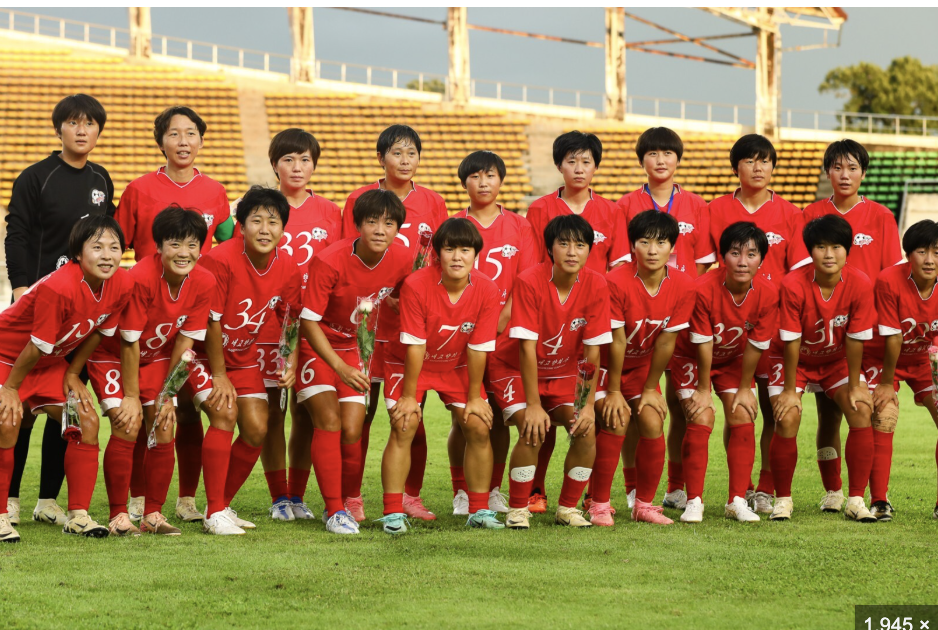
In a rare moment of sporting diplomacy, a North Korean women’s football club is set to play a match in South Korea for the first time in years, highlighting how football can briefly bridge even the deepest geopolitical divides.
A rare cross-border encounter
Naegohyang Women’s FC will face Suwon FC Women on May 20 in the semifinal of the AFC Women’s Champions League. The match will take place at the Suwon Sports Complex, just south of Seoul.
According to Al Jazeera, the North Korean delegation will include 27 players and 12 staff members, with the team scheduled to arrive via Beijing. The winner of the semifinal will advance to the final on May 23, facing either Melbourne City FC Women or Tokyo Verdy Beleza.
Sport amid political tensions
Relations between North Korea and South Korea remain strained, as the two nations are technically still at war following the Korean War, which ended in an armistice rather than a peace treaty. Sporting exchanges have been rare, making this fixture particularly significant.
The upcoming match will mark the first time since 2018 that a North Korean sports team has competed in the South. The last appearance of a North Korean women’s football side in the country dates back to the 2014 Asian Games held in Incheon.
Also Read | ‘Love happens only once’: Mukesh Khanna on marriage at 67
Strong pedigree on the pitch
Founded in 2012 and based in Pyongyang, Naegohyang Women’s FC features several players with national team experience. North Korea’s women’s football system has consistently produced strong results on the international stage, especially in youth competitions.
Also Read | Vinícius double keeps Real Madrid’s title hopes alive
Their pedigree was underlined recently when North Korea clinched the U-17 Women’s World Cup title, defeating the Netherlands in the final. That success has reinforced the country’s reputation as one of Asia’s most formidable forces in women’s football.
While the semifinal is a high-stakes sporting contest, it also carries symbolic weight. Moments like these show how sport can open limited channels of engagement, even when broader diplomatic ties remain frozen.