The Iran national football team has relocated its pre-World Cup training camp to Belek in Antalya, Turkey, as tensions intensify in the Middle East due to the ongoing conflict involving Iran, the United States, and Israel.
The decision to move preparations outside the country reflects growing logistical and security challenges, with sporting activities within the region facing disruption. The camp in Turkey has been conducted under strict conditions, with heavy restrictions on media access and no direct interaction allowed between players, coaching staff, and journalists, indicating the sensitivity of the situation surrounding the team’s preparations.
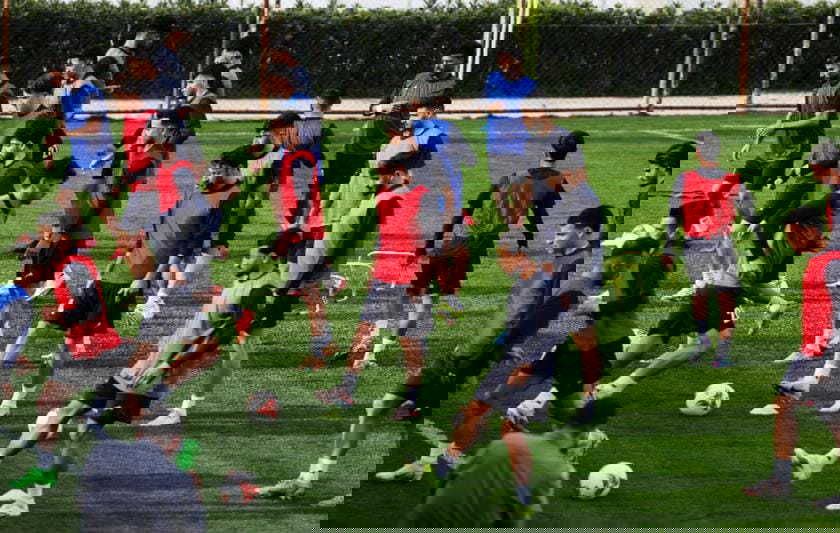
Despite the uncertainty, the squad has continued its routine training sessions, focusing on fitness, tactical drills, and team coordination in a controlled environment away from the conflict zone.
Also Read | Griezmann set for MLS move as Atlético Madrid chapter nears end
Friendly matches key to World Cup preparation
As part of their build-up to the FIFA World Cup 2026, Iran is scheduled to play two international friendly matches in Turkey against Nigeria and Costa Rica. These fixtures were reportedly shifted from Jordan due to the worsening security situation in the region, further underlining how geopolitical tensions have directly impacted sporting calendars.
The matches are crucial for Iran as they look to finalize combinations, assess squad depth, and test strategies against competitive international sides. With limited opportunities for match practice due to disruptions, these friendlies carry added importance in ensuring that the team remains match-ready ahead of the global tournament, which will be hosted across the United States, Canada, and Mexico.
Key players present in training camp
Several prominent names have been spotted training in Turkey, with star forward Mehdi Taremi leading the squad’s attacking preparations. Taremi, who remains one of Iran’s most reliable goal scorers, has been actively involved in drills and is expected to play a central role in the upcoming friendlies and the World Cup campaign. Alongside him, German-born striker Dennis Eckert has joined the squad, marking an important addition as Iran explores new attacking options and strengthens its bench depth ahead of the tournament.
The training sessions have reportedly seen high intensity, with players focusing on ball movement, finishing, and tactical organization. Coaching staff have emphasized adaptability, especially given the uncertain conditions surrounding travel, venues, and opposition.
The presence of both experienced campaigners and fresh faces highlights Iran’s attempt to strike a balance between stability and experimentation as they build toward the World Cup.
Major absence: Sardar Azmoun left out
One of the biggest talking points from the squad announcement is the absence of star striker Sardar Azmoun, who has been left out amid controversy surrounding a social media post that reportedly attracted criticism from authorities. Azmoun, long regarded as one of Iran’s key attacking threats, has been a consistent performer for the national side, and his exclusion has raised questions about the team’s attacking depth and overall balance.
His absence not only effects on-field dynamics but also adds a layer of off-field tension to the squad environment. With limited time before the World Cup, Iran will need to quickly adjust its attacking strategy and identify reliable alternatives who can fill the void left by Azmoun’s omission.
Team Focus amid political and sporting uncertainty
Despite the challenging backdrop, reports suggest that the Iranian squad remains focused and disciplined in training. Players have continued preparations with a professional approach, concentrating on tactical execution and maintaining peak physical condition. However, uncertainty still looms over several aspects of their World Cup campaign, including travel logistics, security arrangements, and even potential venue-related concerns, particularly for matches scheduled in the United States.
The situation has also sparked broader discussions within the footballing world about the impact of geopolitical conflicts on international tournaments. Iran’s preparations, conducted away from home and under strict supervision, reflect how deeply external factors can influence even the most high-profile sporting events.
The ongoing tensions have disrupted not just Iran’s plans but football activities across the region. Teams have been forced to reconsider travel routes, shift venues, and alter training schedules, highlighting the far-reaching consequences of the conflict. Iran’s decision to base itself in Turkey underscores a growing trend of teams seeking neutral and stable locations to continue preparations amid uncertainty.
Also Read | ISL points table: Mumbai City tops ISL 2025–26 standings as title race heats up
The situation also raises concerns about player welfare, mental health, and the overall integrity of competition, as athletes are required to perform at the highest level while navigating unprecedented off-field challenges.
Conclusion notes
Iran’s road to the FIFA World Cup 2026 has been anything but conventional, shaped by geopolitical tensions, squad controversies, and logistical disruptions. With key players like Mehdi Taremi leading the preparations and new inclusions such as Dennis Eckert adding depth, the team continues to push forward despite adversity.
However, the absence of Sardar Azmoun and the broader uncertainty surrounding their campaign serve as reminders that the challenges facing Iran extend far beyond the football pitch, making their World Cup journey one of resilience as much as competition.