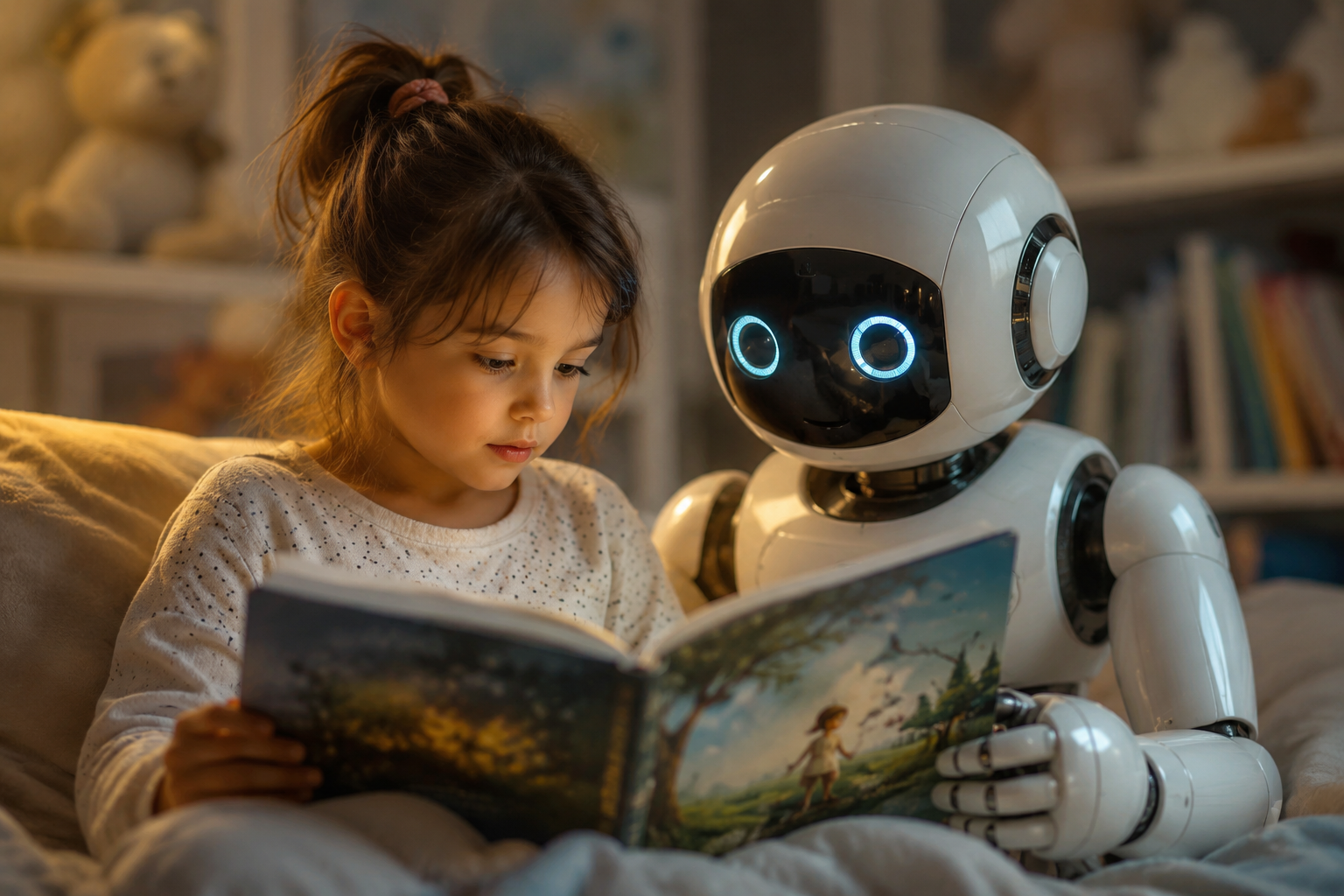
AI-generated children’s books are increasingly circulating online, with many appearing to be part of a broader wave of low-cost, prompt-driven content rather than professionally edited publishing.
Such books often show up in self-published form and are most visible on Amazon, which makes them harder to spot in casual settings and more likely to reach children through gifts, waiting rooms and other informal channels.
Also Read | Apple may split iPhone launches as standard iPhone 18 tipped for delayed debut
“because AI […] has no understanding of the relevance of things in human life, it would be extremely risky to entrust these technologies with important matters in the lives of thinking beings—ethical, military, or economic policy decisions, for example, and above all, questions… https://t.co/q5AVn8lyxq pic.twitter.com/0G4UquyrDc
— Katherine Stiles (@_K_Stiles) June 6, 2026
Not quite a storyteller's touch
A recent Vox report by Alex Abad-Santos focused on concerns that AI is being used to produce books for children without the judgement, intent or care that human authors and illustrators bring to the medium.
Megan Kearney, an artist who teaches children’s book illustration at a college level, said that AI “cannot make a conscious choice” and argued that children’s books require creators who care about children’s emotional and intellectual development.
She said AI can produce material that resembles existing work, but not work that reflects deliberate decision-making.
🟢 3. Book Cover Design Prompt : 👇
— UxUi Tega (Design & Ai) (@Tegadesigns) April 29, 2026
Create a magical, premium children’s book cover design with a warm, dreamy storytelling aesthetic.
The cover should feature two adorable children sitting under a large tree in a colorful garden, reading a book together with joyful… https://t.co/BiCnDbavON pic.twitter.com/pzF63hMxgS
Small minds, serious readers
Kearney also warned that adults often underestimate how seriously children engage with books.
In the Vox interview, she said children deserve art that is made and selected intentionally and added, “We already have a lot of bad books out there. We don’t need a bad book machine!”
Her view is that even imperfect human-made books have value because they are the result of real creative choices, while AI-generated material lacks that same process.
Also Read | Apple bets on AI and foldables as iOS 27 takes centre stage at WWDC 2026
Where judgement still earns its keep
Avoiding AI children’s books is still possible, but it requires vigilance from adults, who usually control what children read.
Independent bookstores appear less exposed to the trend than online marketplaces because buyers there tend to be more selective.
Author Rex Ogle said that independent booksellers are quick to pull questionable titles once concerns are raised, while also warning that publishers could eventually weaken restrictions on AI if they see it as a cost-cutting tool.
For now, the larger issue is not only the technology itself but whether adults are willing to treat children’s reading material as something that deserves careful human judgement.
FAQs
Q1. What are AI-generated children's books?
Ans: AI-generated children's books are titles created partly or entirely using artificial intelligence tools for writing, illustration, or both.
Q2. Why are authors and educators concerned about AI children's books?
Ans: Critics argue that AI-generated books may lack the creative judgement, care and intentionality that human authors and illustrators bring to children's literature.