Open AI has improved the capabilities of Codex, which is a coding assistant developed by the company. The improvements have been linked to GPT-5.4 model and the Codex app.
Codex has been used by programmers to identify errors, write codes, and understand programming concepts. With the recent improvements, programmers say that the capabilities of Codex can now be used to manage coding workflows ranging from structuring projects to analyzing several files.
These improvements come at a time when artificial intelligence is increasingly used to improve software development processes, especially when coding. In coding processes, AI has been used to speed up processes and make them more effective. This has been achieved through the use of tools like Codex to improve coding processes.
Also Read | International Women’s Day 2026: Google Doodle honours women pioneers in STEM
Codex can now suggest full project structures
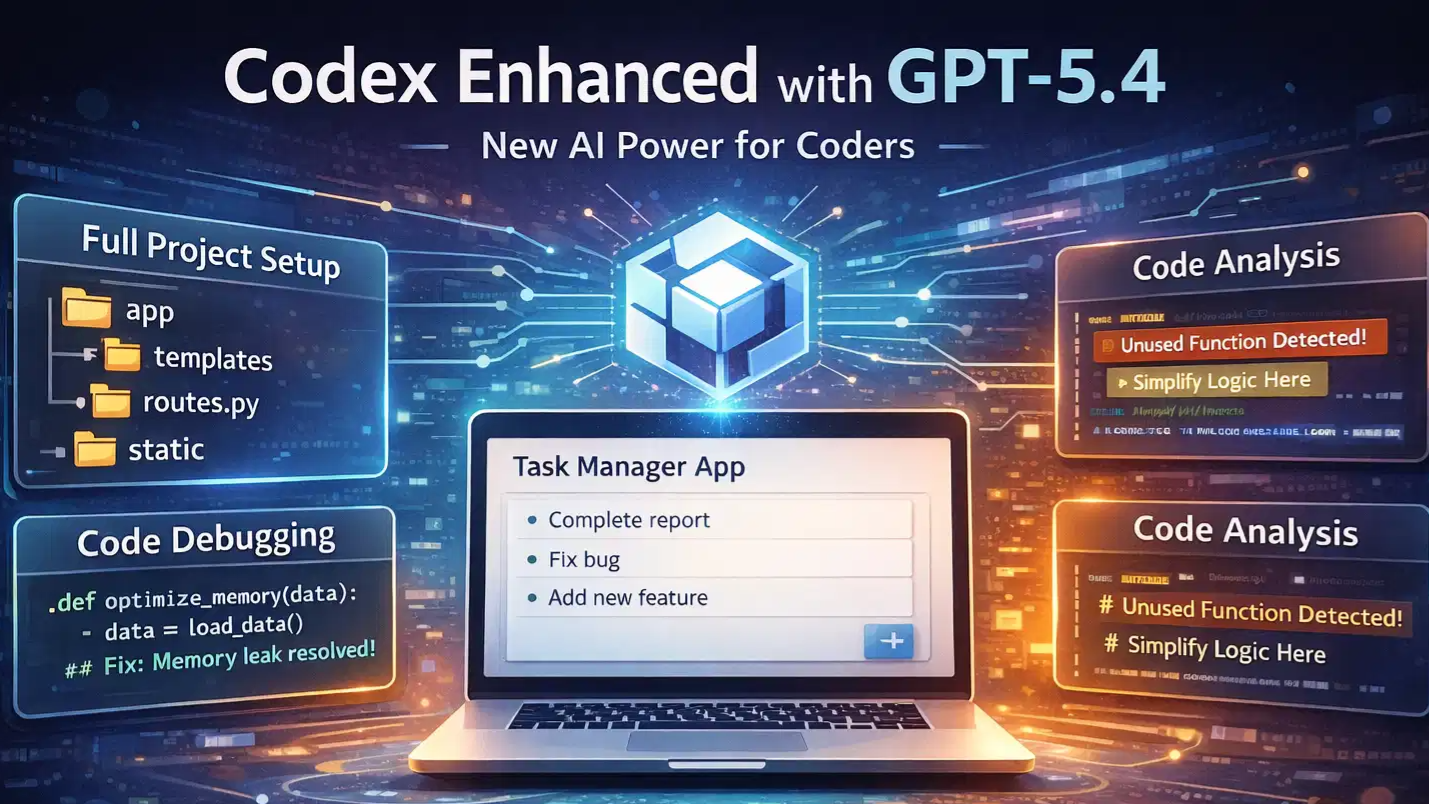
One of the changes that can be noted is the ability of Codex to respond to a larger development request by providing the structure of an entire project.
For example, the assistant was asked to build a basic Python task management system using the Flask web development framework. The assistant suggested the structure of the project folders, created routes for managing tasks, and even created a simple HTML template for the user interface.
Rather than providing the user with only small pieces of code, the system described the ways in which different parts of the application could work together. This is helpful in the early stages of the project setup process, as many of the steps can be repetitive.
Multiple development tasks handled in one request
The updated Codex environment can also process different programming tasks within the same interaction. During testing, developers asked the assistant to debug a Python script that was consuming too much memory while also generating a React interface that could display the script’s output.
The system analysed the Python code while separately producing frontend components for the interface. For developers working across both backend and frontend systems, this allows multiple parts of a project to be addressed without restarting the interaction.
Improved understanding of large projects
Another improvement involves the assistant’s ability to read and analyse larger sections of code at once. Developers testing the feature shared several files from an older JavaScript project and asked the system to review them.
The assistant highlighted unused functions, suggested ways to simplify complex conditional logic and explained how different parts of the code interacted. Rather than focusing on isolated lines, the analysis described how the structure of the program could be improved.
Also Read | YouTube adds chat feature for users in over 30 countries — here's how it works
Codebase questions and debugging support
When programmers asked the assistant where a specific function was used, it told them how it related to other parts of the code and what modules it was used in.
There were also signs of improvement in terms of debugging tasks. When the assistant was given a script with logical errors and a failing test case, it was able to pinpoint the problem and offer a change to solve the test case. Programmers find that assistance like this can be useful in terms of locating the cause of a failing test case in a larger project.