Bengal today stands as one of the most politically aware and intellectually mature societies in India. Elections in West Bengal are not mechanical events; they are moral moments. We debate, argue, and analyse; only then do we decide. This culture of political literacy defines Bengal’s democratic character.
Here, elections are never merely about power. They determine the state’s economic direction, social harmony, border management, welfare distribution, and institutional stability. A vote decides who shapes policy and whose voice carries legislative authority. That is why the integrity of the electoral roll becomes central to public trust.
Bengal also has a long and painful history of displacement. For decades, migration, both legal and disputed, has altered demographic realities across districts. As a border state, Bengal experiences these shifts more directly than most regions of India. Over the years, ruling political parties have allegedly used these demographic changes to expand their vote banks and to increase bogus voting and inflated electoral rolls. This is not merely a statistical shift; it has generated structural imbalances across the state.
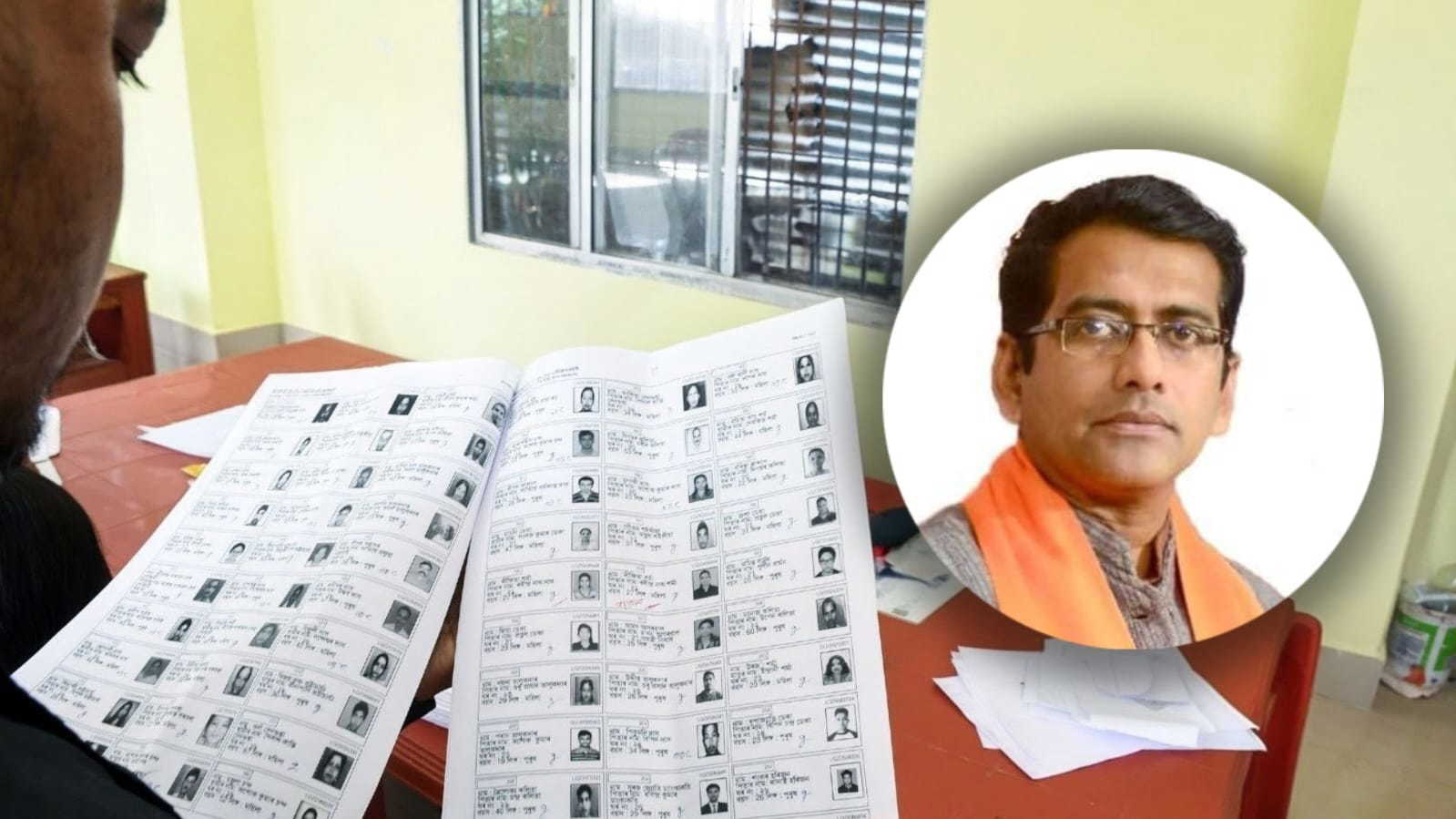
These imbalances affect the original inhabitants, making the transformation not only demographic but also emotional and cultural. In this context, the Bharatiya Janata Party consistently puts nationhood and national identity at the center of its political philosophy. In this continuum, the Special Intensive Revision (SIR), conducted under the supervision of the Government of India and the Election Commission, is being viewed as more than an administrative exercise; it is considered a significant step toward strengthening national sovereignty. Formally, the SIR verifies voter identity, removes duplicates, corrects inaccuracies, and updates the electoral rolls.
Socially, it addresses a deeper concern: protecting the future of Bengal’s citizens and safeguarding their rights from potential exploitation by ensuring clarity about who determines Bengal’s future.
Today, society expresses a clear expectation: verified Indian citizens with legitimate and actual residence should determine electoral outcomes in their respective areas. This is not hostility toward refugees who entered through legitimate, recognised processes. Rather, it is a demand for clarity between documented citizenship and undocumented presence. Democracy functions on legitimacy. When electoral rolls are perceived as flawed, public confidence in democracy weakens, affecting both national integrity and electoral integrity, as the two are intrinsically connected. A sovereign nation depends upon a credible voter base.
Across India, there is growing recognition that electoral reforms strengthen constitutional order. In Bengal, this recognition carries special significance because demographic questions intersect directly with political outcomes. Therefore, it is essential that the SIR in Bengal be completed with full impartiality and free from political pressure.
The debate around SIR has generated disagreement. Some fear exclusion errors. Others question administrative transparency. Yet, amid the noise, a broader social sentiment emerges: elections must reflect the voice of real, verified residents. When that assurance exists, mandates become stronger. When it is absent, doubt clouds the outcome.
The upcoming election will shape Bengal’s future. Developmental priorities, employment strategies, border governance, and social stability will depend on the representatives chosen. That is why society insists on a simple democratic principle: those legally residing and constitutionally recognised as people of Bengal must play the decisive role in determining Bengal’s direction. In this regard, SIR appears to be an important institutional mechanism.
This is not about narrowing democracy; it is about protecting it. Bengal’s intellectual tradition has always defended debate, but it has also defended institutional clarity. In the present moment, electoral verification is being viewed not merely as a procedural exercise but as a safeguard of legitimacy, of representation, and of Bengal’s collective voice.
The views and opinions expressed in this article are those of the author and do not necessarily reflect the official policy, editorial policies of News Ei Samay, and its editorial team.