The rapid rise of artificial intelligence has made it easier for propagandists to create convincing fake satellite images during conflicts, raising concerns among researchers about serious real-world security consequences..
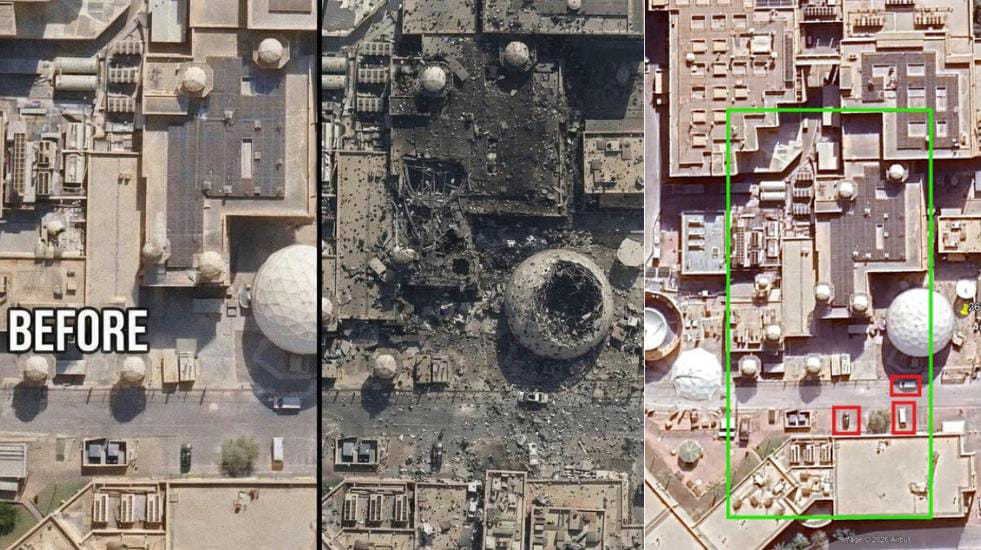
During the ongoing US-Israeli conflict with Iran, the Tehran Times shared a “before and after” image on X claiming that US radar equipment at a base in Qatar had been “completely destroyed.” However, researchers later confirmed that the image was actually an AI-edited version of a Google Earth image from last year showing a US base in Bahrain.
How was the AI image detected?
One clear clue was a row of cars that appeared in exactly the same positions in both the original and the manipulated image. Despite this, the AI-generated image spread widely on social media and received millions of views in multiple languages, highlighting how difficult it has become for people to distinguish real images from fake ones online.
Also Read | Did Israel use white phosphorus in Lebanon? Human Rights Watch makes explosive claim
#BREAKING
— Tehran Times (@TehranTimes79) February 28, 2026
Before vs. after
An American radar in Qatar was completely destroyed today in an Iranian drone strike. pic.twitter.com/GEebfcWH0q
Open-source intelligence researcher Brady Africk noted that manipulated satellite imagery often appears online after major global events, including conflicts in the Middle East. According to AFP, Africk said, “Many of these manipulated images have the hallmarks of imperfect AI generation: odd angles, blurred details, and hallucinated features that don’t align with reality.”
He added, “Others appear to be an image manipulated manually, often by superimposing indicators of damage or another change on a satellite image that had no such details to begin with.”
Information warfare analyst Tal Hagin also identified another AI-generated satellite image circulating online. The image falsely claimed that Israeli-US jets had targeted a painted aircraft silhouette on the ground in Iran while real planes were moved elsewhere.
The image contained suspicious signs, including meaningless coordinates, and circulated widely on platforms such as Instagram, Threads, and X. According to AFP, investigators also detected a SynthID watermark- an invisible marker used to identify images generated with Google’s AI tools.
Experts say that these fake visuals are appearing alongside fake OSINT accounts on social media that attempt to undermine the work of legitimate digital investigators.
Hagin explained that in countries like Iran, “Due to the fog of war, it can be very difficult to determine the success of an adversary’s strikes. OSINT came as a solution, using public satellite imagery to circumvent the censorship.” He added, “But it’s now being preyed upon by disinformation agents.”
Similar AI-generated satellite images were also observed during the Russia-Ukraine war and during last year’s four-day conflict between India and Pakistan.
Africk warned that manipulated satellite images can have significant real-world consequences. “Manipulated satellite imagery, like other forms of misinformation, can have real-world impacts when people act on the information they come across without verifying its authenticity,” he said.
He also added, “This can have effects that range from influencing public opinion on a major issue, like whether or not a country should engage in conflict, to impacting financial markets.”
At the same time, experts note that genuine high-resolution satellite imagery collected in real time can help leaders assess security threats and identify false claims.
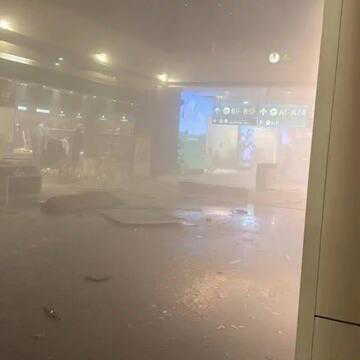
For instance, after a militant attack at Niamey airport in Niger, images circulated online claiming that the main terminal had caught fire. Satellite intelligence company Vantor later analysed the situation and confirmed that the images were fake and most likely generated by AI.
Vantor’s Tomi Maxted told AFP that their own satellite data proved the images were not real. Bo Zhao from the University of Washington also warned about the growing influence of AI-generated visuals.
“When a satellite image is presented as visual evidence in the context of war, it can easily influence how people interpret events,” Zhao said. Because AI images are becoming increasingly realistic, he advised that it is “important for the public to approach such visual content with caution and critical awareness.”
Meanwhile, Iran fired missiles at Israel early Monday in the name of the country’s new leader, Mojtaba Khamenei. Iranian state television reported that the Assembly of Experts had appointed Mojtaba Khamenei as the third leader of the Islamic Republic. The announcement was made alongside a picture of the 56-year-old cleric, who closely resembles his father.
The statement said Mojtaba Khamenei “is appointed and introduced as the third leader of the sacred system of the Islamic Republic of Iran, based on the decisive vote of the respected representatives of the Assembly of Experts.”
It added that the clerical body “did not hesitate for a minute” while choosing the new leader, even amid “the brutal aggression of the criminal America and the evil Zionist regime.”
Shortly after the announcement, state media broadcast images of a projectile believed to have been launched toward Israel. The projectile reportedly carried the slogan “At Your Command, Sayyid Mojtaba,” an Islamic honorific.
The younger Khamenei is considered a hardliner and is expected to continue his father’s policy of rejecting dissent. Earlier, US President Donald Trump had dismissed Mojtaba Khamenei as a “lightweight” and said he should play a role in selecting the next leader.
“If he doesn’t get approval from us, he’s not going to last long,” Trump told ABC News before the announcement. Israel’s military had also issued a warning to any successor, saying, “We will not hesitate to target you.”
Also Read | 'Bhago yahan Se chacha': Viral video shows missile chaos in Qatar | Watch
Meanwhile, the Islamic Revolutionary Guard Corps (IRGC) quickly expressed support for the new leader. In a statement, the Guards Corps said it was “ready for complete obedience and self-sacrifice in carrying out the divine commands” of Mojtaba Khamenei, who assumes the position with far less experience than his father.