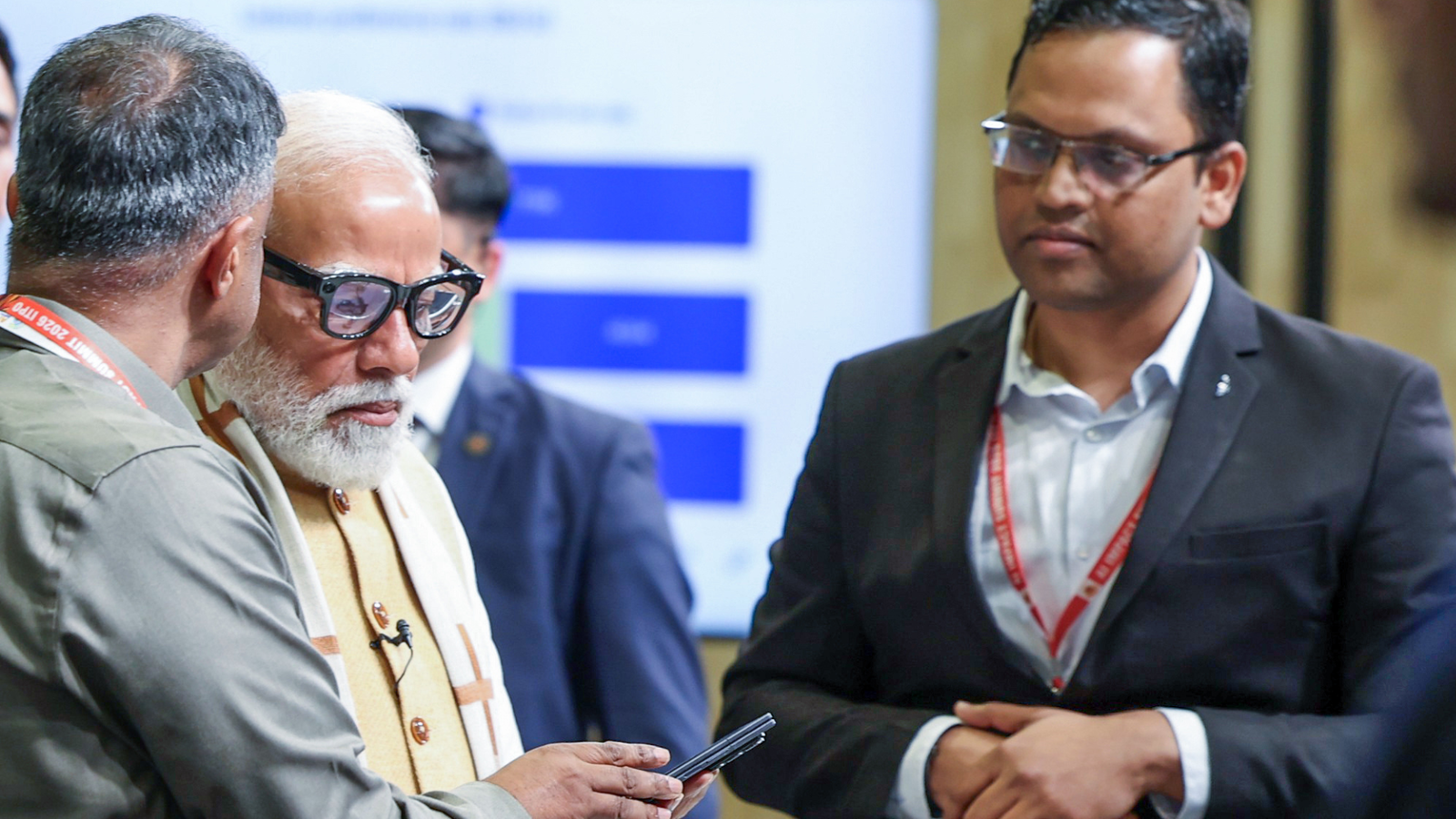
At the India AI Impact Summit 2026, Prime Minister Narendra Modi was seen wearing a sleek and glasses-like AI wearable. The Sarvam Kaze, as the AI wearable has been named, seems to be the talk of the town. The reason for this is the fact that the AI wearable is a development of the Bengaluru-based Sarvam AI, reported Economic Times The wearable, described as a "next-gen assistant for real-world interactions" as opposed to a screen-based one, seems to be the subject of much interest.
Also Read | Nasscom rejects AI disruption fears; says Indian IT firms ready for next phase
What is Sarvam Kaze?
Sarvam Kaze is an AI-powered wearable built in the form of lightweight glasses that can listen, interpret voice commands, respond in real time and visually capture what the user sees. Unlike conventional AI tools that function through phones or laptops, the device aims to blend intelligence with everyday movement through voice and visual interaction.
According to reports, the company is also preparing to introduce a chat feature, expanding the device's communication capabilities. Developers are expected to be able to build customised applications on the Sarvam platform, enabling use-case-specific experiences across industries. The company describes the product as fully designed and engineered in India, highlighting its homegrown credentials.
PM Modi spotted testing the device
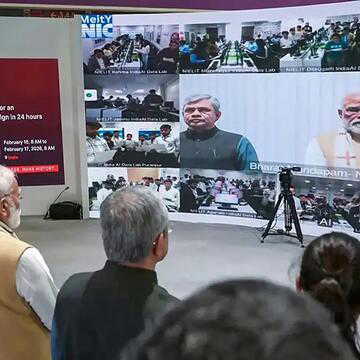
Modi wore the wearable while walking through exhibition stalls at the summit venue, Bharat Mandapam. Images shared by Sarvam AI co-founder Pratyush Kumar showed the Prime Minister appearing to explore the device's real-time response features during the tour. The startup has indicated that Sarvam Kaze is expected to enter the market in May, informed the Economic Times report.
Also Read | Who is Peter Steinberger? OpenClaw creator shakes hands with Sam Altman, joins OpenAI
What else is Sarvam AI building?
Sarvam AI is also developing foundational AI models tailored for Indian languages and local needs. Its recent launches include Sarvam Akshar for document digitisation, Sarvam Studio for multilingual content creation, and Saaras V3, a speech recognition model.
The development aligns with the government's wider digital ambitions under the IndiaAI Mission, launched in March 2024 with a Rs 10,372-crore outlay. The initiative has already onboarded tens of thousands of GPUs and shortlisted multiple teams to build indigenous large language models, signalling a strong national push toward AI innovation and self-reliance.