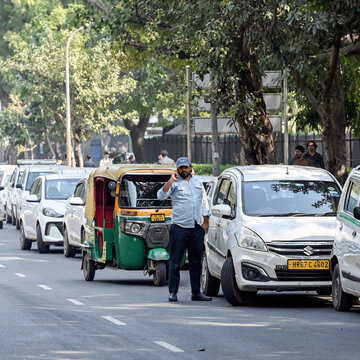
India’s automobile sector is grappling with the financial implications of the Environment Protection (End-of-Life Vehicles) Rules, 2025, which could significantly impact profitability in the coming financial year. Industry estimates suggest a potential hit of around ₹25,000 crore to the sector’s bottom line in FY26, driven by new compliance requirements tied to past vehicle sales.
At the core of the issue is a provision linked to Extended Producer Responsibility, a framework that places the onus on manufacturers to manage the lifecycle of vehicles even after they are no longer in use. A specific clause in the rules has triggered the application of IND AS 37, requiring companies to make financial provisions for potential environmental compensation.
Provisioning burden raises alarm
According to PTI, the automakers are particularly concerned about the retrospective nature of the requirement. The rules effectively mandate provisioning for vehicles sold over the past two decades in the case of private vehicles and over 15 years for commercial ones. This means companies may have to account for liabilities even if they have no plans to exit the market.
Executives argue that such provisions will lock up substantial capital, directly affecting reported profits for the year. The uncertainty over the final environmental compensation cost, to be determined by the Central Pollution Control Board, adds another layer of concern for financial planning.
Industry flags risk to investments
The Society of Indian Automobile Manufacturers has already raised the issue with the government, warning that the rules could constrain the industry’s ability to invest in future growth areas. These include electric mobility, cleaner technologies and capacity expansion, all of which require sustained capital outlay.
According to industry estimates, the burden is not evenly distributed. Passenger vehicle manufacturers are expected to bear a significant share of the impact, while two- and three-wheeler makers will also face notable financial strain. Even on a discounted basis, the provisioning requirement remains substantial.
Also Read | Google Gemini is coming to your car, and it could change how you drive, navigate and multitask
Policy clarity remains a key demand
Despite representations from the industry, the government has not modified the contentious clause in subsequent amendments. This has left automakers preparing for a scenario where large one-time provisions could weigh heavily on their financial statements.
Also Read | Jeep Avenger facelift unveiled in Brazil: Will the compact SUV head to India next?
The broader concern goes beyond immediate profitability. Industry leaders believe that such regulatory uncertainty could affect long-term planning and investor sentiment. While the objective of promoting environmental responsibility is widely acknowledged, the current framework has sparked debate over the balance between sustainability goals and economic viability. The coming months will be crucial as companies await clarity on compensation costs and assess how best to absorb the financial shock without derailing their strategic priorities.