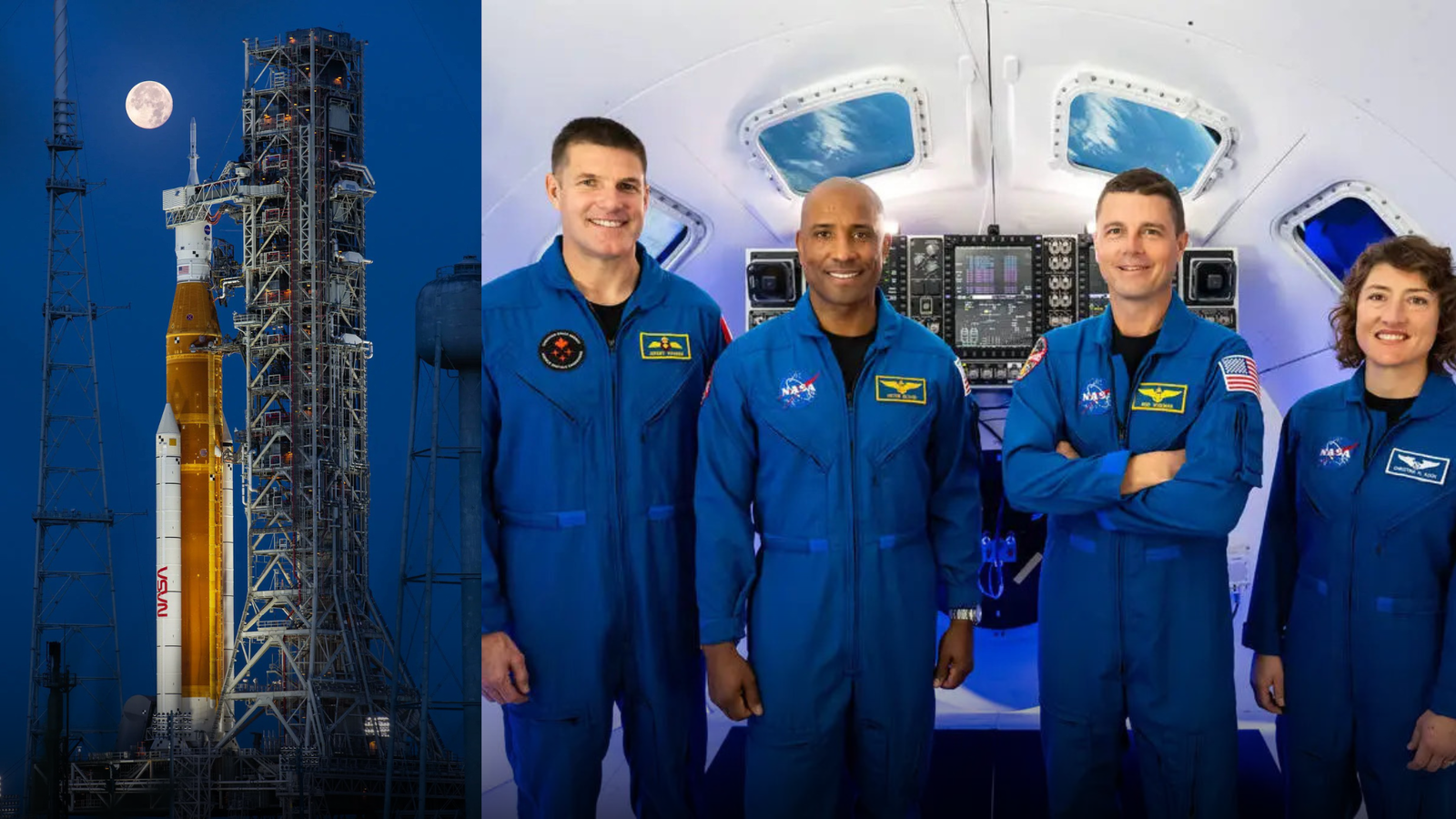
The Artemis II mission of NASA will be a key milestone in human spaceflight as four astronauts prepare to travel around the Moon on the first crewed flight under the Artemis programme. The estimated 10-day mission aims to validate critical systems and hardware needed for future missions of long-term lunar surface exploration.
Meet the Artemis II crew
The mission will carry four astronauts aboard the Orion spacecraft. Reid Wiseman will serve as mission commander, with Victor Glover as pilot. Mission specialists include Christina Koch and Jeremy Hansen, marking the first Canadian astronaut to fly to the Moon.
Launch and early mission phase
According to NASA, Artemis II will launch from Launch Complex 39B at NASA's Kennedy Space Centre in Florida aboard the SLS rocket. After liftoff, Orion will make two orbits of Earth, giving the crew and mission controllers a chance to validate spacecraft performance while still near enough to home should a return to Earth be needed. The early orbits will also provide a chance for astronauts to do a manual proximity operations demonstration using the rocket's interim cryogenic propulsion stage as the target.
Also Read | What is Angelic Intelligence? 5 key points about this brewing term we bet you didn't know
One of the main goals of Artemis II is to confirm that Orion's life support, navigation, and communication systems work properly in the deep-space environment. Astronauts will assess air circulation, carbon dioxide removal, and system performance when the astronauts are exercising and sleeping. Orion will also pass briefly beyond GPS and Space Network coverage, which allows an early test of NASA's Deep Space Network, a resource that will be required for lunar and eventual Mars missions.
Around the far side of the Moon and home again
After overcoming the system checks, Orion will light up the translunar injection burn and propel the crew into a four-day journey to the Moon. The spacecraft will sneak through the far side of the Moon, venturing out about 4,700 miles beyond it. At that position, the crew will have the extraordinary opportunity to observe the Moon's surface and the Earth through the viewports of the Orion crew vehicle.
Rather than relying on propulsion for the return, Artemis II will follow a fuel-efficient free-return trajectory, using the Earth-Moon gravity system to guide Orion back toward Earth.
Also Read | What went wrong with PSLV-C62? ISRO flags third-stage deviation after launch
At the end of the mission, the crew will reenter Earth’s atmosphere at high speed before splashing down in the Pacific Ocean off the coast of San Diego. Recovery teams from NASA and the US Department of Defence will assist the astronauts after landing.
Paving the way ahead
Artemis II builds directly on the uncrewed Artemis I test flight and is a critical step toward Artemis III, which aims to return astronauts to the lunar surface. NASA stated that through the Artemis campaign, it plans to establish a sustained human presence on the Moon and lay the groundwork for future crewed missions to Mars.