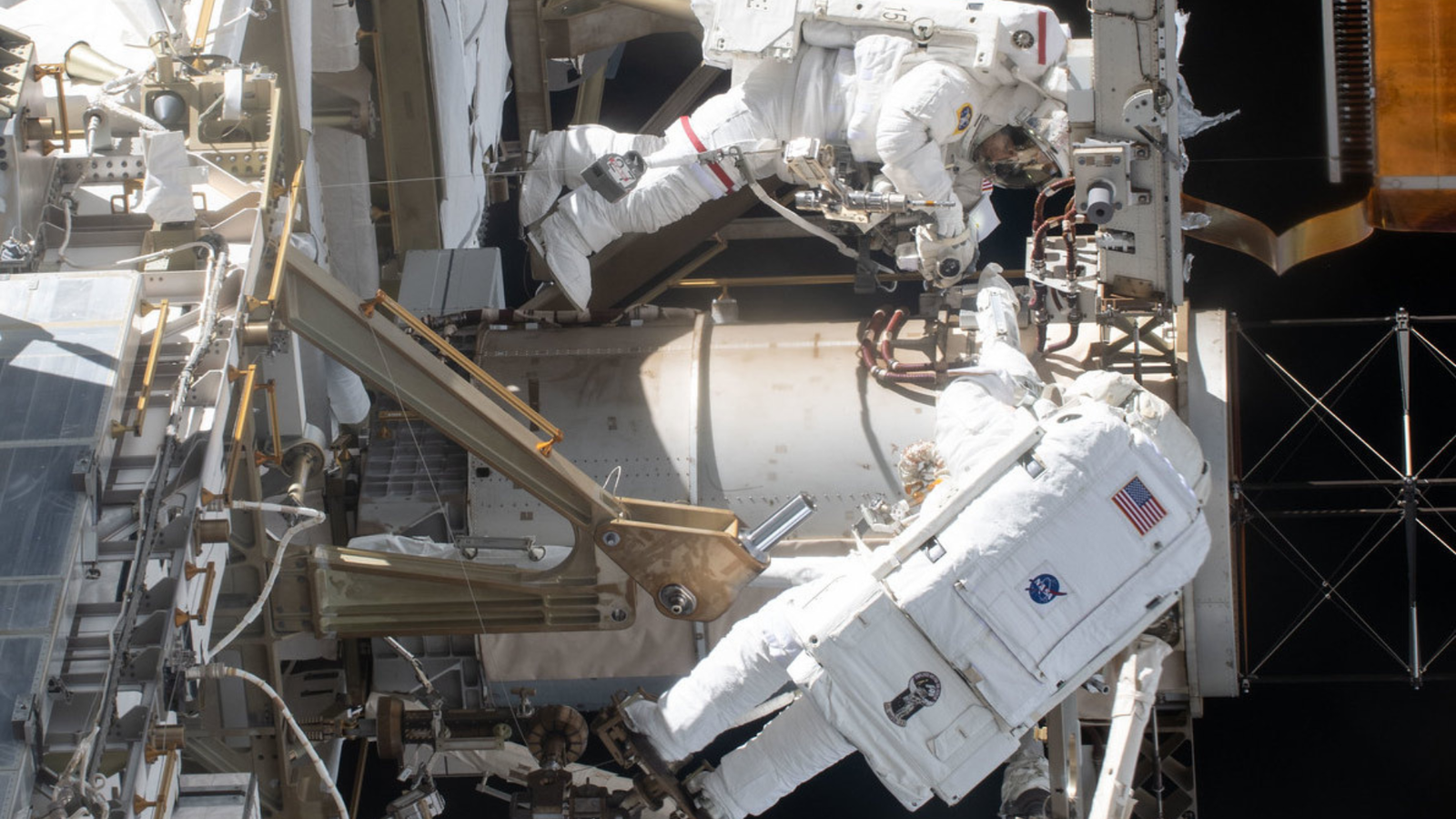
NASA astronauts Chris Williams and Jessica Meir are set to carry out a spacewalk outside the International Space Station (ISS) on June 30 to replace a faulty wrist joint on the station's Canadarm2 robotic arm.
According to NASA, the spacewalk will begin at 8.35 am EDT (6.05 pm IST) and is expected to continue for around six hours and 40 minutes. The repair is aimed at restoring the robotic arm's full range of motion after a malfunction was detected in one of its wrist joints.
Why the repair is important
Canadarm2 has played a crucial role in ISS operations for more than 25 years, helping with spacecraft docking, cargo handling and maintenance tasks. Following an investigation, NASA and the Canadian Space Agency (CSA) concluded that the damaged wrist joint must be replaced during a spacewalk.
Also Read | Can your phone detect earthquakes? Here's what happened in Venezuela
A replacement unit is already stored aboard the ISS and will be installed during the mission to bring the robotic arm back to normal working condition.
Astronauts complete final preparations
The crew has spent the past several days preparing for the complex repair. Chris Williams recently carried out a spacesuit fit check inside the Quest airlock with assistance from European Space Agency astronaut Sophie Adenot. The session included testing communications, mobility and life support systems.
Williams and Jessica Meir also practised the repair using detailed 3D simulations and inspected the emergency jet packs that will be attached to their spacesuits during the operation. Meir additionally readied specialised pistol grip tools designed for work in microgravity.
Also Read | After Venezuela, powerful 7.2-magnitude earthquake strikes northern Japan
Support crew and other ISS activities
Inside the station, Sophie Adenot and NASA astronaut Jack Hathaway have been rehearsing their support duties. Their responsibilities include operating Canadarm2 from within the ISS to position it for the repair work.
Meanwhile, Hathaway has been involved in deploying CubeSats developed by university students for communications and technology research. On the Russian segment of the station, cosmonauts continued eye health studies to examine the effects of long-duration spaceflight. Other ongoing experiments are testing artificial intelligence tools that could improve crew efficiency and communication during future missions.
NASA and the Canadian Space Agency are expected to share additional details about the repair mission during a joint briefing on June 25.