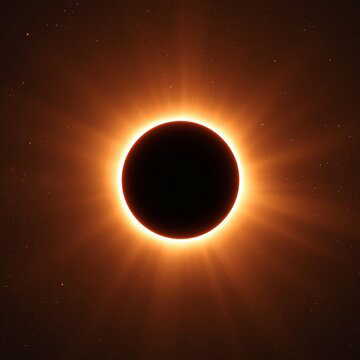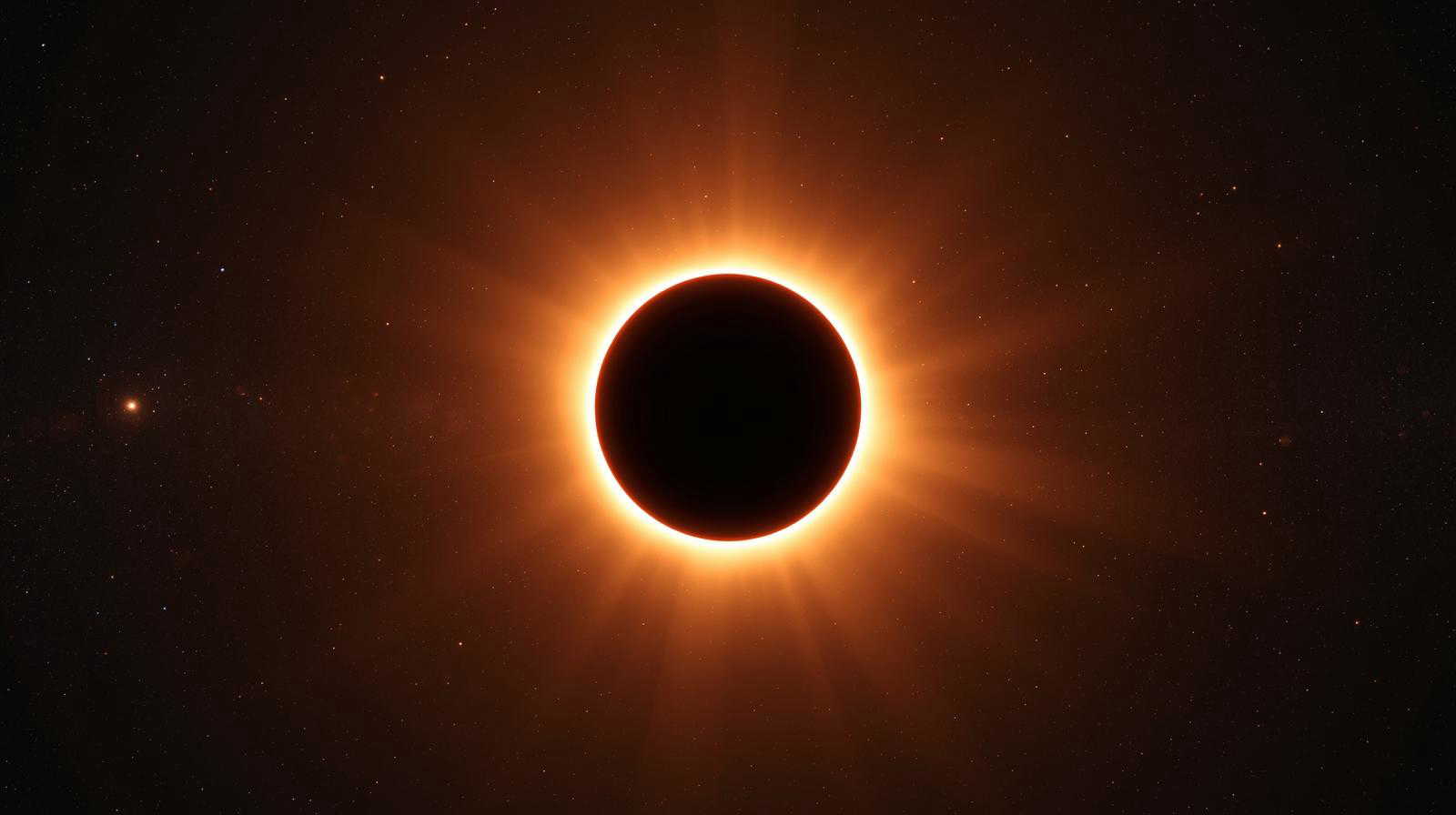
The first solar eclipse of 2026 will take place today, February 17. It is an annular solar eclipse, often called the “Ring of Fire,” a rare sight when the Moon passes in front of the Sun but does not completely cover it. However, despite the global buzz around the event, the eclipse will not be visible from India.
Why eclipses are not visible everywhere
A solar eclipse occurs when the Moon passes between the Sun and the Earth. However, that is not sufficient to view the eclipse from everywhere on the planet. According to NASA, the Moon’s shadow falls on only a small area of the Earth at any particular time.
The Moon creates two types of shadows:
Umbra: The darkest part of the shadow in which the Sun is completely hidden.
Penumbra: The lighter part of the shadow in which the Sun is partially hidden.
The eclipse can be observed in areas that fall under these shadow regions. Areas that fall outside the shadow regions do not see the eclipse.
Also Read | Annular solar eclipse 2026: Will India see the ‘ring of fire’? Check timings, visibility details
The narrow shadow path
The Moon is much smaller than the Earth. Therefore, its shadow is not wide on the Earth’s surface. According to NASA’s eclipse maps, today’s annular eclipse has its path passing through Antarctica and some of the southern ocean areas.
Only locations within this region will be able to see the full Ring of Fire. Some locations in the southern hemisphere may be able to catch a brief glimpse of it, but India is too far north for that.
Why India will not see this eclipse
India is completely outside the umbra and penumbra for this eclipse according to all global maps. As we near the date and time for this eclipse, India will be completely outside the shadow cast by the Moon.
This means:
No annular eclipse
No partial eclipse
Also Read | Lunar New Year 2026: When is it, what is the zodiac animal and how is it celebrated?
No visible solar event from India
The reason is purely astronomical. All solar and lunar phenomena are determined by the precise alignment of the Earth, Moon, and Sun, in addition to the curvature and rotation of our world.
A matter of celestial mechanics
Space agencies, including NASA and the European Space Agency, state that eclipse visibility is determined by orbital motion, geometry and timing. There is nothing local that needs to be considered for solar eclipses.